

Views: 222 Author: Rebecca Publish Time: 2026-02-13 Origin: Site


Content Menu
● What Is a Valve Actuator and Why It Matters
● Electric vs Pneumatic Actuators: Key Differences at a Glance
● How Pneumatic Actuators Work and When They Excel
>> Key Design Types and Features
>> Advantages of Pneumatic Actuators
>> Cost and Maintenance Considerations
● Electric Actuators: Precision, Control, and Smart Automation
>> How Electric Actuators Deliver Precision
>> Benefits of Electric Actuators
>> Speed, Force, and Sizing Trade‑Offs
● Environmental Regulations and Emissions: Why Electric Is Gaining Ground
● Practical Selection Guide: Electric vs Pneumatic Actuators
>> 1. Define Application Requirements
>> 2. Consider Power Infrastructure
>> 3. Evaluate Cost Over the Full Lifecycle
● Real‑World Use Cases and Industry Examples
>> Water and Wastewater Treatment
>> Oil, Gas, and Petrochemical
>> Industrial Manufacturing and General Industry
● Step‑by‑Step Actuator Selection Checklist
● Actionable Takeaways: When to Choose Each Actuator Type
● Clear Call to Action: Get Expert Support for Your Valve Automation Project
● FAQs: Electric vs Pneumatic Actuators
>> 1. Are electric actuators more energy‑efficient than pneumatic actuators?
>> 2. Can pneumatic actuators provide precise control like electric actuators?
>> 3. Which actuator type is better for harsh or hazardous environments?
>> 4. How do environmental regulations influence actuator selection?
>> 5. What is the most common mistake when sizing electric actuators?
Choosing between electric actuators and pneumatic actuators is one of the most important decisions in valve automation, directly impacting safety, lifecycle cost, energy efficiency, and process control quality. This guide explains the real‑world differences, helps you select the right actuator for your application, and shows how to future‑proof your valve projects with smarter automation choices.
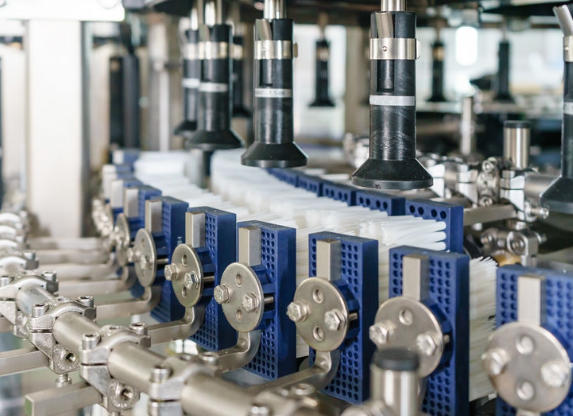
A valve actuator is a mechanism that opens, closes, or modulates a valve without manual intervention. By converting electrical or pneumatic energy into mechanical motion, actuators automate flow control for liquids, gases, steam, slurries, and other media.
Actuators are especially critical when:
- Valves cycle frequently and must operate reliably over many thousands of strokes.
- Accurate throttling or modulating control is required over a wide range.
- Valves are installed in hazardous, remote, or hard‑to‑reach areas.
- Safety or regulatory requirements demand reliable fail‑safe behavior and traceable control.
There are two main motion types:
- Linear: Actuators move a stem in a straight line, commonly used with gate and globe valves.
- Rotary: Actuators apply torque to rotate the valve shaft, commonly used with ball and butterfly valves.
Both electric and pneumatic designs can be built as linear or rotary actuators, but rotary pneumatic units are especially common in automated ball and butterfly valve systems.
The table below summarizes the most important differences between electric and pneumatic actuators for valve applications.
| Factor | Electric Actuators | Pneumatic Actuators |
|---|---|---|
| Power source | Electricity, typically 24 VDC or an AC supply. | Compressed air from a centralized compressor system. |
| Motion & control | Very high precision, excellent repeatability, easy integration with modern control systems. | Fast actuation, well suited for on/off and simple end‑to‑end positioning. |
| Force / torque | Limited by motor and gear size; higher force often increases cost and size. | High force and torque per unit size; ideal for large valves and high pressures. |
| Speed | Good, but speed and thrust must be balanced; higher thrust usually reduces speed. | Very fast response, especially for emergency shutdown and frequent cycling. |
| Initial cost | Higher per actuator, but no plant‑wide air system is required. | Lower actuator unit cost, but requires compressor, air distribution, and accessories. |
| Operating cost | Often lower over time due to better energy efficiency and less leakage. | Can be higher due to compressor energy use and air leaks. |
| Maintenance | Fewer moving parts, no air quality issues, easier condition monitoring. | Requires periodic maintenance of cylinders, seals, solenoid valves, and air system. |
| Environment & emissions | No supply gas venting, supports low‑emission and sustainability‑driven projects. | May vent instrument gas; emissions mitigation may be required. |
| Automation & connectivity | Strong support for remote operation, diagnostics, and smart control. | Remote control possible but often needs additional accessories and components. |
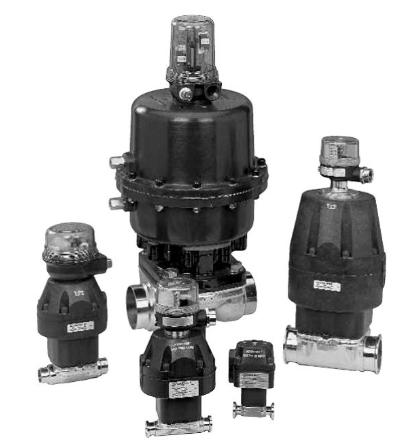
Pneumatic actuators use compressed air to generate linear or rotary motion, making them a robust choice for demanding industrial environments.
Common pneumatic actuator designs include:
- Diaphragm and piston‑cylinder designs for linear motion.
- Rotary designs such as rack‑and‑pinion, scotch yoke, modified scotch yoke, vane, and diaphragm rotary actuators.
- Spring‑return configurations that provide a defined fail‑open or fail‑close position on loss of air supply.
A typical pneumatic system requires:
- The actuator itself.
- An air compressor sized to the total air demand.
- Air tubing, filters, regulators, and lubricators.
- Solenoid valves or positioners to switch or modulate air to the actuator.
Pneumatic actuators are often selected because they offer high force and speed in a compact footprint when adequate air pressure is available. Key benefits include:
- High torque and thrust for large valves and high‑pressure applications.
- Very fast response and high duty cycles, ideal for emergency shutdown, blow‑down, and high‑cycle automation.
- Rugged construction and high tolerance to harsh environments, temperature extremes, dust, and moisture.
- Straightforward mechanics, simplifying troubleshooting and allowing operation in areas where electrical equipment is restricted.
When a facility already operates a properly sized compressed air system, adding additional pneumatic actuators can be a cost‑effective way to scale automation.
While the initial unit price of a pneumatic actuator is often lower than an equivalent electric actuator, the full system cost must account for:
- Compressor purchase and installation.
- Air distribution piping and fittings.
- Solenoid valves, positioners, and control wiring.
- Ongoing energy cost to run compressors.
- Maintenance to address cylinder wear, seal degradation, and air leaks.
If the compressor is oversized relative to demand, unused compressor capacity wastes energy and money, reinforcing the importance of correct air system sizing.
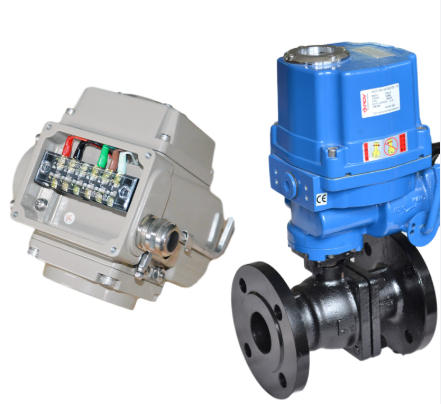
Electric actuators (often called electric motor operators) use electric motors, gear trains, and screw mechanisms to deliver accurate, repeatable valve motion.
Electric actuators achieve exceptional positioning accuracy thanks to components such as high‑precision screws and anti‑backlash mechanisms.
- High‑end designs can reach extremely fine positioning accuracy.
- Standard industrial units typically achieve precision more than sufficient for most process control tasks.
Because voltage and current are easier to control than air pressure, electric actuators excel in accuracy and repeatability, especially for multi‑point positioning and complex motion profiles.
Electric actuators offer several compelling advantages in modern automation projects:
- High precision and repeatability for tight process control in dosing, blending, and quality‑sensitive operations.
- Easy integration with control systems, PLCs, SCADA, and industrial networks through standard communication options.
- Lower operating costs over time in many applications, since energy is used more efficiently without compressor losses or leaks.
- Reduced emissions, as they do not rely on venting instrument gas and support low‑emission facility designs.
- Built‑in diagnostics and remote control, enabling offsite operation, condition monitoring, and predictive maintenance strategies.
Electric actuators can be heavier and more expensive initially, particularly when high force or torque is required, but their lifecycle value is often favorable in applications emphasizing precision, data, and efficiency.
Due to the nature of electric motors and mechanical transmission, an electric actuator's thrust and speed are interdependent:
- More thrust is available only at lower speeds.
- At higher speeds, the available thrust is reduced.
This makes initial sizing especially important. If later you need more thrust or higher speed beyond the chosen design, upgrading may require replacing the actuator with a larger, more powerful unit.
Across many regions, environmental regulations are tightening, with stricter emission limits for oil and gas, petrochemical, and other process industries.
Traditional pneumatic systems using supply gas can vent methane or other hydrocarbons into the atmosphere during normal operation. Electric actuators, in contrast, do not consume supply gas and do not emit process emissions, aligning closely with environmental, social, and governance objectives and low‑emission facility designs.
Where pneumatic actuators remain in use, plants can:
- Install recovery systems to capture vented gas.
- Convert systems to use instrument air instead of natural gas.
- Implement tighter leak management and compressor efficiency programs.
These pressures are a key driver behind the growing adoption of electric actuator solutions in new and retrofit valve automation projects worldwide.
Choosing between electric and pneumatic valve actuators depends on your application, operating environment, and lifecycle cost targets.
Clarify the following before selecting an actuator:
- Valve type and size (ball, butterfly, gate, globe; diameter; torque or thrust requirement).
- Media and pressure (water, wastewater, chemicals, steam, gas; operating pressure range).
- Function: on/off, open/close, or modulating control with multiple positions.
- Cycle frequency and duty cycle (occasional moves versus continuous throttling).
- Ambient conditions (temperature extremes, corrosive atmosphere, hazardous area classification).
Ask these power‑related questions:
- Do you already have a reliable compressed air system with capacity to spare?
- Is electric power readily available near the valve location, and what voltage is standard on site?
- Are you trying to eliminate or reduce reliance on compressed air for energy or maintenance reasons?
If robust air infrastructure exists, pneumatic actuators are often economical. If your facility is expanding digital control and wants to simplify utilities, electric actuators may be the better long‑term fit.
When comparing costs, look beyond purchase price:
1. Initial costs
- Electric actuator hardware versus pneumatic actuator plus compressor and air system.
2. Operating costs
- Electricity for motors versus electricity for compressors, plus losses from air leaks.
3. Maintenance costs
- Frequency of rebuilds, seal replacements, solenoid service, and troubleshooting.
4. Downtime costs
- Impact of actuator failure on production, safety, and compliance.
When total cost of ownership is considered, electric actuators often provide an advantage in precision applications and facilities focused on energy and emission reductions.
To make the electric vs pneumatic decision more concrete, consider these typical scenarios from common industrial practice.
- Challenge: Continuous operation, corrosive atmospheres, and the need for accurate flow control in filtration, chemical dosing, and backwash systems.
- Trend: Many utilities favor electric actuators for critical modulating valves to improve precision, enable remote SCADA control, and support low‑emission operations.
- Challenge: Hazardous locations, high pressures, emergency shutdown requirements, and strict environmental regulations.
- Typical solution: Pneumatic actuators remain popular for large on/off valves and emergency shutdown service due to high speed and force, often combined with mitigation measures to minimize emissions.
- Challenge: High‑precision positioning, synchronized motion, and complex motion profiles.
- Typical solution: Electric actuators are widely used where multi‑axis control, fine positioning, and integration with automation platforms are required.
These examples show that no single technology is “best” in every scenario. The optimal choice depends on the combination of performance, environment, and lifecycle objectives.
Use this simple checklist when evaluating electric vs pneumatic actuators for your next project.
1. Define the valve and process
Identify valve type, size, pressure, and required torque or thrust.
2. Clarify control needs
Decide if the application is on/off, modulating, or requires advanced motion profiles.
3. Review power and utilities
Check availability and reliability of electric power and compressed air in the installation area.
4. Assess environmental constraints
Confirm temperature range, corrosive conditions, hazardous classification, and emission targets.
5. Estimate lifecycle cost
Compare energy, maintenance, and downtime costs over 5–10 years, not just initial purchase price.
6. Plan for future expansion
Consider whether future plant expansions, remote monitoring, or digitalization will favor electric actuators.
7. Consult experienced partners
Work with a specialized valve manufacturer or automation expert to verify sizing, materials, and actuator options that best fit your long‑term goals.
To simplify, use the following rules of thumb for electric vs pneumatic actuators selection.
Choose electric actuators when:
- You need highly accurate and repeatable positioning.
- Integration with modern control systems and remote diagnostics is a priority.
- Environmental policies discourage venting gas or require low‑emission solutions.
- Lifecycle energy efficiency and reduced maintenance are key objectives.
Choose pneumatic actuators when:
- You require very high torque or fast on/off action.
- A reliable, well‑sized compressed air system is already in place.
- The application is primarily end‑to‑end (open/close) with frequent cycling.
- The environment is harsh, hot, or in areas where electrical systems are restricted.
Selecting the right electric or pneumatic actuator is fundamental to achieving safe, efficient, and reliable valve automation over the entire life of your system. If you are planning projects in water treatment, municipal pipelines, or industrial fluid control, now is the ideal time to review your actuator strategy. Contact our engineering team to discuss your application, compare tailored electric and pneumatic solutions, and receive a complete valve and actuator package designed for your performance, reliability, and sustainability goals.
Contact us to get more information!
In many applications, yes. Electric actuators convert electrical energy directly into motion, while pneumatic systems lose energy in compression, distribution, and leakage, which can significantly raise operating costs over time. The exact comparison depends on duty cycle, system design, and maintenance practices.
Pneumatic actuators can be used for throttling with suitable positioners, and they can achieve good control in many processes. However, they generally do not match the fine positioning accuracy and repeatability of electric actuators, especially for multi‑point positioning and complex motion profiles.
Pneumatic actuators are often more tolerant of extreme temperatures, dust, and moisture, and they do not introduce electrical ignition sources, which makes them a common choice in hazardous areas. Electric actuators can also be used in these environments when properly specified with explosion‑proof housings, sealed enclosures, and appropriate protection ratings.
Stricter emission regulations increasingly influence actuator selection. Many operators move toward electric actuators because they do not vent supply gas and help reduce greenhouse gas emissions. Where pneumatic systems are still preferred, facilities may need to invest in emission control and monitoring measures to remain compliant.
A frequent mistake is underestimating required thrust or torque and assuming speed and force can be increased later without hardware changes. For electric actuators, significant performance increases often require selecting a larger unit from the start, so accurate sizing based on valve characteristics and process conditions is essential.
1. https://www.flomatic.com/news/electric-vs-pneumatic-actuators-why-they-are-important/
2. https://www.geminivalve.com/pneumatically-vs-electrically-actuated-ball-valves-which-should-you-use/
3. https://assuredautomation.com/news-and-training/electric-vs-pneumatic-rotary-actuators/
4. https://blog.orientalmotor.com/pneumatic-actuators-vs-electric-actuators-which-is-better
5. https://jhfoster.com/automation-blogs/electric-actuators-vs-pneumatic-actuators/
6. https://valve-elephant.com/blogs/articles/benefits-of-using-electric-actuators-in-valve-automation
7. https://yorkpmh.com/resources/hydraulic-vs-pneumatic-vs-electric-actuators/


