

Views: 222 Author: Rebecca Publish Time: 2026-02-21 Origin: Site


Content Menu
● What Is a Ball Valve and Why It Matters
● Core Ball Valve Types by Actuation
>> Electric (Motorized) Ball Valves
>> Trunnion-Mounted Ball Valves
>> V-Port (Control) Ball Valves
● Full Port vs Reduced Port Ball Valves
● One-Piece, Two-Piece, and Three-Piece Ball Valve Designs
● Soft-Seated vs Metal-Seated Ball Valves
● Control Options and Safety Features
>> Lever vs Handwheel Operation
● Ball Valve Selection for Water Treatment and Municipal Pipelines
● Practical Comparison of Ball Valve Options
● Recent Innovations in Ball Valve Design and Materials
● Work With a Specialist Ball Valve Manufacturer
● Take the Next Step for Your Project
● Frequently Asked Questions (FAQ)
>> 1. Are ball valves suitable for throttling in water systems?
>> 2. When should I choose full-port instead of reduced-port ball valves?
>> 3. What materials are best for ball valves in potable water service?
>> 4. How do I decide between electric and pneumatic actuators?
>> 5. Why are trunnion-mounted ball valves preferred for large-diameter pipelines?
Ball valves are critical to the safe, efficient operation of modern water treatment plants and municipal pipeline networks, and the right ball valve type has a major impact on lifecycle cost, leakage performance, and automation readiness. This guide explains the main ball valve types, their construction, and real-world applications, with a special focus on water and wastewater systems, EPC projects, and OEM or brand owners sourcing from professional manufacturers.
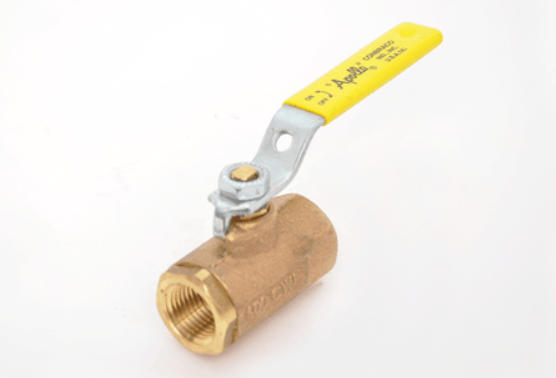
A ball valve is a quarter-turn shut-off valve that uses a perforated spherical ball to start or stop flow through a pipeline. When the ball bore aligns with the pipeline, flow is fully open; when it is rotated 90 degrees, the flow path is blocked and the valve provides tight isolation.
For water treatment and municipal applications, ball valves are widely used because they offer:
- Fast quarter-turn operation for emergency shut-off and maintenance isolation.
- Low pressure drop, especially in full-port designs, which helps maintain energy efficiency in pumping systems.
- Reliable sealing in clean and moderately contaminated media, particularly when using soft-seated designs.
A simple example: on a chemical dosing line in a wastewater plant, a correctly selected ball valve provides safe isolation for maintenance, minimizes leakage risk, and can be automated as the plant scales up.
Manual ball valves are operated by hand using a lever or handle that rotates the ball one quarter turn between fully open and fully closed. They are simple, cost-effective, and do not require any power or control system.
Typical applications:
- Local isolation on water distribution branches and building service connections.
- Manual shut-off on filter inlets or outlets and pump suction or discharge lines.
- Temporary or backup isolation where automation is not required.
Because of their simplicity and low total cost, manual ball valves are often the default choice in municipal pipeline projects for non-critical lines and drain or blow-off points.
Electric ball valves use an electric actuator mounted to the valve via an ISO-5211 pad to open or close the ball based on a command signal. They are ideal where the system is controlled by PLCs, SCADA, or building management systems and where position feedback is needed.
Use cases include:
- Automated flow control in water treatment plants, such as backwash sequencing and filter changeover.
- District cooling or HVAC networks requiring scheduled or remote operation.
- Underground or hard-to-access valve chambers where manual operation is impractical.
Selecting valves with standardized ISO-5211 mounting pads simplifies future upgrades from manual to electric actuation in large projects.
Pneumatic ball valves use compressed air to drive the actuator, providing very fast and repeatable cycling. They are particularly suited for process plants where an instrument air system already exists.
Key advantages:
- High-speed operation for emergency shut-off and sequencing applications.
- Intrinsically safer in explosive atmospheres, as they avoid electric motors at the valve.
- Robust performance in high-cycle environments, such as industrial water recycling systems.
Chemical dosing skids, sludge handling lines, and industrial effluent treatment systems often prefer pneumatic actuation for reliability and safety.
Cryogenic ball valves are engineered for very low temperatures and use extended stems and special materials to avoid seat damage and to keep packing away from extreme cold. They are typically designed for liquefied gases and low-temperature service.
Typical applications:
- LNG terminals and cold energy recovery systems.
- Liquid oxygen and nitrogen storage in industrial gas facilities.
Although less common in standard potable-water projects, cryogenic ball valves appear in integrated utility systems where water and cryogenic gases are handled in the same industrial complex.
High-pressure ball valves are designed for elevated working pressures, using forged bodies, thicker walls, and reinforced seats. These valves maintain leak-tight sealing even under severe pressure fluctuations.
They are used in:
- High-pressure hydraulic systems for water infrastructure equipment, such as movable gates.
- Test benches and pressure boosting systems in industrial water treatment.
- Oil and gas and power generation systems that integrate process cooling water.
Engineers should confirm whether the system truly needs high-pressure construction, because these valves are heavier and more expensive than standard designs.
Trunnion-mounted ball valves support the ball at both the top and bottom, reducing operating torque and improving sealing at high pressures and large diameters. Instead of the ball floating between seats, the trunnion keeps it fixed while the seats move.
Applications include:
- Large-diameter water transmission pipelines and trunk mains.
- Oil, gas, and petrochemical pipelines where both high pressure and tight shut-off are mandatory.
For DN400 and above in municipal or desalination projects, trunnion ball valves are often preferred to keep actuator sizes manageable and to ensure stable sealing.
V-port ball valves have a V-shaped notch in the ball or seat, providing more predictable flow characteristics during opening and closing. That makes them suitable for throttling as well as on or off service.
In water and wastewater engineering, V-port designs are used for:
- Chemical dosing control for coagulants, pH correction, and disinfectants.
- Flow balancing between parallel treatment trains.
- Temperature and flow control in district heating or cooling networks.
Compared with traditional globe control valves, V-port ball valves often reduce cost and footprint while delivering adequate control accuracy for many utility applications.
Full-port (full-bore) ball valves have an internal bore equal to the pipeline's inner diameter, minimizing pressure drop and turbulence. Reduced-port (standard-port) ball valves use a smaller internal bore, which saves material and cost at the expense of higher velocity and pressure loss.
Key selection points:
- Full port is preferred for slurry, pigging, or critical energy-efficient pumping systems, as it reduces the risk of clogging and lowers pumping costs.
- Reduced port is often acceptable for clean water and non-critical lines where budget is a major constraint, especially at large diameters.
- In high-head pumping stations, the cumulative pressure drop across many partially open valves can significantly increase energy consumption.
On long raw-water transmission mains, full-port trunnion ball valves help maintain system efficiency and reduce pump size requirements.
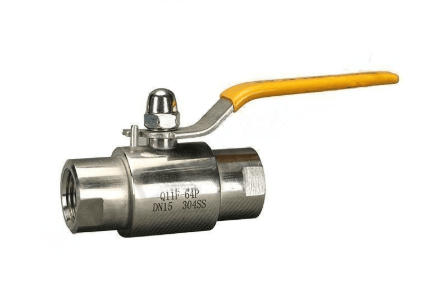
One-piece ball valves use a single valve body enclosing the ball and seats, resulting in a compact, low-cost design. Because the body cannot be disassembled without cutting the valve out of the line, in-situ maintenance is limited.
They are best suited for:
- Light-duty applications in building services and small-bore water lines.
- Systems where replacement is more economical than repair.
Two-piece ball valves consist of two separate body parts, one of which is usually threaded or bolted to the other. This allows the valve to be removed for maintenance or internal inspection while still keeping cost lower than three-piece designs.
Typical roles:
- General water distribution and industrial utility lines.
- OEM equipment where moderate maintenance access is required.
Three-piece ball valves have a central body section housing the ball, seats, and stem, clamped between two end connections. The center section can be removed for cleaning, seat replacement, or inspection without disturbing the pipe end connections.
Advantages for operators:
- Maximum maintainability, especially in continuous-process water treatment and industrial plants.
- Ability to switch end connections such as threaded, welded, or flanged while keeping the same valve internals.
- Better long-term total cost of ownership where downtime is expensive.
In high-value water reuse plants, three-piece stainless steel ball valves are frequently used on dosing, CIP, and critical isolation lines to simplify maintenance.
Soft-seated ball valves use PTFE or other engineered polymers as seat material, achieving very tight sealing in low- to medium-temperature services. They are widely used in clean water, potable water, and many municipal applications.
Benefits:
- Excellent shut-off performance for water and many chemicals.
- Lower operating torque compared with metal seats.
Limitations:
- Temperature limits typically around the upper range of common soft-seat materials.
- Reduced resistance to abrasion from slurries or heavily contaminated media.
Metal-seated ball valves rely on metal-to-metal contact between ball and seat, often with special coatings for wear resistance. They are chosen where high temperature, abrasive particles, or corrosive chemicals would rapidly damage soft seats.
Typical uses:
- High-temperature steam or hot-gas lines that tie into water and condensate systems.
- Sludge lines or abrasive industrial wastewater where erosion is a concern.
The trade-off is slightly less perfect sealing but much higher durability in severe conditions.
Lever-operated ball valves provide fast visual indication of open or closed position and quick manual actuation. For high-pressure or large-diameter valves that require higher torque, a gear operator with handwheel may be installed instead.
Considerations:
- Levers are ideal for small-bore, low-torque water lines and building services.
- Gear-operated handwheels are better for trunk mains and large-diameter isolation valves where controlled closing speed helps prevent water hammer.
Vented ball valves incorporate a vent hole in the ball or body to prevent trapped pressure when the valve is closed. This is important when handling compressible fluids or when thermal expansion could create dangerous internal pressure.
In water treatment skids, vented ball valves may be used on test loops, sampling points, and chemical dosing lines to prevent pressure buildup between isolation points.
When specifying ball valves for water treatment plants and municipal networks, engineers should move beyond nominal size and pressure rating to a structured decision process. A practical approach is to evaluate application, media, pressure and temperature, maintenance strategy, and automation needs.
Key steps:
1. Define function: on or off isolation, throttling, or safety function such as emergency shut-off.
2. Check medium: potable water, raw water with solids, sludge, or chemical solutions, and select seat and body materials accordingly.
3. Choose port type: full port for minimal pressure loss and pigging, reduced port where cost and space are prioritized.
4. Select construction: one-, two-, or three-piece depending on maintenance philosophy and downtime cost.
5. Consider actuation: manual, electric, or pneumatic, and ensure ISO-5211 pad compatibility for current or future automation.
A water treatment EPC contractor might, for example, use full-port stainless steel three-piece ball valves with pneumatic actuators on backwash lines, and more economical reduced-port manual ball valves on non-critical bypasses.
| Aspect | Manual | Electric | Pneumatic | Trunnion-Mounted | V-Port Control |
|---|---|---|---|---|---|
| Typical role | Local isolation in water lines | Automated isolation and control in plants | High-cycle, fast-acting shut-off | Large-diameter, high-pressure mains | Throttling and flow modulation |
| Power source | None | Electrical supply | Compressed air | Mechanical with any actuator | Same as base valve |
| Maintenance | Low, typically replacement | Periodic actuator service | Air system and actuator upkeep | Similar to standard ball valves, with heavier internals | Similar to base, with additional trim inspection |
| Cost level | Lowest overall | Higher initial investment | Medium to high | High for large DN and high pressure | Higher than standard bore designs |
Recent years have seen meaningful improvements in ball valve construction that benefit water and municipal users. Enhanced split-body designs simplify maintenance and improve sealing integrity, especially in high-cycle service.
Notable trends include:
- Wider use of stainless steel for bodies and trim, improving corrosion resistance in aggressive or saline waters.
- More standardized ISO-5211 mounting interfaces, making actuation upgrades easier across brands.
- Improved coatings and surface finishes on metal seats and balls, extending life in slurry and wastewater applications.
For global distributors and OEM valve brands, partnering with manufacturers that integrate these innovations while complying with relevant international standards adds both performance and branding advantages.
Selecting the right ball valve type is only part of a successful project; partnering with a specialized manufacturer ensures consistent quality, technical support, and on-time delivery. Manufacturers focused on water treatment and municipal pipelines can provide application-specific advice, customized materials, and OEM branding support for global distributors and valve brands.
If you are planning a new water treatment plant, municipal pipeline upgrade, or OEM equipment line, it is wise to involve your valve partner early in design to optimize valve types, materials, and actuation strategy for performance and lifecycle cost.
If you are designing or upgrading a water treatment plant, municipal pipeline network, or OEM equipment line and want reliable, long-life ball valve solutions, now is the time to define your valve strategy in detail. Share your project data, including medium, working pressure, temperature range, design standards, and preferred actuation options, and work directly with an experienced engineering team to match each application point with the most suitable ball valve configuration. A focused technical review at this stage will help you reduce leakage risk, simplify future maintenance, and control total installed cost across the entire lifecycle of your project.
Contact us to get more information!
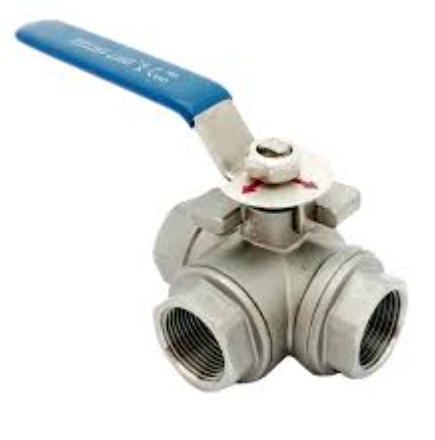
Ball valves are primarily designed for on or off isolation, but V-port ball valves can provide stable throttling for many water and chemical applications when correctly sized and controlled. They are often chosen when a compact control solution is needed and when moderate control accuracy is acceptable.
Full-port valves are recommended where low pressure drop, pigging, or slurry handling are important design factors. Reduced-port valves are adequate for many clean-water lines where flow capacity is sufficient and cost or compact dimensions are a priority.
Stainless steel and approved brass or ductile-iron bodies with suitable internal coatings are widely used in potable water systems. Seat and seal materials should comply with relevant drinking-water standards and be resistant to the specific disinfectants used in the network.
Use electric actuators where you need precise remote control, position feedback, or where compressed air is not available. Choose pneumatic actuators for high-cycle, fast-acting, or hazardous environments with an existing air supply, especially in larger plants with central instrument air systems.
Trunnion-mounted designs reduce operating torque and improve sealing under high pressure, which keeps actuator size manageable and increases reliability. This is critical for large-diameter water transmission and industrial pipelines, where stable performance and controlled closing are essential.
1. https://valveman.com/blog/ball-valve-types-and-applications/
2. https://en.wikipedia.org/wiki/Ball_valve
3. https://www.tangovalve.com/types-of-ball-valves-features-functions-and-best-applications/
4. https://cncontrolvalve.com/different-types-of-ball-valves/
5. https://www.bestflowvalve.com/ball-valve-types-decoded.html
6. https://www.denzwater.com/articles/types-of-valves-used-in-wastewater-treatment-plants/en
7. https://tameson.com/pages/ball-valve-introduction
8. https://wfvalve.com/a-comprehensive-guide-to-ball-valves-types-materials-applications-and-maintenance/


