

Views: 222 Author: Rebecca Publish Time: 2026-02-23 Origin: Site


Content Menu
● What Is a Ball Valve and How Does It Work?
● Can Ball Valves Really Be Used for Flow Control?
● Standard Ball Valves vs V‑Port Ball Valves for Flow Control
>> Ball Valve Types and Flow Control Capability
● How Standard Ball Valves Behave in Throttling Service
>> Key Characteristics When Throttling with Standard Ball Valves
● How V‑Port Ball Valves Achieve Precise Flow Control
● Advantages of Ball Valves in Flow Control Applications
● Disadvantages and Risks of Using Ball Valves for Flow Control
● When Is It Appropriate to Use Ball Valves for Flow Control?
>> Situations Where Ball Valves Are Not Recommended for Control
● Practical Selection Guide: Choosing the Right Ball Valve for Flow Control
>> 1. Define the Control Objective
>> 2. Analyze Process Conditions
>> 3. Decide Between Standard and V‑Port Ball Valves
>> 4. Size and Characterize the Valve
>> 5. Specify Actuation and Control
● Typical Applications of V‑Port Ball Valves in Water Treatment and Municipal Systems
● Best Practices: How to Use Ball Valves for Flow Control Without Damaging the System
>> For Standard Ball Valves Used Temporarily for Throttling
>> For V‑Port Ball Valves in Continuous Control Service
● Why Work with Tianjin Wode Valve Co., Ltd. for Ball Valve Flow Control?
● Take the Next Step with Tianjin Wode Valve Co., Ltd.
● Frequently Asked Questions (FAQ)
>> 1. Can I use a standard ball valve to control flow?
>> 2. What makes a V‑port ball valve better for flow control?
>> 3. Is a globe valve always better than a ball valve for throttling?
>> 4. How do I know if my ball valve is being damaged by throttling?
>> 5. What information should I provide when asking a manufacturer to size a control ball valve?
As a leading Chinese valve manufacturer, Tianjin Wode Valve Co., Ltd. helps global distributors, EPC contractors, and OEM brands choose the right ball valve solution for safe and reliable flow control in water treatment and municipal pipeline systems.
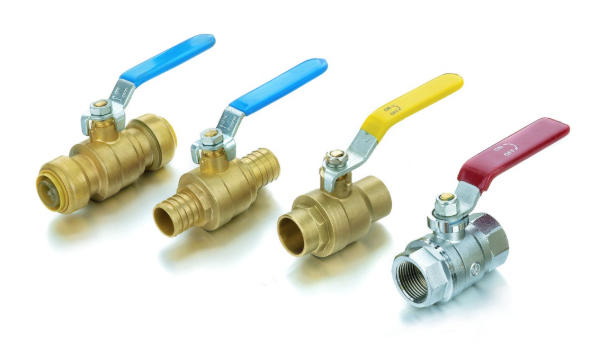
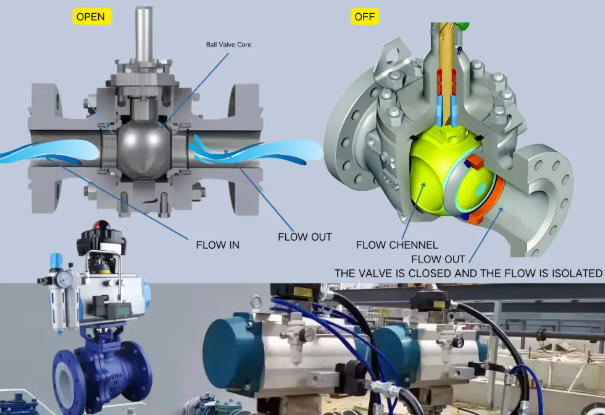
A ball valve is a quarter‑turn valve that uses a perforated spherical ball to start or stop fluid flow. When the hole through the ball aligns with the pipeline, the valve is fully open and media flows freely with low pressure drop.
When the handle is rotated 90 degrees, the ball turns so the solid side faces the flow path and completely blocks the passage, creating a tight shutoff. A stem connects the ball to a handle or actuator, allowing manual or automated operation in just a quarter turn.
Ball valves are widely used because they offer tight sealing, simple design, and long service life, even under high pressure and temperature. In industrial service, quality ball valves can handle very high pressures and elevated temperatures when designed and rated accordingly.
The short, practical answer is: yes, but only in specific ways and not with every ball valve design.
- Standard ball valves (full port or reduced port) are primarily designed for on/off isolation, not precision throttling.
- They can be partially opened to reduce flow, but the flow‑position curve is highly nonlinear, making accurate adjustment difficult.
- V‑port (segmented) ball valves are purposely engineered for flow control, offering more predictable, quasi‑linear or equal‑percentage flow characteristics.
In other words, you can use a ball valve for flow control, but you must choose the right type and operate it correctly to avoid cavitation, seat damage, and unstable flow.
| Valve type | Typical design | Best use | Flow control accuracy | Main advantages | Main limitations |
|---|---|---|---|---|---|
| Standard port ball valve | Reduced bore through ball | On/off isolation where some pressure drop is acceptable | Poor for precise throttling, especially at low flows | Compact, economical, widely available | Nonlinear flow curve, high velocity at small openings, seat wear risk |
| Full port ball valve | Bore matches pipe ID | On/off isolation, piggable lines, low pressure drop systems | Slightly better than reduced port, but still not a control valve | Minimal pressure drop, easy cleaning, high Cv | Still not linear, unstable at small openings for continuous control |
| V‑port ball valve | V‑shaped notch in ball or seat | Continuous flow regulation, process control loops | Good to excellent, near linear or equal‑percentage characteristic | Precise control, high turndown ratio, durable in throttling | Higher cost than standard ball valves, requires correct sizing and trim selection |
This comparison makes it clear that only V‑port ball valves are genuinely intended for long‑term flow regulation, while standard and full‑port versions remain primarily shut‑off devices.
Standard ball valves can technically be “cracked” open to reduce flow, but this behavior comes with predictable drawbacks.
- Nonlinear flow response: Small handle movements cause large flow changes, especially around 10–30% open, making fine tuning difficult.
- High velocity at small openings: When the valve is barely open, fluid jets through a narrow opening, increasing velocity and erosion risk.
- Seat and trim wear: Localized high‑velocity flow causes erosion, wire‑drawing, and pitting on seats and ball surfaces.
- Potential cavitation and noise: At certain pressure drops, vapor bubbles form and collapse, damaging metal and causing vibration.
- Pressure surges: Fast quarter‑turn operation can induce water hammer in long pipelines if the valve is snapped open or closed.
Because of these factors, most engineers avoid using standard ball valves as continuous control valves in critical industrial duties.
V‑port ball valves, also called segmented ball valves or control ball valves, are engineered specifically to solve throttling problems.
- V‑shaped notch in the ball or seat, often 30°, 60°, or 90°, creating a controlled opening profile as the valve rotates.
- Linear or equal‑percentage flow characteristic, so flow increases more proportionally with the opening angle.
- Hardened trims and special seat materials to resist high‑velocity erosion at small openings.
- Actuator‑ready design, often with ISO mounting pads for precise positioning via electric or pneumatic actuators.
- High turndown ratio: The same valve size can handle a wide range from minimum to maximum flow.
- Stable control at low openings: Better low‑flow stability compared with standard ball valves.
- Ability to replace conventional globe valves in many clean and slightly dirty service applications, with lower pressure drop when fully open.
A properly sized V‑port ball valve can often deliver both isolation and flow regulation within one compact unit, which is attractive in space‑constrained plants and valve chambers.
Even when compared with other control valve types, ball valve‑based solutions offer several system‑level advantages in water treatment and municipal infrastructure.
- Compact and lightweight: Ball valves usually have a smaller footprint and lower mass than globe valves, simplifying support and installation.
- Low pressure drop at full open: Full port designs minimize energy loss, which is valuable in large pumping systems and long pipelines.
- Fast quarter‑turn operation: Ideal for emergency shutdown, automatic protection functions, or quick flushing sequences.
- Tight shutoff: Soft‑seated designs can achieve bubble‑tight isolation, reducing leakage and water loss.
- Flexible materials and end connections: Carbon steel, stainless steel, PVC, CPVC, threaded, flanged, grooved, and welded options suit different media and regional standards.
When combined with V‑port trims and suitable actuators, ball valves can provide both control and isolation within a single compact assembly.
To support sound engineering decisions, it is important to also explain the limitations and risks.
- Poor low‑flow throttling with standard designs: It is difficult to maintain stable flow at very low opening percentages.
- Erosion and seat damage: High velocity jets and cavitation at small openings can rapidly damage internal parts.
- Nonlinear response: This makes control loop tuning harder and can lead to oscillations if used with sensitive instrumentation.
- Water hammer risk: Fast quarter‑turn operation can create pressure spikes in long or elevated pipelines if not controlled.
- Not ideal for ultra‑precise control: For extremely fine flow control, such as dosing or very critical process loops, globe, needle, or diaphragm valves often perform better.
By acknowledging these issues, you help operators and designers make realistic decisions about where ball valves are appropriate.
The next step is to translate the technical characteristics into clear, practical guidance.
- General industrial and municipal flow regulation where moderate control accuracy is acceptable.
- Water treatment processes such as filter backwash, bypass lines, flushing, and level control.
- Slurries and slightly dirty media where V‑port ball valves with hardened trims provide shearing action and resist clogging better than some globe valves.
- Systems requiring both isolation and control in a single valve body to save space and piping complexity.
- Continuous high‑precision control loops with tight tolerance requirements, such as some chemical dosing or high‑pressure boiler feed systems.
- Very low flow at high pressure drop, where cavitation and trim erosion would be severe.
- Applications with frequent small adjustments using standard ball valves instead of control‑grade V‑port designs.
In these cases, dedicated control valves are usually the safer and more economical choice over the full lifecycle.
This section provides a straightforward framework for selecting an appropriate ball valve for flow control in water treatment and municipal systems.
- Required flow range, including minimum and maximum flow rates.
- Acceptable control accuracy and response time.
- Whether the valve must also perform tight shutoff in the same position.
- Line size, pressure, and temperature ranges.
- Fluid type, such as clean water, raw water, slurry, seawater, or chemical‑laden water.
- Upstream and downstream piping configuration, including straight run availability and elevation changes.
- If the valve is mainly on/off with occasional rough throttling, a standard or full‑port ball valve may be acceptable.
- If the valve is part of a continuous control loop or a critical process, specify a V‑port or segmented ball valve with appropriate trim and actuator.
- Use Cv or Kv data to match required flow at expected pressure drop.
- Select the V‑port angle, such as 30°, 60°, or 90°, based on desired turndown and sensitivity.
- Confirm that cavitation limits and noise thresholds are respected for the chosen valve size.
- Manual handles for simple, non‑critical adjustments.
- Pneumatic or electric actuators for automated flow control under PLC, DCS, or building management systems.
- Positioners and feedback instruments for precise and repeatable throttling duties.
This structured approach helps engineers move from a basic requirement to a well‑defined and documented valve specification.
It is helpful to connect valve selection to concrete application scenarios.
- Raw water intake and distribution, regulating flow from rivers, reservoirs, or wells into treatment plants.
- Filter inlet and outlet control, balancing flow across multiple filter trains to maintain stable filtration rates.
- Backwash and blow‑down control, managing backwash intensity and duration while protecting filter media and piping.
- Chemical dosing lines, where moderate precision is required and fluids are not extremely corrosive or viscous.
- District metered areas in municipal networks, where controlling zone flow and pressure helps reduce losses and manage demand.
These examples show where V‑port ball valves can provide robust, reliable control in real operating environments.
The following practical guidelines help protect both the valve and the pipeline system.
- Avoid very small openings; try to keep the valve roughly between 20% and 80% open.
- Do not leave the valve partially open for long periods in demanding services.
- Monitor for vibration and noise, which can be early warning signs of cavitation and internal damage.
- Plan upgrades to a properly sized V‑port or other control valve when the process stabilizes or becomes more critical.
- Use manufacturer sizing tools or data to match Cv or Kv to your flow and pressure conditions.
- Select appropriate materials and trims, such as stainless steel, coated balls, and reinforced seats, for corrosive or abrasive media.
- Combine the valve with high‑quality actuators and positioners to ensure accurate, repeatable positioning over the full stroke.
- Implement gradual opening and closing profiles in your control logic to minimize water hammer and pressure spikes.
With these practices, ball valve flow control can be both efficient and reliable in long‑term operation.
Tianjin Wode Valve Co., Ltd. specializes in valves for water treatment and municipal pipeline applications, serving global distributors, EPC contractors, and international valve brands. This experience gives our engineering team a deep understanding of water hammer, leakage control, energy consumption, and lifecycle cost in real projects.
We offer standard, full‑port, and V‑port ball valves in carbon steel, stainless steel, and other alloys, with flanged, threaded, welded, and grooved end connections to match regional and project‑specific standards. For EPC contractors and OEM brands, we also supply customized trims, actuator packages, and documentation that support design, commissioning, and long‑term maintenance.
By partnering with us, you gain access to both product quality and application expertise, helping ensure that every ball valve in your system meets its performance targets.
If you are planning or upgrading a water treatment plant, municipal pipeline, or industrial water system, and need reliable ball valves for both isolation and flow control, Tianjin Wode Valve Co., Ltd. is ready to support your project. Share your process data, including flow, pressure, media, and control requirements, and our technical team will recommend suitable standard or V‑port ball valves, size them correctly, and propose matching actuators and accessories.
Contact us today to discuss your application, request technical support, or obtain a tailored quotation package for your next project.
Contact us to get more information!
You can partially open a standard ball valve to reduce flow, but it is not ideal for continuous, precise throttling. Prolonged throttling can cause cavitation, seat wear, and unstable control, so it should only be used as a temporary or non‑critical solution.
A V‑port ball valve has a V‑shaped notch that produces a more linear or equal‑percentage flow characteristic as the valve opens. This allows stable regulation across a wide range of flows and reduces erosion risk, especially when combined with hardened trims and proper sizing.
Globe valves offer very accurate flow control and are often preferred in critical throttling services. However, V‑port ball valves can provide comparable control with lower pressure drop and a more compact design, making them attractive for many water and municipal systems.
Warning signs include unusual noise, vibration, difficulty operating the valve, or visible leakage past the seats. Inspection may reveal pitting, grooves, or wear on the ball and seats, indicating cavitation or high‑velocity erosion from improper throttling.
Provide line size, media type, minimum and maximum flow rates, upstream and downstream pressure, temperature range, and whether the valve is on/off, throttling, or both. Sharing control philosophy, such as manual, PLC, DCS, or BMS operation, as well as any noise or cavitation limits, will help the manufacturer recommend the most suitable standard or V‑port ball valve solution.
1. https://valveman.com/blog/can-ball-valves-be-used-for-flow-control/
2. https://www.cntopa.com/ball-valve-design-explained-how-it-controls-fluid-flow.html
3. https://tameson.com/pages/flow-control-ball-valve
4. https://www.huadeonline.com/news/can-you-use-a-ball-valve-to-control-flow.html
5. https://www.huadeonline.com/news/can-a-ball-valve-be-used-for-throttling.html
6. https://www.zjfvalve.com/Are-Fixed-Ball-Valves-Suitable-for-Throttling-id42894606.html
7. https://www.didtekvalve.com/Can-Ball-Valves-Be-Used-for-Flow-Control-id43016275.html
8. https://uk.rs-online.com/web/content/discovery/ideas-and-advice/ball-valves-guide
9. https://en.wikipedia.org/wiki/Ball_valve
10. https://www.dombor.com/mastering-ball-valve-flow-direction-expert-guide/


