

Views: 222 Author: Rebecca Publish Time: 2026-02-18 Origin: Site


Content Menu
● What Is an Air Release Valve and Why Sizing Matters
● Types of Air Valves Used in Water Systems
● Key Factors That Influence Air Release Valve Sizing
>> Operating Pressure and Pressure Differential
>> Pipeline Profile and High Points
● Step‑by‑Step Method: How to Size Air Release Valves
>> Step 1 – Determine Maximum Flow Rate
>> Step 2 – Estimate Air Volume to Be Released
>> Step 3 – Use Orifice Capacity Charts or Equations
>> Step 4 – Apply Practical “Rule‑of‑Thumb” Checks
>> Step 5 – Compare Results and Select the Larger Size
● Example: Sizing an Air Release Valve for a Municipal Pipeline
● Recommended Air Valve Locations in Water Systems
>> Pumps, Tanks, and Critical Equipment
● Installation Best Practices for Air Release Valves
>> Mounting and Piping Details
>> Isolation Valves and Maintenance Access
>> Materials and Corrosion Resistance
● Common Design Mistakes and How to Avoid Them
>> Relying Only on Nominal Pipe Size
>> Inadequate Maintenance Allowance
● Advanced Considerations: Standards and Engineering Tools
>> Hydraulic Modeling and Transient Analysis
● Practical Comparison: When to Use Each Type of Air Valve
● Targeted Action Call: Work With a Specialized Valve Partner
● FAQ
>> (1) How do I know if my air release valve is undersized?
>> (2) Should air release valves be the same size as the pipeline?
>> (3) What standards apply to air release valves in water systems?
>> (4) How often should air release valves be inspected?
>> (5) Are different sizing methods needed for wastewater systems?
Air in pipelines is a hidden threat that can reduce flow capacity, increase energy costs, and damage pumps and fittings if it is not properly controlled with correctly sized air release valves. For municipal water, wastewater, and industrial water systems, understanding how to select and size air release valves is essential for safe, efficient, and long‑term operation. As a professional valve manufacturer serving global water treatment and municipal pipeline projects, Tianjin Wode Valve Co., Ltd. helps distributors, EPC contractors, and OEM brands define the right air valve strategy to protect their systems.

Air release valves are automatic valves that discharge small, accumulated air pockets from pressurized pipelines while the system is in operation. They typically feature a small orifice and a float mechanism that opens to vent air and closes tightly when water reaches the valve.
If the air release valve is undersized, it cannot vent air fast enough, which can lead to:
- Trapped air pockets at high points
- Reduced effective cross‑section of the pipeline and increased headloss
- Unstable flow and increased risk of water hammer during transients
If the valve is oversized, it may:
- Cycle frequently and wear faster
- Be more expensive than necessary
- Be more sensitive to contamination or debris in some applications
Proper sizing ensures that the valve orifice has enough capacity to discharge air at the required flow and pressure conditions without compromising tight shutoff or long‑term reliability.
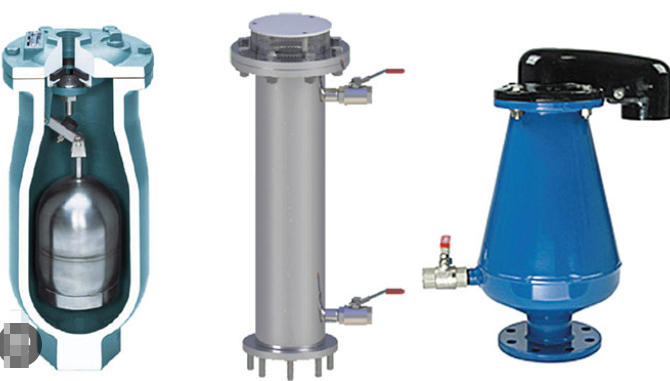
Selecting and sizing air release devices begins with understanding the three main types of air valves used in water and wastewater systems. Each type provides different functions, and many pipelines require a combination of them for full protection.
Air release valves are designed to continuously vent small air bubbles that collect at high points in pressurized pipelines during normal operation. They use a small precision orifice to release air without allowing liquid to escape, even under system pressure.
Typical applications include:
- High points along long transmission mains
- Points where air is expected to accumulate, such as changes in slope or reduced velocities
- Water treatment plant headers and distribution manifolds
Air/vacuum valves admit large volumes of air during pipeline draining or column separation and expel large volumes during filling. They have a larger orifice and are normally open when the pipeline is empty, closing when full line pressure is present.
They are typically installed at:
- High points on long rising mains
- Pump station discharge headers
- Long gravity lines where rapid filling or draining can occur
Combination air valves combine both air release and air/vacuum functions within one unit. They are widely used in municipal water and wastewater systems because they provide both large‑orifice and small‑orifice performance at a single location.
Typical locations include:
- Critical high points on long transmission mains
- Long horizontal sections where both large volumes and small accumulations of air are expected
- Pipeline sections with complex profiles or frequent slope changes
Correct sizing of air release valves depends on more than just nominal pipe size. Engineers should consider hydraulic, mechanical, and operational factors to ensure adequate air capacity and reliable performance.
The maximum liquid flow rate in the pipeline is one of the primary inputs for sizing air release and air/vacuum valves. When the pipeline is filled or drained, the same flow that moves water also represents the potential volume of air that must be admitted or discharged.
Key points:
- Higher flow rates typically require larger orifice areas.
- For gravity pipelines, flow is determined by pipe diameter, slope, and head conditions.
- For pumped systems, pump curves and operating points define maximum flow.
Air valves are sized at a specific pressure differential between the pipeline and atmosphere. Many engineering references recommend sizing so that air can be released with a differential of about 2 psi or less to avoid excessive vacuum or pressure surges.
Important considerations:
- Higher line pressure allows smaller orifices to discharge the same volume of air.
- Lower pressure conditions often require larger orifices to maintain sufficient capacity.
- Valve manufacturer sizing charts typically show discharge capacity as a function of orifice size and differential pressure.
The vertical alignment of the pipeline strongly influences where air valves are needed and how they should be sized. Air naturally migrates to high points, so these locations must be able to release accumulated air under operating conditions.
Common guidelines include:
- Air release or combination valves at pronounced high points.
- Valves at the beginning and end of long horizontal runs.
- Valves at regular intervals along long sections to manage distributed air.
Sizing must also reflect whether the system conveys clean water, raw water, or wastewater containing solids and gas. Air valves in wastewater applications may require different internal designs, larger clearances, and specific seat materials to resist clogging and corrosion.
Although there are multiple approaches, most engineering sizing methods follow a similar step‑by‑step process. Below is a simplified, practical approach that aligns with widely used industry guidelines.
First, determine the maximum design flow in the pipeline.
- For pumped systems, use the pump's rated flow at design head.
- For gravity systems, calculate flow using hydraulic formulas based on pipe diameter, slope, and roughness.
- Use consistent units, such as gpm or m³/h, for later calculations and chart lookups.
Next, determine the air volume that must be handled during system filling or when air accumulates at high points. Engineering documents provide formulas and tables to estimate air volumes as a function of flow, pipeline length, and profile.
For practical design:
- Use manufacturer charts that directly correlate maximum water flow with required air discharge.
- For complex networks, consider transient analysis software to evaluate air pocket formation and movement.
Once the required air discharge is known at a specified differential pressure, consult the valve manufacturer's capacity charts or equations. These resources indicate the minimum orifice diameter or valve size needed to pass the required air volume.
Key steps:
- Select the orifice size that provides the required capacity at or below the chosen pressure differential.
- When tables show multiple standard valve sizes, choose the smallest one that still meets capacity requirements.
Many engineers use simple rules of thumb as a check after performing detailed calculations. One common rule links pipe diameter to a typical minimum air release valve size.
Example rule‑of‑thumb relationships:
- A 12‑inch pipeline often uses a 1‑inch air release valve.
- A 24‑inch pipeline often uses a 2‑inch air release valve.
- Larger lines may require proportionally larger valves or multiple devices.
These guidelines do not replace calculations but help confirm that the selected size is reasonable for the pipeline.
Some engineering guides recommend performing sizing using two independent methods, such as a tabular method and a graph method, and then selecting the larger resulting valve size. This conservative approach helps ensure that the pipeline can safely exhaust air under a range of operating conditions.
If one method suggests a smaller valve and another suggests a larger one, the safer choice is to adopt the larger valve size that still satisfies shutoff and structural requirements.
A simple example helps illustrate the logic behind air release valve sizing.
Assume a municipal water transmission main with:
- Pipe diameter: 12 inches
- Maximum flow rate: 3,000 gpm
- System operating pressure at the high point: 100 psi
- Required pressure differential for air discharge: 2 psi
A sizing guide shows that the required air discharge is approximately 400 cfm under these conditions. The orifice capacity chart recommends:
- A 2‑inch valve with a smaller orifice provides insufficient capacity.
- A 3‑inch valve with a 5/16‑inch orifice meets the required discharge at 2 psi differential.
In this case, the 3‑inch air release valve is selected because it ensures that trapped air can be safely discharged from the high point without causing excessive pressure drop or surging.
Correct sizing must be coupled with correct placement along the pipeline. Established guidelines provide clear advice on where different types of air valves are needed in water and wastewater systems.
- Install combination or air release valves at pronounced high points where air will naturally accumulate.
- Use larger air/vacuum devices at the highest elevations on long rising mains or undulating profiles.
- Consider combination or air release valves at the beginning and end of long horizontal sections.
- Install additional air release valves at suitable intervals along long runs, depending on system criticality and profile.
- At pump discharge headers, use air/vacuum and air release valves to prevent air binding and reduce the risk of water hammer during starts and stops.
- At elevated tanks or reservoirs, use air valves to protect against vacuum conditions and to vent displaced air during filling.
Properly sized air release valves can still underperform if they are installed incorrectly. Following best practices improves reliability, safety, and maintainability.
- Install the valve as close to the top of the pipeline as possible to minimize pockets where air can remain trapped.
- Use a short riser or spool piece with minimal restrictions between the pipe and valve.
- Avoid sharp bends or undersized connectors that could limit air flow.
- Always provide an isolation valve under each air valve to allow inspection, cleaning, or replacement without draining the line.
- Include drain valves and sufficient clearance around the valve for safe maintenance work.
- In buried installations, use valve boxes or chambers that provide dry access and protect the valve from surface loads.
- Select body and trim materials compatible with the fluid, such as potable water, wastewater, seawater, or industrial liquids.
- For potable water, ensure compliance with relevant health and safety standards specified in local codes.
- In aggressive environments, consider stainless steel or high‑grade coatings to extend service life.
Field experience and industry literature consistently highlight recurring design mistakes with air release valves. Addressing these issues at the design stage can significantly reduce lifecycle costs.
A frequent mistake is simply matching air valve size to pipe diameter without considering flow rates, pressures, or air volumes. As a result, valves may be too small to vent critical air pockets or unnecessarily large and expensive.
Some designs only consider steady‑state conditions and overlook pressure transients caused by pump trips, power failures, or valve closures. During these events, column separation and vacuum conditions can cause rapid air movement that exceeds the capacity of undersized valves.
Designs that do not provide isolation valves, working space, or access structures make it difficult to maintain air valves, leading to clogging, leakage, or long‑term failure.
Modern water utilities increasingly rely on published standards and software tools to refine air valve sizing and placement.
Established manuals for air valves in water supply systems provide detailed instructions for:
- Selecting air release, air/vacuum, and combination valves
- Sizing orifices based on flow, pressure, and fluid properties
- Locating valves along different pipeline profiles
For large or critical pipelines, engineers often use hydraulic modeling tools to simulate transient behavior and air pocket movement. These models help:
- Identify locations where air accumulation or vacuum conditions are most severe
- Validate valve sizing decisions under multiple operating scenarios
- Optimize combinations of valve types for performance and cost
| Application scenario | Recommended valve type | Key sizing focus |
|---|---|---|
| High point on long pumped main | Combination air valve | Maximum flow, pressure, transient behavior |
| Short distribution main with minor profile change | Air release valve | Small air accumulation during normal operation |
| Pump station discharge header | Air/vacuum plus air release or combination | Rapid fill and drain volumes, vacuum protection |
| Long gravity sewer or raw water main | Combination air valves at peaks | Air and gas release, clog‑resistant design |
| Large diameter trunk main | Multiple valves in series | Distributed air removal, conservative sizing |
Correctly sizing and locating air release valves is critical to the safety, efficiency, and longevity of water and wastewater systems. If you are planning a new pipeline, upgrading an existing network, or troubleshooting air‑related performance issues, partnering with an experienced valve manufacturer can reduce design risk and long‑term operating costs.
Tianjin Wode Valve Co., Ltd. offers engineering‑driven air valve solutions tailored to municipal, industrial, and water treatment projects worldwide. Share your pipeline profile, design flow, and operating pressures with our technical team, and we will prepare a detailed air valve sizing and selection proposal aligned with your project's performance, reliability, and budget requirements.
Contact us to get more information!
If you observe recurring air pockets at high points, reduced flow capacity, or frequent pressure fluctuations, your air release valve may not be discharging enough air. A detailed check comparing actual operating conditions to the valve's rated air capacity is the best way to confirm this.
Not necessarily; valve size should be based on required air discharge capacity, not just pipe diameter. In many cases, a properly sized air release valve is significantly smaller than the main pipeline, yet still provides adequate protection.
Designers commonly reference recognized industry manuals and standards for guidance on selection, sizing, and placement. Local regulations may also require compliance with potable water material and performance standards in each region.
Inspection frequency depends on water quality, system criticality, and operating conditions, but many utilities include air valves in annual or semi‑annual maintenance programs. Regular inspection helps prevent clogging, sticking floats, and leakage issues that can reduce performance.
Yes, wastewater systems may contain entrained gases, solids, and corrosive constituents that affect valve performance and sizing. Designers often select larger, clog‑resistant orifices and materials engineered for sewage environments, while still following the same fundamental sizing principles.
1. https://www.flomatic.com/wp-content/uploads/2023/08/Sizing-Air-Release-Valves-Guide.pdf
2. https://www.flomatic.com/assets/pdf_files/literature/AirRelease2014.pdf
3. https://www.cedengineering.com/userfiles/M02-046%20-%20Selection%20and%20Sizing%20of%20Air%20Release%20Valves%20-%20US.pdf
4. https://www.valmatic.com/Portals/0/pdfs/AV_TheoryApplicationSizingAirValves_4-18.pdf
5. https://kh.aquaenergyexpo.com/wp-content/uploads/2023/02/Selection-and-Sizing-of-Air-Release-Valves.pdf
6. https://www.wef.org/publications/news/sponsored-whitepapers/air-release-valve-sizing-and-selection---engineering-guide/


