

Views: 222 Author: Rebecca Publish Time: 2026-02-22 Origin: Site


Content Menu
● Best Valves for Pools for Commercial and Residential Use
● Why PVC Pool Valves Are the Industry Standard
>> Key Advantages of PVC Pool Valves
● Main Types of Valves Used in Pool Systems
>> Overview Table – Common Pool Valves and Applications
>> Single‑Union vs True‑Union Ball Valves
>> Example – Heavy‑Duty PVC Ball Valves
● Diverter Valves for Advanced Pool Flow Control
>> Typical Diverter Valve Applications
>> Automation‑Ready Diverter Valves
● Multiport Valves for Sand and DE Filters
>> Common Multiport Valve Positions
>> Selection Tips for Multiport Valves
● Check Valves for Pool Safety and Equipment Protection
>> Where to Use Check Valves in Pool Plumbing
>> Features of High‑Quality Ball Check Valves
● Gate and Butterfly Valves in Large Commercial Pools
>> When to Consider Butterfly Valves
● Standards, Compliance, and Safety Considerations
● Practical Selection Guide – Choosing the Best Pool Valves
>> Step‑by‑Step Selection Process
● Installation and Maintenance Best Practices for Pool Valves
● How Tianjin Wode Valve Co., Ltd. Supports Pool Projects
● Call to Action – Design More Reliable Pool Systems with Tianjin Wode Valve
● Frequently Asked Questions About Pool Valves
>> 1. What are the most important valves in a typical pool system?
>> 2. Are PVC valves suitable for saltwater pools?
>> 3. When should I use a diverter valve instead of a ball valve?
>> 4. How often should pool valves be replaced or serviced?
>> 5. Why are recognized industry standards important for commercial pool valves?
As a leading professional valve manufacturer, Tianjin Wode Valve Co., Ltd. helps pool builders, facility managers, and service companies select reliable pool valves that keep both commercial and residential pools safe, efficient, and easy to maintain. This guide explains which pool valve types to use, why PVC valves dominate modern pool plumbing, and how to choose the right design for your filtration, backwash, water‑feature, and safety requirements.
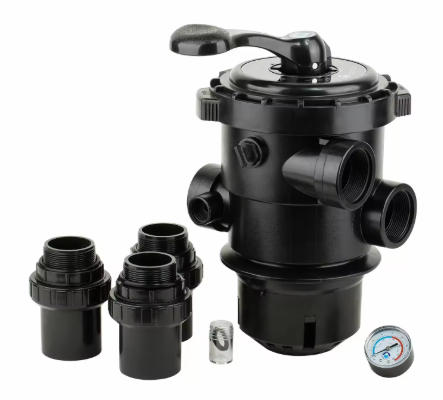
Modern swimming pools—from resort waterparks and hotel rooftops to backyard family pools—depend on a well‑designed valve system to control water flow, protect equipment, and avoid costly leaks or downtime. Choosing the best valves for pools is not only about price; it is about long‑term reliability, ease of service, compatibility with automation, and compliance with relevant pool equipment standards.
PVC has become the dominant material for pool valves because it offers an excellent balance of corrosion resistance, cost, and ease of installation for chlorinated and saltwater systems. In both commercial and residential pool plumbing, PVC valves are widely used on suction lines, return lines, backwash manifolds, chemical dosing circuits, and water‑feature loops.
- Corrosion resistance: PVC does not rust and resists most pool chemicals used in chlorinated, brominated, and saltwater pools.
- Weather resistance: Quality PVC valves withstand outdoor UV exposure and temperature swings when properly supported and protected.
- Cost efficiency: Compared with metal valves, PVC offers lower initial cost and reduced labor due to lighter weight and simpler joining methods.
- Installation simplicity: Socket (solvent‑weld) and threaded connections allow fast assembly, repair, and replacement in tight equipment spaces.
- Safety and durability: PVC valve bodies designed for pool duty are pressure‑rated for typical filter and pump pressures, often up to 150 psi or more at room temperature.
Different pool valve types perform distinct functions—ranging from isolation and flow balancing to backflow prevention and multi‑mode filtration control. Understanding how each valve type works helps you design or upgrade systems that are safer, more energy efficient, and easier to operate.
| Valve type | Primary function | Typical locations | Commercial pool use | Residential pool use | Notes |
|---|---|---|---|---|---|
| PVC ball valve | On/off isolation, basic throttling | Pump suction, returns, chemical lines | Equipment isolation, simple zones | Common on most backyard pools | Use true‑union design for serviceability. |
| Diverter valve (2‑way / 3‑way) | Flow routing between circuits | Skimmer / main drain split, water features, spa spillover | Automation and advanced flow control | Premium pools, spas, water features | Standard interface for actuators. |
| Multiport valve | Multiple filter modes (filter, backwash, rinse, waste, recirculate) | Sand and DE filters | Essential for large filters | Common on many residential sand filters | Must match filter model and port size. |
| Check valve | Prevent backflow and equipment damage | Heater outlet, spa lines, elevated features | Protects high‑value equipment | Used when elevation differences exist | Essential to stop reverse flow when pump stops. |
| Gate / butterfly valve | Isolation in large‑diameter lines | Commercial surge tanks, large feature loops | Used on large‑bore pipes | Rare in small backyard pools | Butterfly valves often preferred for big commercial lines. |
PVC ball valves are the workhorse pool valves for both commercial and residential systems, providing simple quarter‑turn isolation of lines and equipment. They are used on suction lines, return manifolds, chemical feed lines, and to isolate individual filters, heaters, and water‑feature pumps.
- Single‑union ball valves
- Have a union on only one side of the body.
- Offer lower initial cost but make replacement and rework more difficult when the valve fails.
- True‑union ball valves
- Use unions on both ends, allowing the entire valve body to be removed without cutting the pipe.
- Ideal for commercial pools, high‑traffic facilities, and lines that may need frequent service.
Professional pool technicians increasingly recommend union ball valves rather than glued‑in commodity valves, because unions reduce downtime and prevent damage to surrounding pipework during maintenance.
Industrial‑grade PVC ball valves designed for pressurized service typically feature:
- Full‑bore design to minimize head loss and energy consumption.
- PTFE seats for smooth operation and reliable sealing.
- EPDM or FPM (Viton) O‑rings selected to match pool chemical conditions and temperature ranges.
- High impact handles with clear open/closed indication and, in some models, lockout capability.
Diverter valves (often called “pool valves” by service technicians) are multi‑port valves used to redirect flow between different lines or equipment. They are available as 2‑way and 3‑way designs and are widely used in premium residential pools and commercial installations that need flexible control.
- Balancing skimmer and main drain suction.
- Switching between pool and spa modes.
- Feeding multiple water features such as sheer descents, deck jets, and waterfalls.
- Selecting between different heaters or heat pump loops.
Modern diverter valves, especially the well‑known brands used in the pool industry, are designed to turn smoothly, seal reliably, and integrate easily with motorized actuators for automation systems.
Pool automation systems rely on valves that can be actuated electrically to change modes on a schedule or in response to sensors. Diverter valves used with actuators typically offer:
- Standardized actuator mounting patterns on the valve top.
- Positive stop positions for 90‑degree or 180‑degree rotation.
- Serviceable internals so seals can be replaced without cutting pipe.
For high‑end residential pools, resorts, and aquatic centers, combining PVC diverter valves with smart actuators enables efficient water management and reduces manual operator workload.
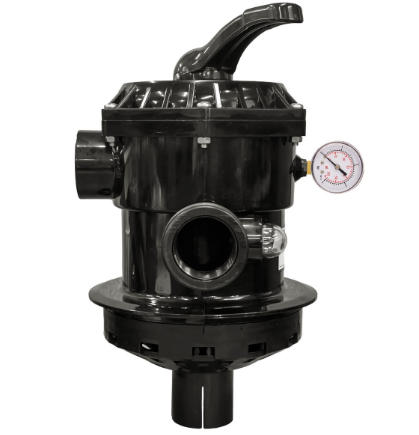
Multiport valves are specialized pool valves mounted on sand and DE filters to provide several operating modes through a single handle. This makes them essential components for filtration performance, backwashing, and water quality control in both commercial and residential pools.
Typical settings on a multiport valve include:
1. Filter – Normal operation, water flows through the filter media and returns to the pool.
2. Backwash – Reverses flow to flush contaminants out of the media to waste.
3. Rinse – Rinses remaining debris to waste after backwashing.
4. Waste / Drain – Sends water directly to waste without passing through the filter.
5. Recirculate – Bypasses the filter while keeping circulation running.
6. Closed – Shuts off flow, usually only used when the pump is off.
These modes are particularly important for large commercial filters, where correct backwashing and rinsing are critical to maintain flow, filtration efficiency, and compliance with water quality guidelines.
When specifying or replacing a multiport valve:
- Match the port size and connection type (top‑mount or side‑mount) to the filter model.
- Verify the pressure rating is adequate for the pump and filter design pressure.
- Confirm the valve is compatible with pool chemicals and expected water temperature range.
Check valves are one‑direction valves designed to prevent backflow when the pump shuts off or when water levels change. In pool systems, they protect heaters, chlorine generators, dosing equipment, and elevated features from reverse flow that can cause damage or unwanted siphoning.
- Downstream of heaters and heat pumps to prevent hot water from flowing backward through sensitive components.
- On raised spas or water features to keep water from draining back into the pool when the pump stops.
- On chemical injection lines to prevent pool water from entering dosing tanks or feeders.
Foot valves, which are check valves with a strainer at the inlet, can also be used in some pool and pond applications to keep suction lines primed and debris‑free.
Industrial‑grade ball check valves for pools typically provide:
- PVC or CPVC bodies for corrosion resistance and temperature capability.
- True‑union ends for easy removal and cleaning.
- Square‑cut elastomer seats and carefully designed ball profiles to minimize leakage and ensure long service life.
- Ability to mount horizontally or vertically, with defined cracking pressure to ensure proper operation.
While PVC ball and diverter valves dominate small to medium pipe sizes, large‑diameter commercial pool systems often employ gate or butterfly valves. These valves allow economical isolation and throttling on big header lines feeding surge tanks, wave pools, and complex water‑feature networks.
- Pipe sizes typically DN100 (4") and above in waterparks, competition pools, and large hotel or resort systems.
- Locations where space is limited, because butterfly valves are more compact than full‑bore ball valves at large diameters.
- Systems that require frequent operation, as the quarter‑turn mechanism makes opening and closing faster than multi‑turn gate valves.
High‑quality butterfly valves for pool systems use coated or corrosion‑resistant bodies, elastomer‑lined discs, and can be configured with electric or pneumatic actuators for integration into building management systems.
For commercial pools, public spas, and institutional aquatic facilities, valves and related components are often evaluated against recognized equipment and chemical standards for swimming pools and other recreational water facilities. Such documents include criteria for corrosion resistance, pressure performance, labeling, and material safety for valves used in these systems.
- Regulatory approval: Many jurisdictions reference these standards for public pool equipment compliance.
- Material safety: Testing helps ensure that wetted materials do not leach harmful substances into pool water.
- Long‑term performance: Pressure and durability evaluations reduce the risk of sudden failures in critical piping systems.
For facility owners and engineers, selecting valves that align with recognized standards supports safer operation and makes it easier to demonstrate due diligence to inspectors and stakeholders.
A structured approach to valve selection helps avoid undersized components, poor serviceability, and premature failures.
1. Define the application
- Identify whether the valve is for isolation, flow routing, backflow prevention, or multi‑mode filtering.
2. Confirm operating conditions
- Determine maximum working pressure, temperature, and chemical environment, including chlorine level, salt system, and pH control.
3. Choose the valve type
- Use ball valves for straightforward on/off isolation, diverter valves for routing, multiport valves for filters, and check valves for backflow prevention.
4. Select body and seal materials
- Choose PVC or CPVC bodies with EPDM or FPM seals matched to pool chemistry and temperature.
5. Evaluate serviceability
- Prefer true‑union and serviceable designs to minimize future downtime and avoid cutting of pipe.
6. Check standards and approvals
- For public facilities, verify alignment with relevant industry standards and local codes.
- A hotel pool upgrading to automation may switch several manual ball valves on suction and return manifolds to duty‑rated diverter valves with actuators for flexible scheduling and energy optimization.
- A municipal aquatic center may standardize on true‑union PVC ball valves and ball check valves across filter galleries to simplify spares and maintenance procedures.
Correct installation and basic maintenance habits substantially extend the life of pool valves and reduce leaks and service interruptions.
- Support adjacent piping to avoid excess mechanical stress on valve bodies.
- Align pipes carefully and avoid forcing connections into position, which can distort the valve and compromise sealing.
- Use appropriate solvent cement and primer for PVC sockets, and the correct thread sealant for threaded joints in wet environments.
- Ensure all valves are installed in accessible locations so handles, unions, and actuators can be serviced.
- Operate manual valves periodically to prevent sticking and to check for smooth movement.
- Inspect union nuts, O‑rings, and actuator mounts for signs of leakage or wear.
- Verify that check valves open and close correctly, especially after seasonal shutdowns or extended pump stoppages.
- On multiport valves, follow manufacturer procedures for lubrication and gasket inspection during filter service intervals.
As a professional valve manufacturer specializing in water treatment and municipal pipeline applications, Tianjin Wode Valve Co., Ltd. can provide customized valve packages for both commercial and residential pool systems. With experience supporting global distributors, EPC contractors, and international brands, the company can align valve designs with local codes, project specifications, and long‑term maintenance strategies.
Typical support for pool and aquatic projects includes:
- Application engineering for selecting PVC ball valves, check valves, butterfly valves, and other components appropriate to pool duty.
- Coordination with automation suppliers for actuator‑ready designs on larger diverter and butterfly valves.
- Batch manufacturing and quality control programs tailored to OEM pool equipment brands and large‑scale facility builds.
If you are planning a new commercial pool, upgrading an aging facility, or standardizing parts across a network of residential installations, partnering with a specialized valve manufacturer can significantly improve lifecycle performance and maintenance efficiency. Tianjin Wode Valve Co., Ltd. is ready to support your next pool or water‑recreation project with engineered PVC ball valves, check valves, butterfly valves, and custom solutions tailored to your piping standards and operating conditions.
Contact our engineering team today to share your project drawings, valve schedules, and technical requirements. Our experts will help you specify and supply the best valves for pools that balance safety, efficiency, and total cost of ownership for your specific commercial or residential application.
Contact us to get more information!
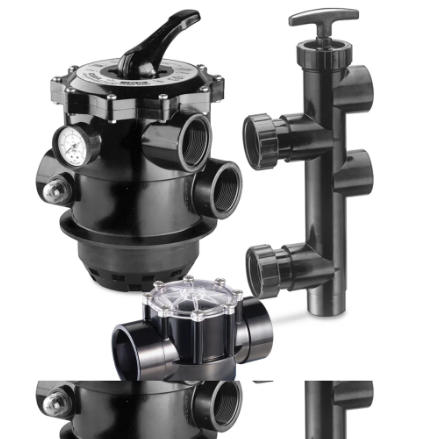
The most important valves in a pool system are usually the suction and return isolation ball valves, the diverter valves that route flow between circuits, the multiport valve on sand or DE filters, and the check valves protecting heaters and elevated features. Together, these components control circulation, enable backwashing, and prevent backflow that can damage equipment.
Yes, PVC valves are widely used in saltwater pools because they resist corrosion better than many metallic valves when exposed to saline water and chlorination byproducts. Seal materials must still be selected carefully, but well‑designed PVC valves provide long service life in salt systems when installed and maintained properly.
Use a diverter valve when you need to split or redirect flow between two or more lines, such as between skimmer and main drain or between pool and spa. Ball valves are best for simple on/off isolation of a single line without routing between circuits.
There is no fixed replacement interval, but valves should be inspected at least annually for smooth operation, leaks, and signs of UV or chemical degradation. In heavily used commercial pools with aggressive water chemistry, seals and O‑rings may need more frequent replacement as part of planned preventive maintenance.
Recognized industry standards set out performance, safety, and material criteria for equipment used in pools, spas, and other recreational water facilities, including valves. Selecting products aligned with these standards helps facility owners demonstrate compliance with regulations and supports consistent, safe operation of critical water systems.
1. https://blog.waterworksnz.co.nz/best-valves-for-swimming-pool-systems
2. https://www.swimmingpoolsteve.com/pages/best-valves.html
3. https://www.vitafilters.com/blogs/news/swimming-pool-valves-101
4. https://www.testyourownpool.com/pool-parts/pool-valves
5. https://premierpools.com/blogs/info/how-valves-work
6. https://www.swimmingpoolsteve.com/pages/best-pool-valves.html
7. https://blog.ansi.org/ansi/nsf-ansi-50-2025-equipment-swimming-pools/
8. https://modernpumpingtoday.com/types-of-check-valves-and-their-industrial-applications/


