

Views: 222 Author: Rebecca Publish Time: 2026-02-20 Origin: Site


Content Menu
● What Is an Actuated Butterfly Valve?
>> How a Butterfly Valve Works
● Where Actuated Butterfly Valves Are Used
● Butterfly Valve Types for Actuated Assemblies
>> Disc and Stem Geometry: Concentric vs Eccentric
>> End Connections: Wafer, Lug, Double-Flanged, Butt-Welded
● Actuation Methods and Their Typical Use
● Actuator Sizing and ISO 5211 Mounting
>> Practical Actuator Sizing Workflow
>> Common Interface and Sizing Issues
● Valve Actuator Selection Criteria
>> Cycling Requirements and Duty Cycle
>> Actuator Speed and Water Hammer
>> Nature of the Working Media
>> Redundancy and Fail-Safe Behavior
>> Cost, Maintenance, and Lifecycle
● Municipal Water and Compliance Considerations
● Installation, Commissioning, and Troubleshooting Checklist
>> Common Issues and Root Causes
● Take the Next Step: Request a Complete Valve and Actuator Package
● FAQ
>> 1) What is an actuated butterfly valve?
>> 2) Which actuator is better for butterfly valves, electric or pneumatic?
>> 3) What is ISO 5211 and why is it important?
>> 4) How do I size an actuator for a butterfly valve?
>> 5) Are butterfly valves suitable for municipal water systems?
Actuated butterfly valves are quarter-turn valves that combine a butterfly valve body with an actuator (manual, electric, pneumatic, or hydraulic) to automate isolation and throttling in piping systems, especially where fast operation, compact footprint, and reliable on/off control are required. In water treatment and municipal pipelines, choosing the right valve style and the right actuator (with adequate torque and correct mounting) directly impacts leakage risk, maintenance workload, response time, and lifetime cost.
For global distributors, EPC contractors, and international valve brands, this guide focuses on the decision points that matter in real projects: where actuated butterfly valves fit best, how to select valve construction, how to size actuators and ISO 5211 interfaces, and how to commission systems for stable long-term performance.

A butterfly valve is a quarter-turn flow control or isolation device that uses a rotating disc mounted on a shaft to open or close the flow path. Because the disc remains in the flow even when open, butterfly valves typically introduce some pressure drop, but they offer a compact and lightweight design that can be advantageous in large-diameter piping.
An actuated butterfly valve adds an actuator mounted to the valve stem to deliver the torque needed to move the disc to the commanded position (open, closed, or modulating). The actuator can be manual (hand lever or gear), electric, pneumatic, or hydraulic depending on the automation level, speed, available utilities, and safety requirements.
When the actuator turns the stem, the disc rotates between two main positions: aligned with flow (open) or perpendicular to flow (closed). Many systems also use intermediate positions for throttling, but stable modulation depends on correct actuator control, correct valve design, and realistic expectations about cavitation and erosion in high differential pressure conditions.
Actuated butterfly valves are widely used where operators need fast shutoff or automated control without the size and weight penalties of some alternatives. Typical applications include:
- Water treatment process lines, such as raw water, filter backwash, and chemical dosing isolation where media compatibility is verified.
- Municipal distribution and transmission systems, where butterfly valves are common for large diameters and sectional isolation.
- Industrial utilities, such as compressed air and cooling water, and some gas, steam, or slurry services when the valve materials and pressure and temperature limits are properly specified.
If your specification demands very tight shutoff under high differential pressure, very high temperature, severe cycling, or abrasive slurry with high solids, you may need high-performance double- or triple-offset designs or a different valve type entirely.
Butterfly valves can be classified by disc and stem geometry and by end connection style. Understanding these designs helps you match the valve to the service and actuator.
Concentric (zero-offset) butterfly valves place the stem at the centerline of the disc and typically use a resilient seat. They are commonly used in low-pressure flow applications and are often a cost-effective choice for municipal and water treatment isolation duties when pressure, temperature, and cycling limits are respected.
Eccentric (offset) butterfly valves move the stem off the disc centerline and can reduce rubbing during closing, helping prevent jamming and reducing wear. Eccentric designs include single-, double-, and triple-offset variants. These valves are often chosen when you need better sealing performance, improved durability under higher pressure and temperature, or more demanding cycling.
Wafer-type valves fit between two flanges and are clamped by bolts that pass around or through the valve body. They are compact and cost-effective in many piping layouts and are common in water plants and packaged skids where space and weight matter.
Lug-type valves include threaded lugs that allow bolting to flanges and can be useful where one side of the line might be disconnected, depending on design and project requirements. They are often selected when maintenance isolation or spool removal is expected.
Double-flanged butterfly valves have flanges on both ends and are generally easier to align and install in larger municipal pipelines. They are frequently used where robust alignment and repeatable installation are key concerns.
Butt-welded butterfly valves are used for high-pressure applications where a permanent welded connection is required. They are less typical in municipal potable water distribution but are often used in specific industrial segments.
Actuation improves opening and closing speed and supports automated, incremental flow control where needed. Selecting the actuator is not only about the power source; it is also about torque, control accuracy, failure position, duty cycle, and available utilities on site.
Manual operators use a lever, crank, or handwheel with a gearbox to position the disc. They are simple and inexpensive, often suitable for remote pipelines without power. Operating speed is relatively low, and large sizes may require gearing to generate enough torque and to keep operating effort within safe limits.
Electric actuators use a bi-directional motor and gearbox to deliver torque and allow remote control. Many include limit switches to stop the motor at full open or full closed. They can be quiet and simple to install, but their application depends on a stable power supply, correct duty-cycle selection, and appropriate environmental protection, such as enclosures and heaters where needed.
Pneumatic actuators use compressed air to create piston motion and rotary output torque. They can be single-acting (spring return) or double-acting. Pneumatic actuators are compact, economical, and fast, making them suitable for frequently throttled lines, provided a reliable compressed-air supply and suitable control accessories are available.
Hydraulic actuators use pressurized fluid to generate high torque and are often selected for heavy-duty or very large valves requiring large turning forces. They can be single-acting or double-acting and provide an economical means for automatic operation of very large valves. They do, however, require a hydraulic power unit and planned maintenance to manage fluid cleanliness and leakage.
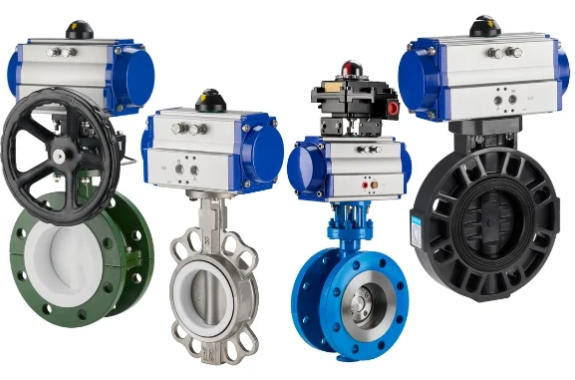
Many project problems originate from incorrect torque assumptions or poorly matched interfaces. ISO 5211 is a key interface standard that defines flange dimensions and drive component dimensions for part-turn actuators used with valves such as butterfly valves. It supports safe torque transmission and mechanical compatibility between the valve and the actuator.
1. Define service conditions: media, maximum differential pressure, temperature, flow velocity, and whether the duty is on/off or modulating.
2. Collect valve torque requirements from the valve manufacturer: breakout torque, running torque, and seating and unseating torque under the specified differential pressure and temperature range.
3. Apply a safety factor so the actuator output torque exceeds the required valve torque, adding margin to cover friction changes, wear, and real operating conditions.
4. Choose the actuator type based on site utilities, response time, control philosophy, and required fail position (fail-open or fail-closed).
5. Verify the ISO 5211 interface size and drive shape. Ensure that the mounting flange and drive insert match the valve stem configuration and that both valve and actuator comply with the same ISO 5211 size.
6. Confirm travel stops, limit switches, and position feedback devices to match the control system and whether the valve will be used for simple open/close or for throttling.
7. Document the selected torque, safety factor, interface size, actuator model, and any accessories, such as solenoid valves, positioners, air filter regulators, manual overrides, and heaters.
- The actuator mounting holes fit the valve flange, but the drive insert does not match the stem shape or size.
- Actuator torque is adequate at one assumed air pressure but insufficient at the lower pressure actually available in the field.
- Oversized actuators close the valve too quickly, introducing water hammer risk unless travel speed is controlled by devices such as flow controls or specific actuator settings.
Choosing the right actuator for an actuated butterfly valve requires more than simply matching torque. The following criteria support a safer and more reliable selection.
Duty cycle is the ratio of actuator on time to off time. Frequent operation increases heat and mechanical wear, affecting sealing and actuator components. Some electric actuators are designed for relatively low duty cycles, while pneumatic and hydraulic actuators can often handle higher cycling frequencies if properly sized and maintained.
It is good practice to state expected cycles per hour or per day and whether operation is continuous modulating or occasional open and close. This information helps avoid actuators that overheat or lose performance prematurely.
Fast-acting actuators such as pneumatic and hydraulic types are preferred for some critical processes, but in many water systems a slower closing speed is beneficial to reduce pressure surges. Closing too quickly can contribute to water hammer, damaging piping and equipment. Speed controls, staged closing, or suitable actuator sizing should be considered during design.
Media characteristics affect both the valve and actuator environment. Corrosive or toxic fluids may require special materials, and outdoor or aggressive atmospheres may require enhanced actuator coatings and sealing. The coupling between actuator and valve must remain protected against corrosion and contamination to prevent jamming and torque increases over time.
Flow systems should be designed to remain safe during power or air failures. Spring-return pneumatic actuators, for example, can drive the valve to a defined fail position. It is important to decide whether fail-open or fail-closed is safer for the specific service, considering upstream and downstream consequences.
Each actuator type has a different cost profile, maintenance needs, and spare parts strategy. Pneumatic systems require reliable compressed air and can offer long service life; electric actuators can simplify infrastructure but might need more attention to duty cycle and environmental protection. A sound comparison looks at initial cost, utilities, spare parts, maintenance intervals, and downtime risk over the full life of the installation.
In municipal waterworks, valves and actuators are often evaluated against recognized water-industry standards and certification schemes. Butterfly valves for water distribution and treatment are commonly specified with reference to standards that define design, materials, testing, and performance for rubber-seated butterfly valves in water service.
For potable water applications, project documentation frequently requires third-party health-effect certifications such as those that verify materials suitability for contact with drinking water. These requirements sit alongside mechanical and performance standards and help utilities and EPCs ensure long-term reliability and safety.
Including clearly documented standards, testing, and certifications in technical documentation and datasheets allows specifiers to quickly determine whether a particular actuated butterfly valve package is eligible for their project list.
Many valve and actuator issues arise from installation or setup problems rather than from inherent product defects. A structured checklist can reduce commissioning time and improve reliability.
- Confirm valve orientation and any indicated flow direction and ensure there is sufficient clearance for actuator mounting, removal, and service.
- Verify flange alignment and gasket selection and avoid forcing the valve into misaligned pipework, which can distort the body and seat.
- Check that the ISO 5211 mounting pattern and drive insert match the actuator and valve stem configuration.
1. Stroke the valve without line pressure to verify smooth travel and correct open and close rotation direction.
2. Set mechanical travel stops and verify that limit switches operate at the desired open and closed positions.
3. For pneumatic systems, verify air quality, pressure stability, and correct functioning of solenoid valves and other control accessories.
4. Introduce line pressure gradually and perform leak checks at the seat and packing areas, noting any unusual torque or current draw.
5. For modulating service, tune the positioner and control loop to avoid oscillations and excessive cycling.
- Valve does not fully close: incorrect travel stop settings, debris on the seat, or insufficient actuator torque margin.
- Electric actuator stalls or overheats: duty cycle not matched to service or friction and torque higher than expected due to misalignment or buildup on the disc.
- Pneumatic actuator operates sluggishly: low supply pressure, undersized air lines, or contamination in the compressed-air system.
If you are planning or upgrading a water treatment plant, municipal pipeline, or industrial utility system, a correctly selected actuated butterfly valve package is essential for safe and reliable operation. Share your valve size, pressure class, media, temperature, automation requirements, expected cycling, and available utilities, and Tianjin Wode Valve Co., Ltd. will recommend a complete valve, actuator, and accessory configuration matched to your project. This application-specific support helps you reduce technical risk, simplify installation and commissioning, and achieve consistent, long-term performance across your piping systems.
Contact us to get more information!
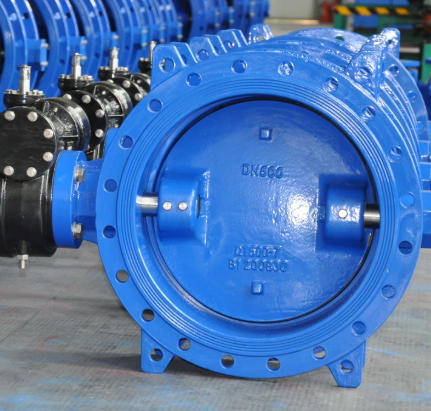
An actuated butterfly valve is a butterfly valve equipped with an actuator that supplies torque for automated or remote opening and closing and, in many applications, for intermediate positioning and flow control.
Electric actuators are well suited to locations with stable power and relatively moderate cycling, and they are often preferred when cabling is simpler than running air lines. Pneumatic actuators are often chosen for fast cycling, quick response, and good positioning performance when a reliable air supply and control instruments are available.
ISO 5211 is an international standard that defines mounting flange sizes, bolt patterns, and drive dimensions for part-turn actuators and compatible valves. It is important because it supports mechanical compatibility and safe torque transfer between actuators and valves, allowing more flexibility and interchangeability in actuator selection.
To size an actuator, start with the valve manufacturer's torque data for the actual service conditions. Then select an actuator whose output torque exceeds those torque values with a suitable safety factor. Finally, verify that the chosen actuator type, ISO 5211 interface, and fail position meet your process and control requirements.
Yes, butterfly valves are widely used in municipal water distribution and treatment plants, especially for larger diameters and sectional isolation. When used in drinking water systems, they are typically selected and certified according to relevant design, performance, and health-effect standards to ensure reliability and water quality.
1. https://valveman.com/blog/actuated-butterfly-valves-101-all-you-need-to-know-about-their-application-in-piping-systems/
2. https://tameson.com/pages/iso-5211-for-valves
3. https://www.solenoid-valve.world/iso5211
4. https://valveinformation.jscepai.com/understanding-iso-5211-pneumatic-butterfly-valve-mounting
5. https://zfavalves.com/blog/what-is-awwa-c504-butterfly-valve/
6. https://www.jrval.com/awwa-butterfly-valves.html
7. https://www.kennedyvalve.com/upl/downloads/kenn/products/documents/general-specifications-butterfly-valves.pdf


