

Views: 222 Author: Rebecca Publish Time: 2026-02-25 Origin: Site


Content Menu
● What Is a Backflow Preventer?
● How Do They Work? Operation and Mechanism
>> How a Backflow Preventer Works
● Key Differences: Check Valve vs Backflow Preventer
● When Should You Use a Check Valve?
● When Do You Need a Backflow Preventer?
● Common Types of Check Valves and Backflow Preventers
>> Common Backflow Preventer Types
● Compliance, Testing, and Maintenance
>> Testing and Maintenance Requirements
● Cost vs Risk: How to Decide Between Check Valve and Backflow Preventer
● Practical Selection Tips for Engineers and Contractors
● Where to Place Check Valves vs Backflow Preventers
● FAQs: Check Valve vs Backflow Preventer
>> 1. Is a check valve the same as a backflow preventer?
>> 2. Can I install a check valve instead of a backflow preventer to pass inspection?
>> 3. Do backflow preventers need regular testing?
>> 4. Where is a check valve sufficient?
>> 5. Which is more expensive – a check valve or a backflow preventer?
When you are designing or maintaining a water system, choosing between a check valve and a backflow preventer is not just a technical detail – it directly affects water safety, code compliance, and long‑term operating costs. This guide explains the key differences, use cases, and selection criteria so that engineers, contractors, and facility owners can make the right decision the first time.

A check valve is a one‑way valve that allows fluid to flow in a single direction and automatically closes to stop reverse flow.
- It typically uses a disc, ball, or swing mechanism that opens under forward pressure.
- It closes when downstream pressure exceeds upstream pressure, or when flow stops.
- It is widely used in pumps, industrial lines, HVAC systems, and general plumbing.
Because of its simple design, a check valve is cost‑effective and reliable for basic backflow prevention where contamination risk is low.
A backflow preventer is a specialized safety device designed to protect potable water from contamination by stopping reverse flow under both backpressure and backsiphonage conditions.
- It usually combines multiple check valves with additional components such as relief valves, air gaps, and test ports.
- It is certified and tested according to plumbing and water authority standards for municipal and commercial systems.
- It is required wherever cross‑connections could allow pollutants or contaminants into drinking water.
In other words, a backflow preventer is not just another valve – it is a certified safety assembly designed for high‑risk applications.
- Forward flow pushes a disc or ball away from the seat, opening the passage.
- When flow stops or reverses, the disc returns to the seat by gravity or spring force, sealing the valve.
- Protection is single‑layer: if the sealing surface is damaged, reverse flow can occur.
This makes check valves suitable where reverse flow could damage equipment or disrupt operation, but where water quality is not a critical safety issue.
Backflow preventers use multiple layers of protection to ensure contaminated water cannot flow back into the clean supply.
Common assemblies include:
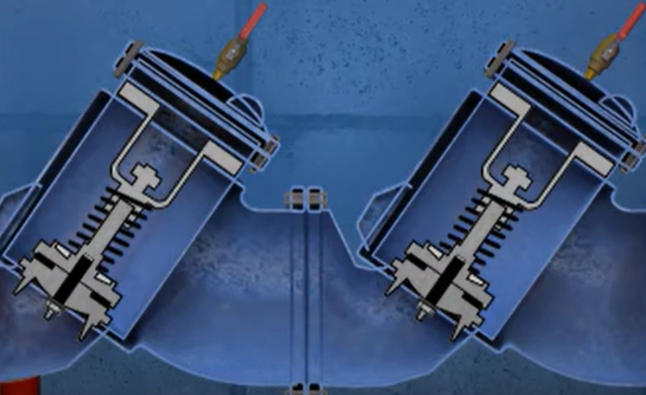
- Double Check Valve Assembly (DCVA): Two check valves in series, often with shutoff valves and test ports.
- Reduced Pressure Zone (RPZ): Two check valves plus a spring‑loaded relief valve that discharges water if the pressure in the intermediate zone rises too high.
- Pressure Vacuum Breaker (PVB): Uses a check valve and an air inlet valve to stop backsiphonage by admitting air and breaking the vacuum.
If one component fails, the others still protect the system. This redundancy is why backflow preventers are required in many codes for potable water protection.
| Feature | Check Valve | Backflow Preventer |
|---|---|---|
| Primary purpose | Prevents reverse flow to protect equipment or process. | Protects potable water from contamination and pollutants. |
| Protection level | Single mechanical barrier. | Multiple layers (two check valves, relief valve, or air gap). |
| Design complexity | Simple one‑piece valve body. | Complex assembly with multiple valves and test ports. |
| Testing | Typically not testable in place. | Has test cocks for performance testing and certification. |
| Code compliance | Usually not accepted where certified backflow protection is required. | Specifically listed and required by water authorities. |
| Typical applications | Pumps, HVAC loops, industrial process lines, low‑risk irrigation. | Municipal connections, fire protection, potable water in commercial and industrial buildings. |
| Cost | Lower initial price. | Higher cost due to added components and certification. |
| Maintenance | Minimal, usually only inspection. | Requires regular testing and periodic repairs by qualified professionals. |
This comparison highlights the core idea: a check valve is a general‑purpose flow control device, while a backflow preventer is a compliance‑driven safety assembly.
Use a check valve when the main concern is equipment protection or system performance, not public health or potable water safety.
Typical scenarios include:
- Pump discharge lines to keep pumps primed and prevent reverse rotation.
- Industrial process lines where the medium is non‑potable and contamination does not affect the public water supply.
- Closed‑loop HVAC systems to avoid backflow between circuits.
- Low‑risk irrigation or utility water where local rules only require basic backflow prevention.
In these cases, a check valve provides adequate protection at a lower cost, with simple installation and minimal maintenance.
You need a backflow preventer whenever the system could introduce pollutants or contaminants into a drinking water supply or where the plumbing code or water authority explicitly requires it.
Common use cases:
- Municipal water service connections to commercial or industrial buildings.
- Fire sprinkler systems connected to potable water mains.
- Irrigation systems using fertilizers, chemicals, or connections to ponds and tanks.
- Hospitals, laboratories, food and beverage plants, and other high‑risk facilities.
- Any system subject to regular backflow testing and certification by the local water supplier.
In these environments, installing a check valve instead of a certified backflow preventer can lead to failed inspections, fines, and forced replacement.
- Swing check valve – A hinged disc swings open with flow and closes when flow reverses, common in larger pipelines.
- Spring‑loaded inline check valve – A compact design with fast closing, suitable for both vertical and horizontal installations.
- Ball check valve – Uses a ball to seal the seat, often used in slurry or wastewater applications.
Each type balances pressure drop, closing speed, and cost, and should be selected according to system design and fluid characteristics.
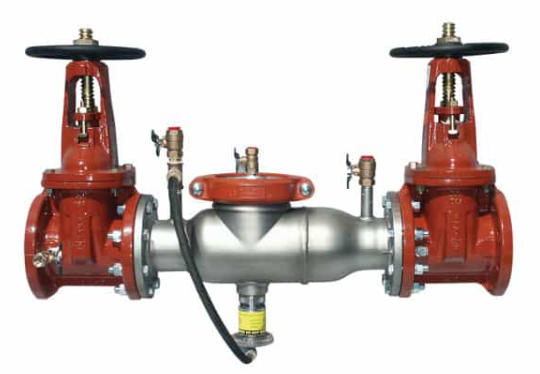
- Double Check Valve Assembly (DCVA or DCV) – Two check valves in series, used for moderate hazard levels.
- Reduced Pressure Zone (RPZ) – Two check valves plus a relief valve, used for high‑hazard applications where contaminants could cause serious health risks.
- Pressure Vacuum Breaker (PVB) – Protects against backsiphonage, often used in irrigation systems.
- Atmospheric Vacuum Breaker (AVB) – A simple device for backsiphonage protection downstream of control valves in low‑hazard uses.
Local codes and authority guidelines typically specify which type is acceptable based on hazard level and installation location.
Water authorities treat backflow prevention as a public health issue. Using the wrong device, such as a simple check valve where a certified assembly is mandated, can result in:
- Failed inspections and service disconnection notices.
- Fines or enforcement actions from the water district.
- Liability exposure if contamination occurs.
- Backflow preventers usually must be tested at scheduled intervals by certified testers using the built‑in test ports.
- Components such as check discs, springs, and relief valves may need periodic cleaning or replacement.
- Check valves generally require only visual inspection or functional checks; they do not offer the same testability and traceability as listed backflow assemblies.
When choosing between a check valve and a backflow preventer, it is important to consider total risk, not just hardware price.
Key decision factors:
1. Risk level of the connection
If there is any chance of contaminants entering potable water, a backflow preventer is usually the correct choice.
2. Regulatory requirements
If local plumbing codes or the water authority require a listed backflow prevention assembly at a specific connection, a check valve alone will not be acceptable.
3. Consequences of failure
If reverse flow will only affect a pump or piece of equipment, the risk is limited. If it can impact public water safety, a higher level of protection is necessary.
4. Lifecycle cost
Check valves are cheaper and easier to install, but they cannot replace backflow preventers where testing, documentation, and certification are required.
A practical rule is: if you are connecting to potable water or facing inspections, treat the backflow preventer as mandatory, and use check valves as supporting components rather than substitutes.
To optimize both safety and budget:
- Use check valves:
- On pump outlets, industrial equipment, and internal process lines where regulations do not demand certified backflow assemblies.
- As internal components within systems that already include a backflow preventer.
- Use backflow preventers:
- At service entrances and cross‑connections with non‑potable systems.
- At any point specified by the local authority having jurisdiction.
When planning a system:
- Confirm hazard classification, such as low, medium, or high hazard.
- Choose the appropriate assembly type, such as DCVA, RPZ, or PVB, based on hazard level.
- Ensure there is enough space for proper installation, testing, and ongoing maintenance access.
- Backflow preventers should be installed as close as practical to the point where potable water enters a potentially contaminated system, such as just after the meter or branch connection.
- Check valves should be installed downstream within equipment, booster stations, or sub‑loops to protect pumps and components.
A good layout:
- Keeps the certified backflow preventer accessible for testing.
- Minimizes pressure loss impact on the system.
- Simplifies future service by providing shutoff valves and drain points around the assembly.
If you are planning or upgrading a water treatment, municipal pipeline, fire protection, or industrial water system and are unsure whether you need a check valve or a backflow preventer, our engineering team can help you choose the safest and most cost‑effective solution for your project. Contact Tianjin Wode Valve Co., Ltd. today to discuss your operating conditions, standards, and project requirements, and get tailored valve recommendations and technical support for your next installation.
Contact us to get more information!
No. A check valve only provides basic one‑way flow control, while a backflow preventer is a certified assembly with multiple layers of protection and test ports specifically designed to protect potable water from contamination.
In most jurisdictions, you cannot. Water districts usually require an approved backflow prevention assembly, such as an RPZ or DCVA, and a simple check valve will not satisfy those requirements.
Yes. Many codes require backflow preventers to be tested at defined intervals by certified testers, using built‑in test ports, to ensure they function correctly over time.
A check valve is usually sufficient in closed systems or non‑potable services where reverse flow could damage equipment but does not threaten drinking water quality, such as pump discharge lines or internal process loops.
A backflow preventer is more expensive due to its complex design, certification, and testing requirements. It also involves ongoing testing and maintenance costs, while check valves typically have lower initial and maintenance costs.


