

Views: 222 Author: Wode Valve Publish Time: 2026-05-22 Origin: Site


Choosing the right ball valve for natural gas service is not just a catalog exercise—it is a safety‑critical engineering decision that directly affects system reliability, leak risk, and lifecycle cost. Drawing on my experience supporting natural gas, water treatment, and municipal pipeline projects, this guide walks you through how to select the best ball valve for natural gas use, what Apollo's natural‑gas‑ready designs get right, and how an experienced OEM partner like Tianjin Wode Valve can help you specify and source the right solution for demanding projects. [valveman]
In real projects, "best" means safest, most reliable, and most economical over the full lifecycle, not just the lowest purchase price. For natural gas transmission, distribution, or commercial gas lines, this typically comes down to a few non‑negotiables: [convalve]
- Tight shut‑off with no detectable leakage under operating pressure and temperature. [valvulasfevisa]
- Materials compatible with dry or wet natural gas and potential contaminants (H₂S, CO₂, moisture). [convalve]
- Proper pressure and temperature rating with a safety margin for abnormal conditions. [valveman]
- Compliance with relevant standards, such as API 6D, ASME B16.34, ISO 14313, and local gas codes. [valvulasfevisa]
- Robust stem and seat design, including blow‑out proof stems and high‑performance seats (typically RPTFE or similar). [valveman]
From an engineering standpoint, a ball valve that meets these criteria—and is backed by documentation, testing, and a responsive manufacturer—will outperform a cheaper generic option every time. [convalve]
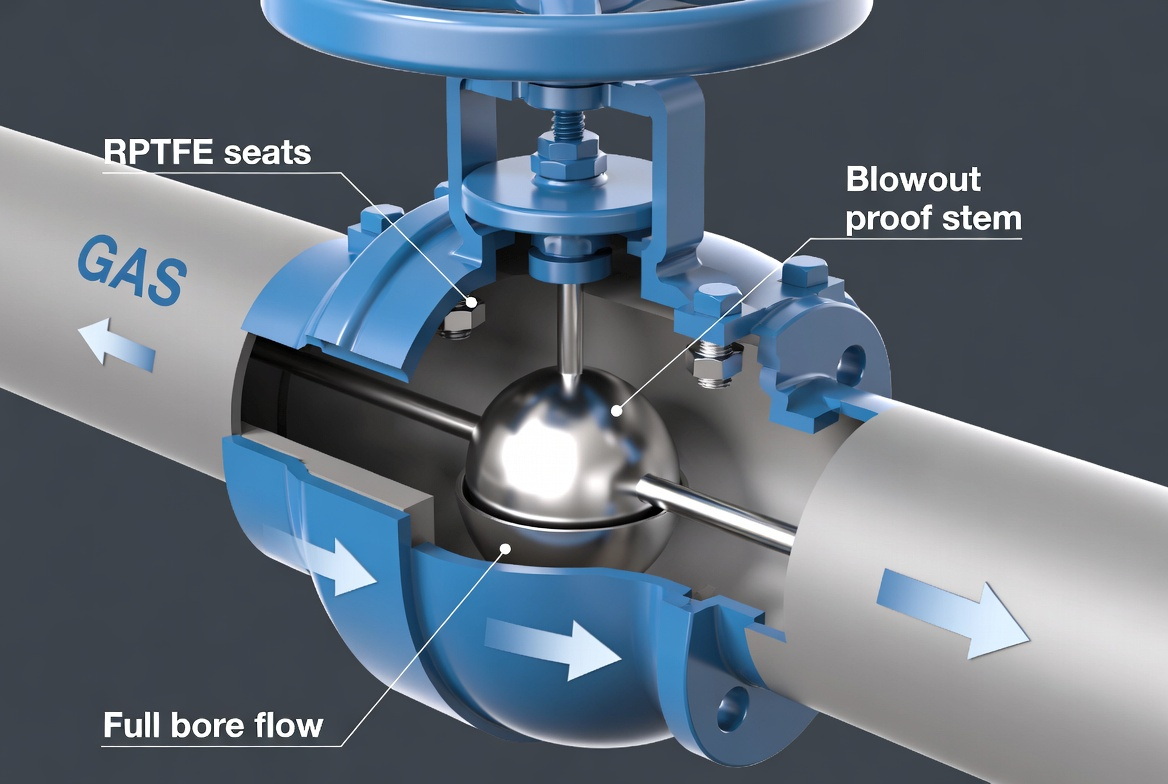
Ball valves have become the dominant choice for natural gas isolation and emergency shutoff in both transmission pipelines and local distribution networks. That is because they combine full‑bore flow, fast 90‑degree operation, and very low internal leakage in a compact package. [plumbingsupplyandmore]
Key advantages for gas service include:
- Full‑bore design minimizes pressure drop and turbulence, which is especially important in high‑velocity gas lines. [valvulasfevisa]
- Quarter‑turn operation makes them ideal for emergency shutoff and automation with electric or pneumatic actuators. [convalve]
- Tight sealing with modern seat designs yields leakage rates often below 0.1%, suitable for demanding gas applications. [plumbingsupplyandmore]
- Versatile configurations, including floating and trunnion‑mounted designs, threaded, welded, or flanged ends, and manual or actuated options. [tianyuvalves]
In practice, engineers often select ball valves for station block valves, city‑gate isolation, building service lines, and many on‑off applications where fast, reliable shutoff is essential. [valvulasfevisa]
Apollo's natural gas ball valve portfolio provides a useful benchmark for what a high‑quality gas valve should look like in terms of design and documentation. The well‑known Apollo 80‑100 Series, for example, shows how thoughtful engineering and rigorous testing translate into performance in the field. [plumbingsupplyandmore]
While specific figures vary by model, Apollo's gas‑rated ball valves typically incorporate:
- Bronze or high‑grade alloys designed and machined to tight tolerances for long‑term leak integrity. [valveman]
- RPTFE seats delivering a reliable seal in gas service across wide temperature ranges. [plumbingsupplyandmore]
- Blow‑out proof stems, which prevent stem ejection under pressure—a critical safety feature. [valveman]
- UL listings for LPG, natural gas, and flammable liquids, helping installers demonstrate compliance to inspectors and insurers. [plumbingsupplyandmore]
The Apollo 80‑100 Series is frequently highlighted as one of the top bronze ball valves specifically designed for natural gas, rated for pressures around 205 psig and temperatures up to approximately 460 °F in typical configurations. Some Apollo ball valves are also rated for higher pressures and temperatures, making them suitable for more demanding industrial service. [valveman]
From a specifier's point of view, these design choices are not unique to Apollo—they are a checklist you can apply to any gas ball valve supplier you evaluate. [convalve]
When supporting EPC contractors and distributors, I usually walk them through a structured checklist before final valve selection. Below is a practical framework you can adapt to your own projects. [valvulasfevisa]
Start by defining the real‑world conditions your valve will face:
- Gas composition (dry natural gas, presence of H₂S, CO₂, moisture, or condensate). [convalve]
- Operating pressure and maximum design pressure, including potential surges. [valvulasfevisa]
- Minimum and maximum temperature during operation and downtime. [convalve]
- Location in the system (transmission line, city gate, building service, appliance branch). [valvulasfevisa]
The more precisely you quantify these parameters, the more confidently you can size and rate your valve.
Material choice is critical when handling natural gas, particularly where contaminants or low temperatures are involved. Typical options include: [convalve]
- Carbon steel (e.g., ASTM A105, A216 WCB) for general gas pipelines. [convalve]
- Low‑temperature steels (e.g., ASTM A350 LF2) where sub‑zero conditions are expected. [convalve]
- Stainless steels (304/316) for corrosive or sour gas environments. [valvulasfevisa]
In parallel, make sure the valve design complies with API 6D, ASME B16.34, and ISO 14313, especially for pipeline applications where compliance is not optional. [valvulasfevisa]
Ball valves for natural gas are typically specified according to ANSI pressure classes (Class 150, 300, 600, etc.). For example, transmission pipelines operating around 70 bar often require Class 600 valves to maintain adequate margins. [valvulasfevisa]
You should also verify that the flow coefficient (Cv) of the selected size meets your flow requirements without causing unnecessary pressure drop. Ball valves generally offer generous Cv values because of their full‑bore design, but undersizing can still lead to inefficiencies. [convalve]
Your choice of end connection and actuator should match both the system pressure and maintenance philosophy. [tianyuvalves]
- Threaded or compression ends: Smaller building and appliance lines.
- Flanged ends: Medium to large distribution pipelines where future removal is anticipated.
- Welded ends: High‑pressure transmission lines, minimizing leak paths.
- Manual lever operation: Simple on/off, local control.
- Pneumatic or electric actuation: Remote control, SCADA integration, and safety interlocks. [tianyuvalves]
Modern gas networks often favor actuated ball valves with Double Block & Bleed (DBB) capabilities at critical nodes to simplify maintenance and leakage testing. [convalve]
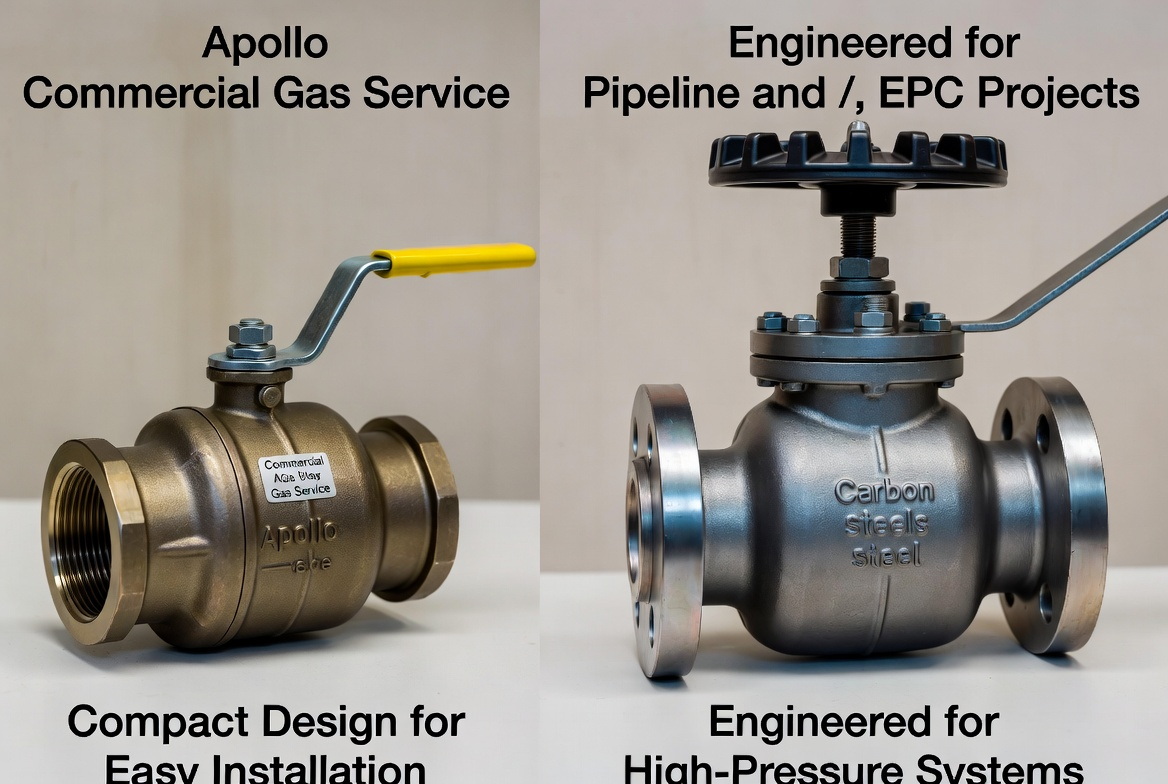
The table below summarizes how a typical UL‑listed Apollo gas ball valve compares to a project‑specific ball valve sourced from an OEM such as Tianjin Wode Valve for water, waste‑water, or cross‑industry applications that also involve gas tie‑ins. [wdvalve.en.made-in-china]
| Aspect | Apollo natural gas ball valve | OEM project ball valve (Tianjin Wode Valve style) |
|---|---|---|
| Primary focus | Packaged, catalog natural gas service valves with UL listings. (valveman) | Customized valves for water, municipal, industrial and EPC projects, with options for gas service. (wdvalve.en.made-in-china) |
| Design standards | Typically UL listed and aligned with ASME B16.34; some models for gas and flammable liquids. (valveman) | Designed to ANSI/ASME and API pipeline standards, with project‑specific material, pressure, and sealing options. (wdvalve.en.made-in-china) |
| Materials | Bronze and alloy bodies with RPTFE seats, blow‑out proof stems. (valveman) | Carbon steel, stainless steel, and special alloys to match gas, water, or mixed services, with tailored seat and stem designs. (wdvalve.en.made-in-china) |
| Typical use | Commercial and light industrial natural gas lines, building services, packaged skids. (valveman) | Municipal water and wastewater pipelines, industrial networks, large‑diameter lines, and integrated EPC systems that may also include gas. (convalve) |
| Customization | Primarily catalog‑based options and size range. (valveman) | High level of customization for size, end connections, coatings, and actuation, aligned to project specifications. (wdvalve.en.made-in-china) |
From a specifier's perspective, Apollo's range is an excellent reference point, while an experienced OEM partner can adapt those same design principles across broader system requirements and mixed media (e.g., gas plus water or condensate in the same facility). [wodevalve]
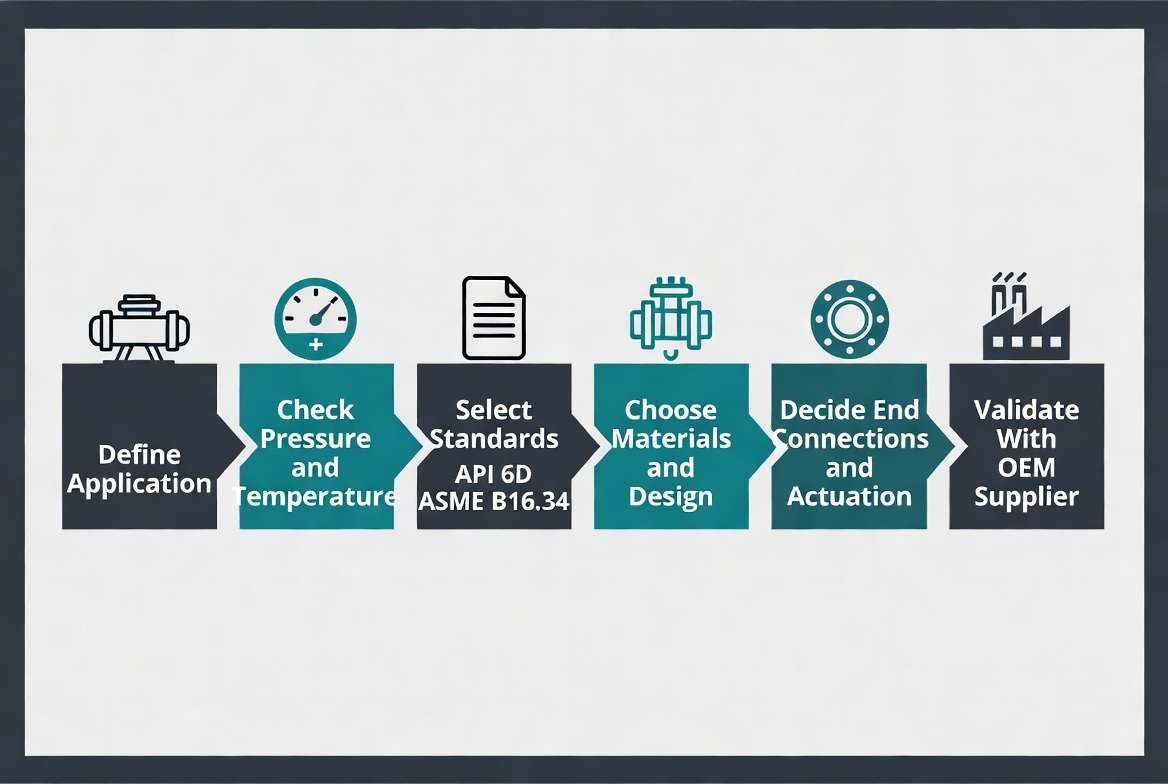
Over the years, supporting EPC contractors and global distributors, I have developed a simple but highly effective decision flow for natural gas ball valve selection. You can follow the same steps: [valvulasfevisa]
1. Define the pipeline segment
Is it transmission, distribution, building service, or an internal plant line? This determines the pressure class, standards, and documentation requirements. [valvulasfevisa]
2. Fix your design envelope
Document operating and design pressure, maximum temperature, and minimum ambient temperature. [convalve]
3. Confirm standards and approvals
Identify which of API 6D, ASME B16.34, ISO 14313, UL, CSA, or local gas codes must be met in your jurisdiction. [valvulasfevisa]
4. Select materials and body style
Choose carbon steel, low‑temperature steel, stainless steel, or bronze based on gas composition and environment, then select floating or trunnion‑mounted design based on size and pressure. [tianyuvalves]
5. Size and rate the valve
Calculate Cv requirements, verify full‑bore or reduced‑bore design, and lock in the ANSI class with adequate safety margin. [convalve]
6. Specify seats, seals, and stem design
Confirm high‑performance seat materials such as RPTFE, seals compatible with your gas stream, and a blow‑out proof stem. [valveman]
7. Determine actuation and accessories
Decide between manual, pneumatic, or electric operation and define any position switches, solenoids, or communication protocols for SCADA integration. [tianyuvalves]
8. Validate with your supplier
Share your data sheet with a proven ball valve manufacturer, request drawings, test reports, and material certificates, and review all details before final approval. [wdvalve.en.made-in-china]
This structured approach dramatically reduces the risk of mis‑specification and ensures that the "best" valve is the one that matches your real application, not just the most heavily marketed product. [valvulasfevisa]
From a user experience perspective, people often underestimate how easily a seemingly small specification gap can turn into a serious issue once a line is pressurized. Some of the most common mistakes include: [convalve]
- Ignoring gas composition and assuming all natural gas behaves the same, which can lead to material compatibility issues and premature seat failure. [valvulasfevisa]
- Selecting on price alone, without verifying standards, test documentation, or leakage class. [convalve]
- Misunderstanding pressure ratings, confusing working pressure at ambient temperature with reduced ratings at higher temperatures. [valvulasfevisa]
- Undersizing or oversizing the valve, leading to high pressure drop or poor controllability, particularly in mixed‑duty lines. [convalve]
- Skipping installation best practices, such as proper pipe support, correct flow direction where applicable, and post‑installation leak testing. [valvulasfevisa]
In one recent project review, a contractor installed generic brass gas valves without confirming their temperature derating and compatibility with a slightly sour gas stream, resulting in unplanned shutdowns and valve replacement within the first year of operation. A modest upfront investment in proper material selection and documentation would have prevented this entirely. [convalve]
While catalog valves from brands like Apollo are an important part of the market, many EPC projects and distributors need tailored solutions that combine gas service with water, wastewater, or industrial process media in a single project portfolio. [wodevalve]
An experienced OEM manufacturer brings several advantages:
- Broad specification coverage across ANSI/ASME, API, and ISO, enabling consistent design language across different lines in the same facility. [wdvalve.en.made-in-china]
- Custom sizes and special diameters to match existing pipelines, expansion projects, or space‑constrained installations. [wodevalve]
- Project‑level engineering support, including drawing review, data sheet checking, and coordination with actuators and control systems. [wdvalve.en.made-in-china]
- Integrated supply for multiple valve types, simplifying logistics for distributors and EPCs who need ball, butterfly, check, and gate valves from a single source. [wodevalve]
For natural gas service, this means you can apply the same selection logic you would use for a premium Apollo gas valve but implement it at project scale, across dozens or hundreds of line items, with consistent documentation and support. [wdvalve.en.made-in-china]
Not always, but many jurisdictions and insurers strongly prefer UL or similar listings for building and commercial gas systems. For transmission pipelines and large industrial facilities, API and ASME compliance plus documented testing may be more important than UL alone. [plumbingsupplyandmore]
In some low‑pressure systems, a properly rated valve may handle both media, but you must verify material compatibility, pressure and temperature ratings, and any regulatory limitations for gas service. It is safer to treat gas valves as a dedicated category and confirm suitability with your manufacturer. [convalve]
Inspection intervals depend on local regulations and criticality, but many operators perform at least annual leak checks on key isolation valves, with more frequent inspections at high‑risk locations. Follow your pipeline integrity management plan and manufacturer guidance. [valvulasfevisa]
Floating ball valves work well for small to medium sizes and moderate pressures, while trunnion‑mounted designs are preferred for larger diameters and higher pressures because they reduce seat loading and operating torque. Your pressure, size, and actuation scheme typically dictate the best choice. [tianyuvalves]
At a minimum, ask for datasheets, pressure‑temperature ratings, material lists (MTRs where applicable), test reports (hydrostatic and leak tests), certificates of compliance to relevant standards, and any UL, CSA, or equivalent approvals. Reputable manufacturers and OEM partners will supply these proactively. [wodevalve]
1- ValveMan. "Selecting the Best Apollo Ball Valve for Natural Gas Use." [https://valveman.com/blog/selecting-the-best-apollo-ball-valve-for-natural-gas-use/] [valveman]
2- Plumbing Supply and More. "Which Apollo Valve Type Is Best for Your Needs?" [https://www.plumbingsupplyandmore.com/which-apollo-valve-type-is-best-for-your-needs] [plumbingsupplyandmore]
3- Convalve. "Types, Features, and Selection Criteria of Valves in Natural Gas Pipelines." [https://convalve.eu/language/en/types-features-and-selection-criteria-of-valves-in-natural-gas-pipelines/] [convalve]
4- Fevisa. "Gas Ball Valves in Industrial Applications: Things to Keep in Mind." [https://valvulasfevisa.com/gas-ball-valves-in-industrial-applications-things-to-keep-in-mind/] [valvulasfevisa]
5- Hebei Wode Valve Co., Ltd. "Company Profile and Product Overview." [https://wdvalve.en.made-in-china.com] [wdvalve.en.made-in-china]
6- WODE VALVE. "About Us." [https://www.wodevalve.com/aboutus.html] [wodevalve]
7- Tianyu Valves. "API 6D Trunnion Mounted Ball Valves for High-Pressure Oil & Gas Pipelines." [https://www.tianyuvalves.com/news/api-6d-trunnion-mounted-ball-valves-for-high-pressure-oil-gas-pipelines/] [tianyuvalves]


