

Views: 222 Author: Wode Valve Publish Time: 2026-05-21 Origin: Site


Choosing between electric and pneumatic actuators is one of the most consequential decisions you make when automating ball valves and check valves in water treatment and municipal pipeline projects. As a manufacturer deeply involved in valve packages for global distributors, EPC contractors, and international valve brands, I've seen good actuator choices dramatically improve plant reliability—and poor choices create hidden lifetime costs, safety risks, and downtime. [svf]
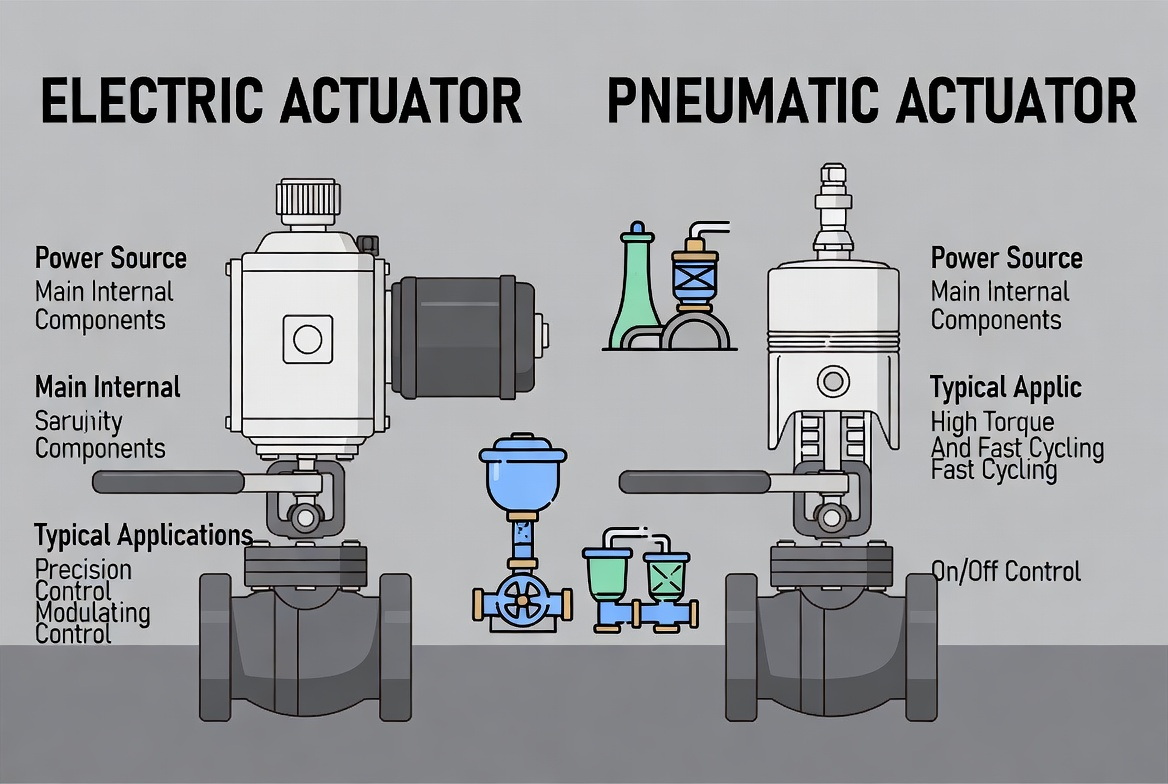
Valve actuators are automation devices that move valves—opening, closing, or modulating them in response to a control signal, without manual intervention. They replace hand levers or gear operators and are mounted to the valve via standardized interfaces (for example, ISO 5211 on many ball valves and butterfly valves). [ttpumps]
At a high level, actuators:
- Receive a signal from a control system (PLC, SCADA, DCS). [svf]
- Convert electrical energy or compressed air energy into torque or thrust. [linkedin]
- Rotate or linearly stroke the valve to a commanded position (open, closed, or somewhere in between). [svf]
For quarter‑turn valves such as ball valves and butterfly valves—common in water treatment and municipal pipelines—actuators typically generate a 90° rotary motion. [kinetrol]
Electric actuators convert electrical energy from AC or DC power into rotational motion, usually via an electric motor and gear train. For quarter‑turn valves (ball, butterfly, plug), a motorized drive rotates the valve stem through 90°, often with built‑in limit switches, torque sensing, and position feedback. [linkedin]
There are two common categories you'll encounter in water and pipeline projects:
- Motor‑driven quarter‑turn actuators for ball and butterfly valves—often with intelligent controls and fieldbus options. [valveman]
- Solenoid valve assemblies, where the actuator and valve are integrated as one compact unit for on/off service. [linkedin]
Electric actuators tend to stand out in several areas:
- High precision and repeatability – Electric drives deliver very fine positioning, especially in modulating service with feedback encoders. [svf]
- Easy integration with modern control systems – Native compatibility with PLC, SCADA, and IoT platforms; many units support digital protocols out of the box. [linkedin]
- Clean, quiet operation – No exhaust air, no compressor noise; important in indoor facilities, commercial buildings, or noise‑sensitive projects. [svf]
- Lower maintenance – With no air lines, filters, or compressors, maintenance is often limited to periodic checks on seals, electronics, and mechanical wear. [linkedin]
In my experience, project teams appreciate electric actuators when:
- Space is limited and piping for compressed air is difficult or expensive. [linkedin]
- Operators want rich diagnostics—valve position logs, alarms, torque curves—for remote troubleshooting. [svf]
- The plant is already heavily digitized and "smart" valves fit neatly into the existing architecture. [svf]
From recent projects and published case studies, electric actuators are commonly chosen for: [ttpumps]
- Water treatment plant flow control – Modulating control on filters, clarifiers, and chemical dosing where precise flow control is needed. [kinetrol]
- Critical isolation with backup power – Valves equipped with electric actuators plus battery backup to maintain operation during power outages. [ttpumps]
- Remote installations with reliable power – Sites where electricity is easier to provide than compressed air, such as small booster stations or remote PRV chambers. [kinetrol]
Pneumatic actuators use compressed air to generate force. A piston or diaphragm housed in a cylinder is pressurized on one side (or both), converting air pressure into linear motion, which is then transformed into rotary motion via mechanisms such as rack‑and‑pinion or scotch yoke drives for quarter‑turn valves. [svf]
There are two main pneumatic configurations:
- Single‑acting (spring return) – Air drives the valve in one direction; an internal spring brings it back to its fail position when air is lost.
- Double‑acting – Air pressure alternates between two sides of the piston, with no internal spring; both opening and closing rely on air supply.
Pneumatic actuators are favored in many industrial environments because they offer: [intelmarketresearch]
- Very high torque and force density – Excellent for large‑diameter valves or high‑pressure services where electric actuators become bulky or expensive. [svf]
- Fast response and high cycling capability – Ideal for applications needing rapid open/close or frequent operation. [svf]
- Excellent performance in hazardous or harsh environments – Pneumatics tolerate high temperatures, dust, moisture, and explosive atmospheres with fewer certification burdens than electrics. [intelmarketresearch]
- Simple, robust construction – Fewer electronic components and rugged mechanical design, which helps achieve long service life when air quality is controlled. [intelmarketresearch]
From a lifecycle perspective, the actuator body itself often runs reliably for years; the main maintenance burden shifts to supporting infrastructure—compressor, dryers, and FRL (Filter‑Regulator‑Lubricator) units. [intelmarketresearch]
For water and municipal pipeline projects, pneumatic actuators are frequently chosen for: [blog.modec]
- High‑torque butterfly or plug valves on large trunk mains and transmission lines. [ttpumps]
- Hazardous or corrosive environments—for example, zones with explosive gases or aggressive chemicals where electrical equipment is challenging to certify. [intelmarketresearch]
- High‑cycle isolation and control in treatment processes that open and close valves many times a day. [blog.modec]
Several case studies in water treatment plants show how upgrading to modern pneumatic actuator packages—often with double‑acting rotary actuators and smart positioners—significantly reduces freezing issues, air leaks, and unplanned downtime. [blog.modec]
Below is a practical comparison you can use in project reviews and technical proposals. [intelmarketresearch]
| Factor | Electric actuator | Pneumatic actuator |
|---|---|---|
| Power source | Electricity (AC/DC) (linkedin) | Compressed air (svf) |
| Motion type | Rotary or linear, typically via motor and gear train (svf) | Linear piston/diaphragm converted to rotary via rack‑and‑pinion or scotch yoke |
| Precision & control | Very high; excellent for modulation and feedback integration (svf) | Moderate; high precision requires positioners and feedback devices (svf) |
| Speed of operation | Moderate to fast; fastest models still slower than pneumatics in many cases (svf) | Very fast, especially for on/off; high duty cycles (svf) |
| Torque / force range | Limited at very large sizes; high torque versions exist but can be large and costly | Naturally high torque/force in compact packages; ideal for large valves (svf) |
| Hazardous areas | Requires explosion‑proof housings and certifications (svf) | Intrinsically safer in explosive atmospheres; fewer electronics (intelmarketresearch) |
| Noise level | Low, quiet, no air exhaust (svf) | Moderate due to exhaust air noise (svf) |
| Maintenance | Lower on actuator; no air system; periodic checks on seals, motor, and electronics (svf) | Actuator is robust, but compressors and FRL require ongoing service (intelmarketresearch) |
| Initial cost | Higher per unit; no compressor cost if power is available (svf) | Lower unit cost; total system cost higher if you must install an air system (intelmarketresearch) |
| Energy efficiency | Often higher; power is consumed mainly during motion (linkedin) | Continuous compressor operation can drive higher energy use (linkedin) |
| Fail‑safe capability | Requires batteries, springs, or external systems for fail‑safe (ttpumps) | Spring‑return designs provide natural, mechanical fail‑safe behavior |
| Best suited for | Precision control, digital integration, cleaner environments | High torque, fast action, harsh or hazardous environments |
In real projects, the "right" actuator is rarely chosen on a single criterion. Here's the step‑by‑step framework I use with EPC teams and plant engineers when sizing and selecting actuators for ball valves and check valves.
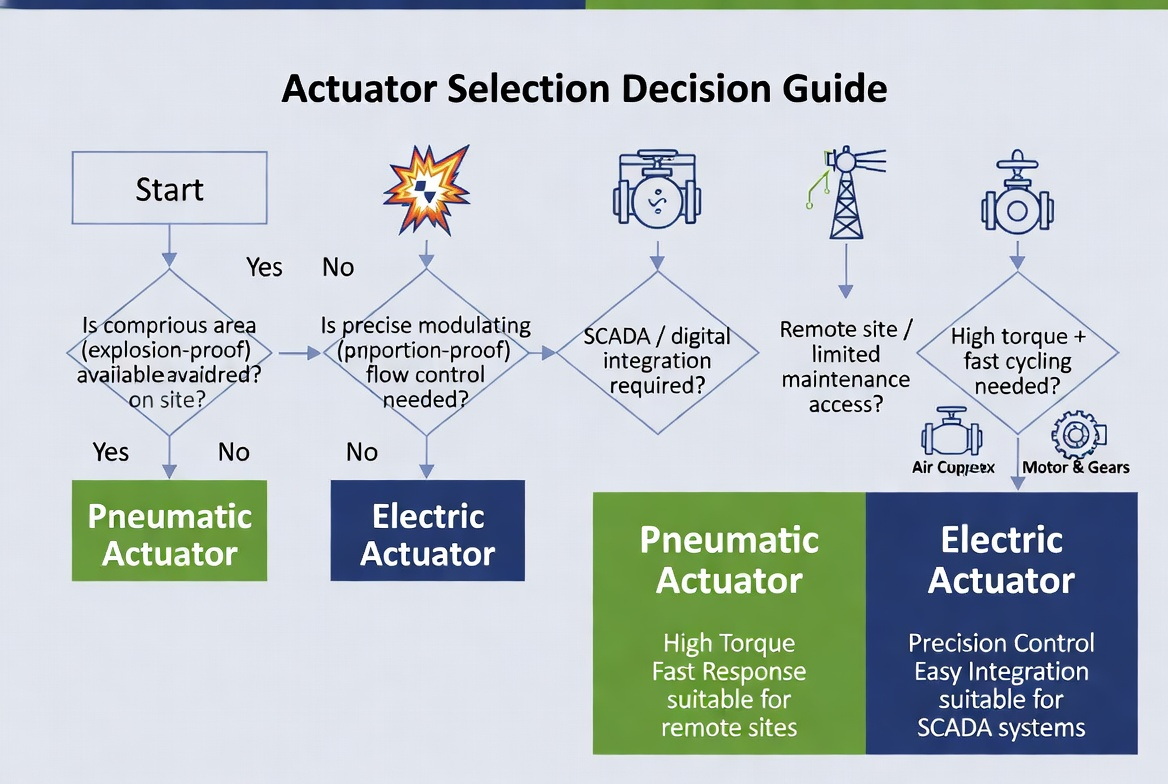
Start by clarifying:
- Valve type: ball, butterfly, plug, or check valve with external actuator. [svf]
- Size and pressure class: Larger diameters and higher differential pressures typically push you toward pneumatics. [cncontrolvalve]
- Function: On/off isolation, emergency shutdown, or modulating control. [svf]
For example, a DN200 butterfly valve in a high‑pressure main will likely require a robust pneumatic actuator, while a DN50 ball valve in a dosing line might be better served by a small electric actuator with fine control. [ttpumps]
Ask how precise the valve needs to be:
- On/off only – Both electric and pneumatic actuators work well. [svf]
- Modulating (e.g., 4–20 mA setpoints) – Electric actuators offer simpler precision; pneumatic units typically need a positioner. [cncontrolvalve]
In many chemical dosing or filter backwash controls, an electric actuator with integrated position control simplifies wiring and tuning. [linkedin]
Infrastructure often decides more than the specification sheet:
- If the plant already has a reliable compressed air system with spare capacity, a pneumatic solution can be very cost‑effective. [intelmarketresearch]
- If there is no compressed air, and adding compressors and dryers would be costly or complex, electric actuators may reduce total installed cost. [svf]
In one water treatment project I reviewed, the design team initially specified pneumatics but later switched to electric actuators after realizing the compressor house would push the project over budget and schedule.
Consider:
- Ambient conditions: temperature range, humidity, dust, potential for flooding or submersion. [svf]
- Hazardous area requirements: ATEX, IECEx, or similar certifications. [intelmarketresearch]
- Safety scenarios: What should the valve do on power loss or air failure? [ttpumps]
If you require a fail‑closed valve on loss of power, a spring‑return pneumatic actuator is often the simplest and most reliable choice. Electric actuators can achieve similar behavior with battery backup or spring mechanisms, but at higher complexity and cost. [ttpumps]
Upfront actuator price is only part of the story. In line with industrial market analyses, you should also account for: [intelmarketresearch]
- Energy costs (compressor vs. electric actuator power usage). [linkedin]
- Maintenance labor and spare parts for compressors, air treatment, and actuators. [intelmarketresearch]
- Downtime risk and impact—especially for critical valves in treatment or transmission. [kinetrol]
Market research suggests pneumatic actuator markets are facing modest pressure from more energy‑efficient electric alternatives, yet pneumatics maintain a strong position in hazardous and heavy‑duty applications due to their robustness and cost‑effectiveness. [intelmarketresearch]
For water and municipal pipelines—the core markets for many ball valve and check valve manufacturers—there are several nuances worth highlighting.
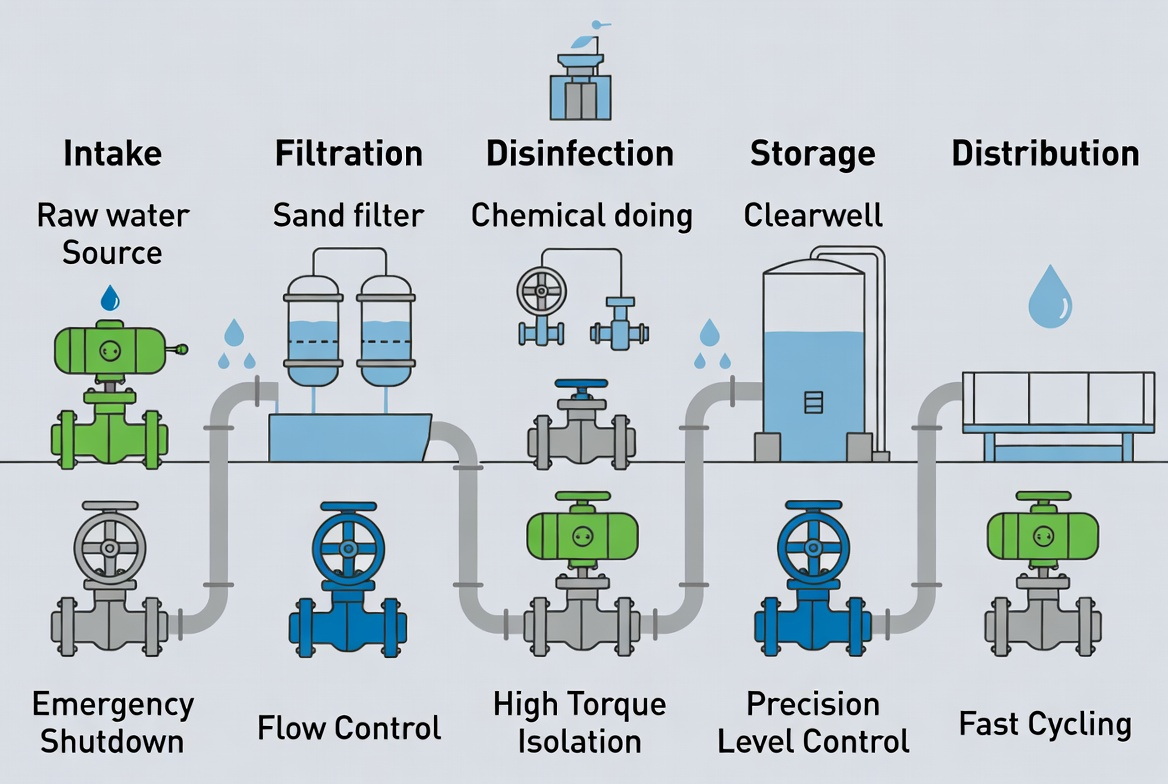
Case studies from water utilities show that poorly matched actuator types can lead to: [blog.modec]
- Frozen valve actuators in winter conditions.
- Excessive air leaks and compressor failures.
- Manual intervention required to keep valves operational.
Conversely, facilities that upgrade to well‑sized pneumatic actuator packages with proper air treatment or to intelligent electric actuators with position feedback report: [kinetrol]
- Fewer emergency call‑outs and less downtime.
- More stable process control (especially on modulating duties).
- Simplified remote monitoring through SCADA.
From my own experience supporting EPCs on water projects, the most reliable systems are those that standardize actuator types across similar duties, keep the number of variants low, and carefully document torque margins and fail‑safe logic.
As utilities push toward lower energy consumption and greener operations, actuator technology becomes part of the conversation. [linkedin]
- Electric actuators often have an advantage in overall energy efficiency, particularly where compressed air systems are old or poorly optimized. [linkedin]
- Pneumatic actuators remain attractive where air is already needed for other processes and where the intrinsic safety of air power outweighs the energy penalty. [intelmarketresearch]
Balancing these factors is essential, especially in large‑scale municipal projects with 20‑ to 30‑year design horizons.
Ball valves are typical quarter‑turn valves used extensively in isolation and control of water, wastewater, and process streams. [valveman]
For ball valves:
- Electric actuators are often chosen for small to medium DN sizes where precise modulating control is needed and where digital integration is a priority. [valveman]
- Pneumatic actuators are preferred for larger diameters or higher pressure classes where torque requirements become significant and where fast open/close is required (e.g., emergency shutdown). [valveman]
Manufacturers and distributors increasingly supply complete actuator–ball valve packages, with torque sizing, mounting interfaces, and accessories engineered as a single solution, which simplifies procurement and project execution. [valveman]
Most check valves are self‑acting, using flow and differential pressure rather than a powered actuator to open or close. However, in some advanced systems, designers specify actuated isolation valves in combination with check valves to allow controlled closure and prevent water hammer or reverse flow events. [zfavalves]
In these scenarios, the actuator—whether electric or pneumatic—must be carefully sized and tuned to coordinate with system dynamics, especially in long municipal pipelines where transient events can damage assets.
Engineers and procurement managers are busy. To make their decision process easier when they land on your actuator or valve product page:
- Use clear, descriptive H2/H3 headings such as "Electric Actuators for DN50–DN300 Ball Valves" or "Pneumatic Actuators for Hazardous Environments." [blog.saleslayer]
- Provide technical spec tables downloadable as PDF (torque, voltage, air pressure, IP rating, temperature range). [hashmeta]
- Add short, focused FAQs on topics like fail‑safe, maintenance intervals, and compatibility with existing control systems. [lform]
Choosing between electric and pneumatic actuators is not just a checkbox decision; it shapes the reliability, safety, and lifecycle cost of your entire valve system. If you're planning a water treatment or municipal pipeline project and need to standardize actuator types, validate torque sizing, or design fail‑safe logic, the most effective next step is to review your valve list with a specialist. [intelmarketresearch]
We recommend preparing a short specification package—including valve sizes, pressures, media, environmental conditions, and control philosophy—and then scheduling a technical review with an experienced valve manufacturer or automation partner. That one conversation often uncovers cost savings, risk reductions, and design simplifications that don't show up in generic datasheets. [iodigital]
Electric actuators generally deliver higher positioning accuracy and easier integration with feedback signals, making them a strong choice for modulating control. Pneumatic actuators can also provide precise control, but typically require additional accessories such as electro‑pneumatic positioners and high‑quality feedback devices. [cncontrolvalve]
Use spring‑return pneumatics when you need the valve to fail to a known safe position (open or closed) if air or power is lost. In many water treatment and pipeline applications—for example, emergency shutdown valves—a mechanical spring offers simple, highly reliable fail‑safe behavior. [ttpumps]
Not necessarily. While pneumatic actuators can be less expensive to purchase, compressed air systems consume energy continuously, which can raise operating costs over time. Electric actuators, which consume power mainly during motion, may offer better long‑term energy efficiency in some plants. [linkedin]
Yes, but they require appropriate explosion‑proof housings and certifications, and their implementation can be more complex than pneumatic equivalents. In many explosive or highly flammable environments, pneumatics remain the first choice due to their intrinsic safety and simpler compliance path. [intelmarketresearch]
Maintenance intervals depend on duty cycle, environment, and manufacturer recommendations, but as a rule, electric actuators require periodic inspection of electrical and mechanical components, while pneumatic systems require more frequent checks of air quality, filters, regulators, and compressors. Plants that follow disciplined maintenance routines and use certified spare parts typically see significantly longer actuator lifespans and fewer failures. [blog.modec]
1- ValveMan. "Practical Guide To Electric and Pneumatic Actuators – Which One To Choose?" [Link].
2- SVF Flow Controls. "Pneumatic vs Electric Actuators: How to Choose." [Link]. [svf]
3- LinkedIn Article. "Comparing Electric and Pneumatic Actuators: Which is Better for Your Application?" [Link]. [linkedin]
4- Intel Market Research. "Pneumatic Actuator Market Outlook 2025–2032." [Link]. [intelmarketresearch]
5- T‑T Flow. "Actuated Valve Package for £39m Water Treatment Works." [Link]. [ttpumps]
6- Kinetrol. "Actuators for Water Treatment Plants – Case Study." [Link]. [kinetrol]
7- Modec. "Reliability in Water Treatment Plants: The Role of Valve Actuators." [Link]. [blog.modec]
8- THINKTANK. "Learn How to Selection of Control Valve Actuators." [Link]. [cncontrolvalve]
9- HubSpot / E‑E‑A‑T Compliance. "Is Your Website EEAT‑compliant?" [Link]. [blog.hubspot]
10- iO Digital. "Google E‑E‑A‑T: creating content that puts people first." [Link]. [iodigital]


