

Views: 222 Author: Wode Valve Publish Time: 2026-05-15 Origin: Site


From more than a decade of working with water treatment and municipal pipeline projects, I have learned that a fire-safe shutoff system is only as reliable as the valves and actuation logic behind it. In this guide, I will walk through how to design FM fire-safe shutoff and emergency isolation systems using best practices from the process industry, while also highlighting how a specialized water‐valve manufacturer like Tianjin Wode Valve can support critical shutoff points in broader pipeline networks. [blog.saleslayer]
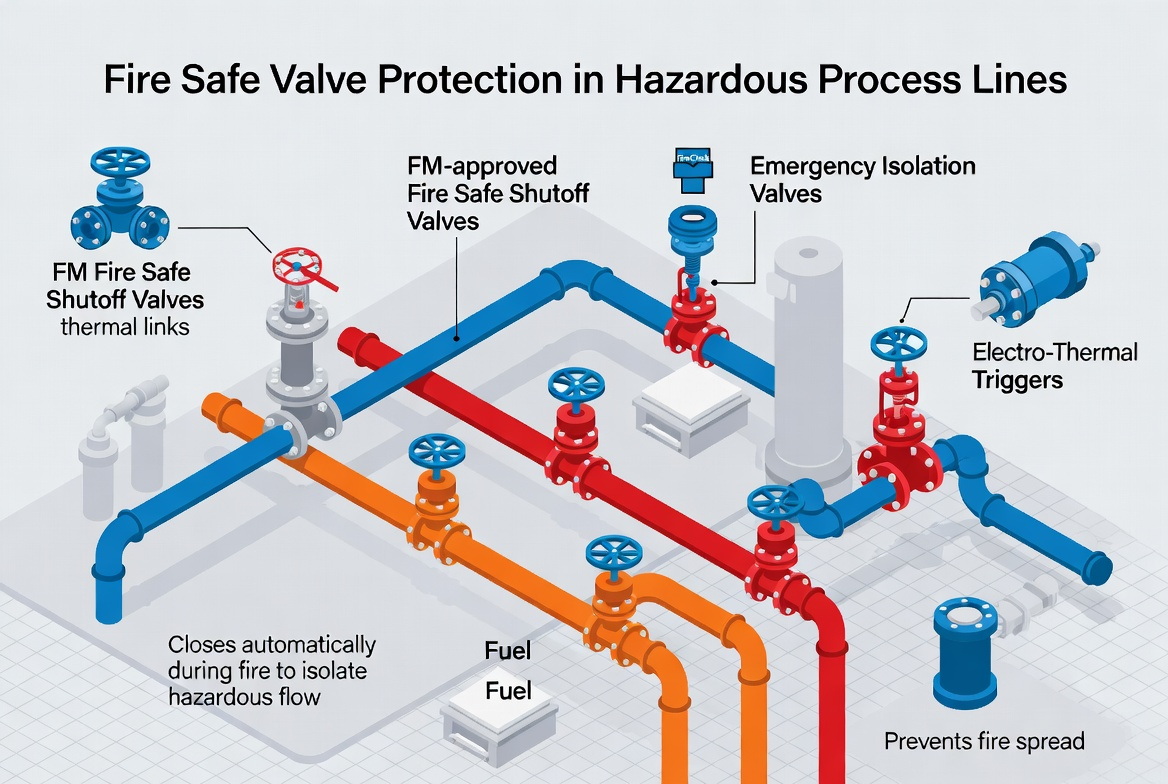
At any facility handling flammable liquids, toxic chemicals, or high‑pressure gases, uncontrolled flow during a fire is one of the biggest escalation risks. Fire can compromise pipe integrity, damage equipment, and turn a local incident into a plant‑wide emergency if media is not quickly isolated. [blog.saleslayer]
In practice, engineers rely on automatic fire‑safe shutoff valves to stop or reroute flow when temperature, smoke, or other alarm conditions indicate a developing fire. These assemblies typically combine: [blog.saleslayer]
- A quarter‑turn valve (ball or butterfly) as the primary isolation device. [blog.saleslayer]
- A thermal or electro‑thermal link that triggers the valve at a specific temperature or electrical signal. [blog.saleslayer]
- Optional pneumatic or electric actuation for integration with plant control systems. [blog.saleslayer]
When shutoff and isolation strategy is done well, it not only limits fire damage, but also protects downstream municipal networks, storage tanks, and adjacent process units.
From an engineer's standpoint, the FM fire‑safe shutoff valve is often the simplest, most robust first line of defense. These assemblies are Factory Mutual (FM) approved* designs that automatically close or open when a preset temperature is reached. [blog.saleslayer]
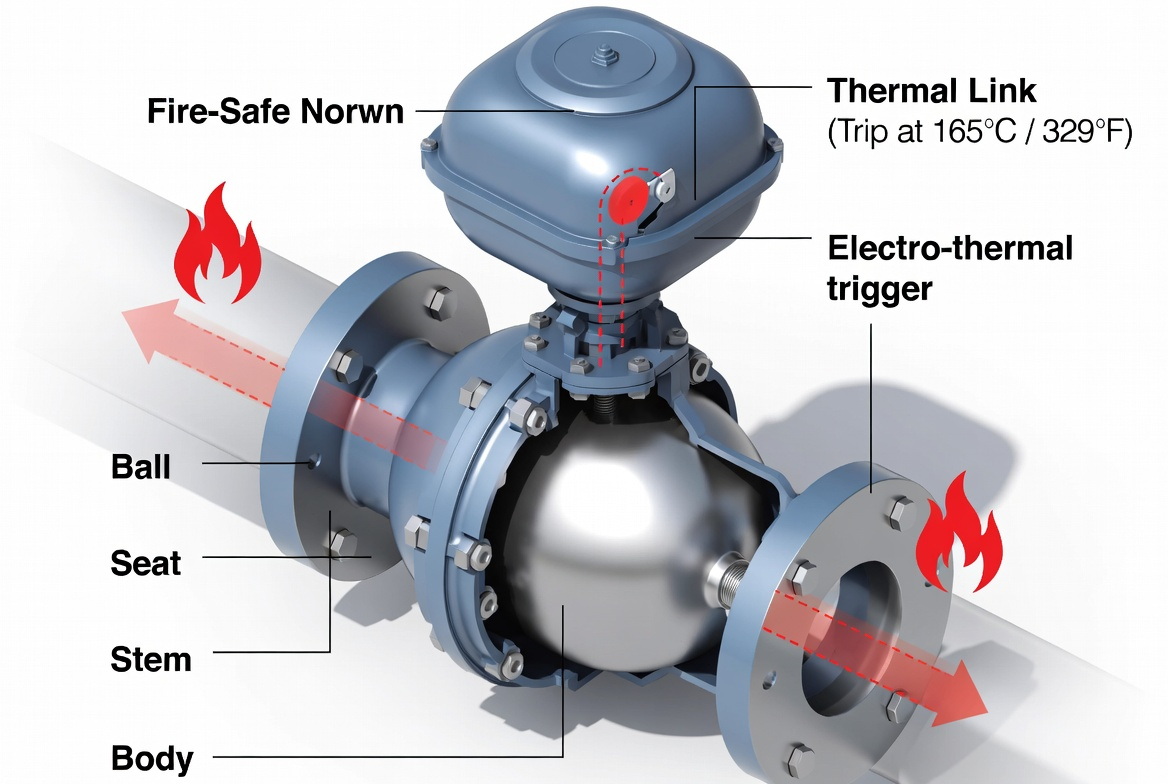
FM fire‑safe assemblies are available in both ball valve and butterfly valve configurations. Each assembly includes: [blog.saleslayer]
- A thermal link that mechanically trips at a predetermined temperature (for example 165–500 °F), driving the valve to its fail‑safe position. [blog.saleslayer]
- Optionally, an electro‑thermal link, which can also be triggered by a low‑power electrical signal such as a smoke detector alarm output. [blog.saleslayer]
- Manual override capability, allowing operators to cycle the valve without compromising the thermal link's functionality. [blog.saleslayer]
This dual‑trigger architecture (thermal plus electro‑thermal) gives designers flexibility: the same valve can respond to local temperature at the line and also to signals from fire detection or safety systems.
For most flammable fluid and gas applications, ball and butterfly valves cover a broad range of sizes and process conditions. [blog.saleslayer]
- Ball valves:
- Sizes from 1/4" to 4". [blog.saleslayer]
- Thermal activation temperatures from 165 °F to 500 °F. [blog.saleslayer]
- Threaded, socket weld, butt weld, and flanged end connections. [blog.saleslayer]
- Multiple metal alloys to match process media. [blog.saleslayer]
- Butterfly valves:
- Sizes from 3" to 12". [blog.saleslayer]
- Thermal activation temperatures from 165 °F to 500 °F. [blog.saleslayer]
- Carbon steel or 316 stainless steel bodies for corrosion resistance. [blog.saleslayer]
Design tip: in mixed utility corridors where oxygen, fuel gas, and water lines run in parallel, I usually specify butterfly valves on larger diameter lines and ball valves on smaller or high‑pressure lines, balancing cost, weight, and torque requirements.
While FM fire‑safe valves focus on local temperature‑triggered shutoff, emergency isolation valves (EIVs) extend that concept into the realm of automation and plant‑wide control. In many brownfield upgrades, EIVs are the preferred path because they retrofit easily into existing pneumatic actuation setups. [blog.saleslayer]
When paired with a FireChek device, an EIV can automatically isolate a line when abnormal temperatures are detected, while also integrating into automated startup and shutdown sequences. [blog.saleslayer]
Key characteristics of the FireChek shutoff include:
- Three actuation set points: 135 °F, 150 °F, or 165 °F. [blog.saleslayer]
- When triggered, FireChek closes the upstream pneumatic supply and vents the actuator air pressure, driving the valve to its safe position. [blog.saleslayer]
- A shape memory alloy element that makes actuation non‑destructive, allowing repeatable testing without replacing parts. [blog.saleslayer]
- Easy manual reset after cooling, with no tools required, which is ideal for routine fire‑system drills. [blog.saleslayer]
- 1/4‑18 NPT sizing for straightforward installation between air supply and spring‑return actuator using standard female threaded connections. [blog.saleslayer]
From a maintenance perspective, this non‑destructive behavior is essential; EIVs must support frequent proof‑testing without excessive spare parts or downtime.
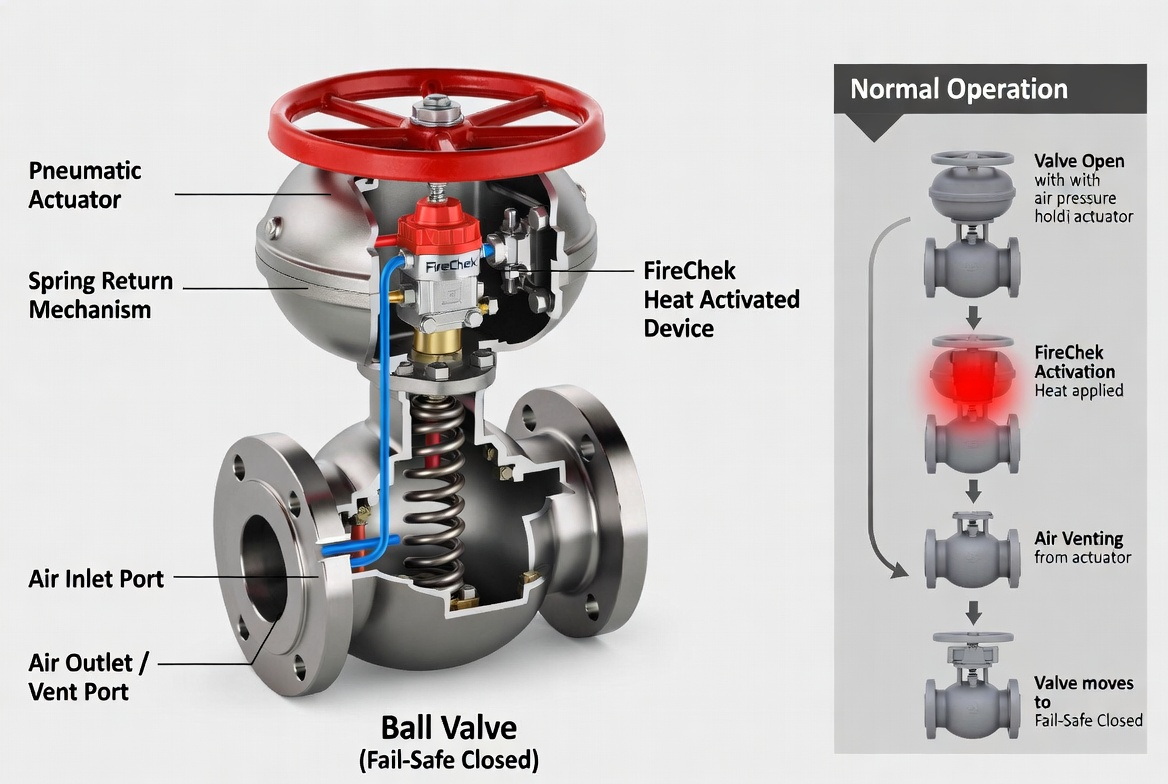
Emergency isolation valve packages are typically offered with two pneumatic actuation options. [blog.saleslayer]
- Double‑acting actuators:
- Operate between 20–120 psi supply pressure. [blog.saleslayer]
- Suitable where both open and close actions are powered and a defined "fail" position is not required.
- Spring‑return actuators:
- Operate between 40–120 psi. [blog.saleslayer]
- Close upon failure of air supply, providing a definable fail‑closed condition favored in safety instrumented functions. [blog.saleslayer]
The associated ball valves are available in stainless steel or carbon steel and in flanged sizes from 1/2" to 12". Two pressure classes are common: [blog.saleslayer]
- Class 150: up to 275 psi. [blog.saleslayer]
- Class 300: up to 700 psi. [blog.saleslayer]
In practice, I align these selections with the plant's piping class and the energy isolation philosophy defined in the project HAZOP.
From an engineering design review standpoint, the first question is always: what role do you want the valve to play in the overall safety function?
Use a thermally triggered FM fire‑safe shutoff valve when:
- No active involvement from the process control system is desired. [blog.saleslayer]
- You want a purely passive safety layer that will close on elevated temperature even if PLCs, power, or air fail. [blog.saleslayer]
- The objective is simply to stop the flow of hazardous liquid or gas if a fire is detected. [blog.saleslayer]
- The supply line does not require venting; only isolation is needed. [blog.saleslayer]
These assemblies are also suitable as part of fire suppression logic, for example to release or isolate fire retardant in specific plant areas rather than flooding an entire facility. [blog.saleslayer]
Select an EIV with FireChek when you need:
- Integration with automated plant sequences (remote startup/shutdown). [blog.saleslayer]
- A combined safety and operational actuated valve (e.g., line startup open, emergency close on fire). [blog.saleslayer]
- Repeatable, non‑destructive fire testing of the isolation function. [blog.saleslayer]
Note that a FireChek‑equipped EIV requires an existing 1/4" pneumatic supply or retrofit, and it does not vent the process supply line itself—only the actuator pneumatic line. [blog.saleslayer]
While FM fire‑safe shutoff valves handle hazardous media directly, the supporting water and pipeline infrastructure around them must also be engineered for reliability. This is where a specialized manufacturer like Tianjin Wode Valve Co., Ltd. (WODE Valve) becomes a strategic partner in the broader system. [venveo]
WODE Valve is a professional valve manufacturer based in Tianjin, China, focused on innovative solutions for water treatment and municipal pipeline applications, with more than 10 years of export experience supplying global distributors, EPC contractors, and OEM/private‑label customers. The company's factory integrates design, manufacturing, assembly, testing, and export logistics, and prioritizes leak‑free, long‑life valves built to international standards. [venveo]
In fire‑safe projects, WODE valves typically appear in:
- Water supply lines feeding fire monitors, hydrants, and fixed sprinkler networks. [venveo]
- Wastewater and drainage systems that safely convey contaminated firewater away from critical zones. [venveo]
- Isolation points in large‑diameter municipal feeds that must close reliably during emergency events. [venveo]
Because WODE focuses on mid‑ to high‑end valves for water and wastewater systems, its products complement FM fire‑safe shutoff and EIV assemblies in the overall risk‑reduction architecture. [venveo]
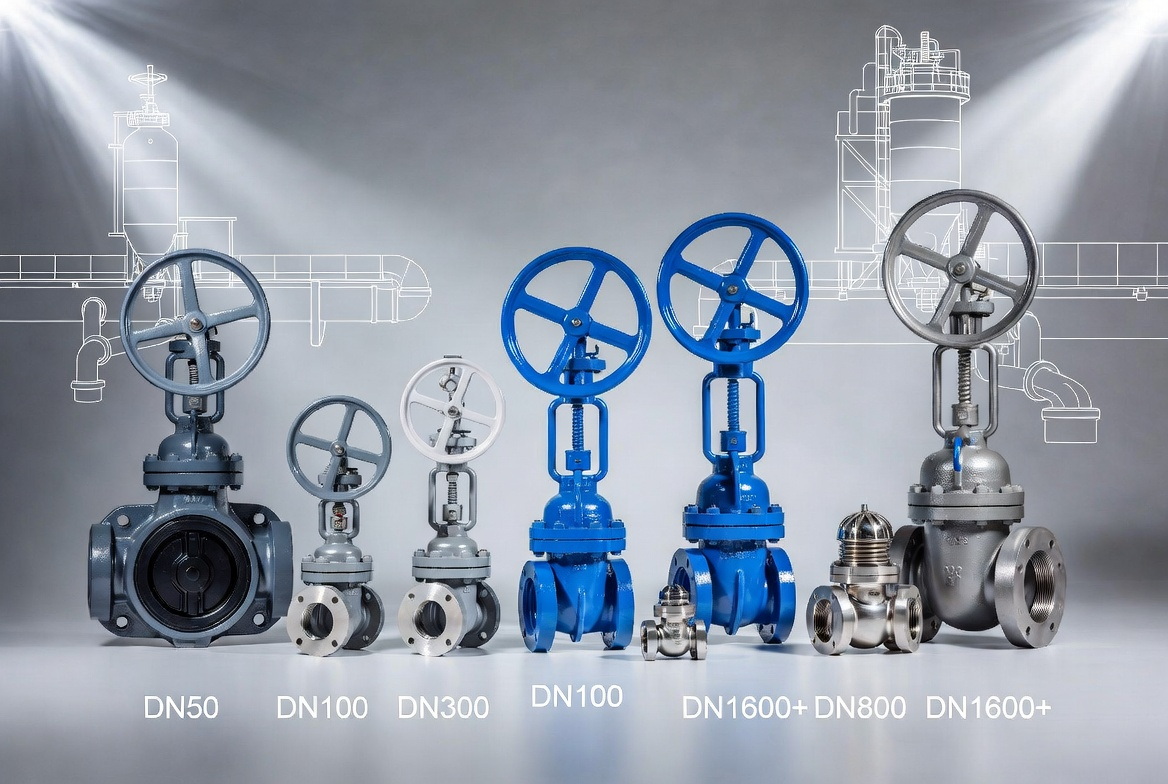
From a systems engineer's view, each valve type in the network plays a distinct role. Below is how I commonly apply the WODE Valve product families in water treatment and municipal projects. [venveo]
Butterfly valves are widely used as primary isolation valves in large‑diameter water treatment and municipal pipelines due to their compact design and low operating torque. WODE offers resilient seated butterfly valves, wafer butterfly valves, lug butterfly valves, flanged butterfly valves, and double eccentric flanged butterfly valves tailored to water and wastewater service. [venveo]
Key applications include:
- Trunk mains and large distribution lines feeding industrial firewater rings. [venveo]
- Isolation of large storage reservoirs and pumping stations.
- Sectional isolation in treatment plants to allow maintenance without full shutdown.
Check valves prevent reverse flow that might damage pumps or contaminate clean water lines. WODE's portfolio includes wafer check valves, dual plate check valves, partially rubber‑lined and fully rubber‑lined dual plate check valves, and swing check valves. [venveo]
In fire‑related design, check valves are especially important for:
- Preventing backflow from firewater systems into potable water networks.
- Protecting booster pumps feeding sprinkler and hydrant loops.
Gate valves remain a common choice where full‑open/full‑close isolation with minimal pressure drop is required in buried or long‑run pipelines. WODE manufactures resilient seated and metal seated gate valves as well as soft seated ball valves, which are used in: [venveo]
- Plant incoming water connections and main headers.
- Underground municipal mains, often paired with surface‑accessible operating extensions.
Ball valves, especially in soft‑seated designs, offer tight shutoff and quick operation, making them suitable for bypass lines, drain lines, and process tie‑ins that support fire‑safe operation around hazardous media valves. [venveo]
Strainers (such as Y‑type strainers) and rubber expansion joints are often overlooked but are critical to long‑term fire system reliability. In practice, I specify: [venveo]
- Y‑type strainers upstream of FM fire‑safe and EIV valves to protect seats and discs from debris. [venveo]
- Rubber expansion joints to absorb vibration and thermal movement around pumps and key isolation points, reducing stress on valve bodies and flanges. [venveo]
A major differentiator for WODE Valve is its ability to manufacture large‑diameter and non‑standard valves from DN550 up to DN2400, including special sizes such as DN850, DN1050, DN1350, DN1600, and DN2000. This capability becomes crucial when designing: [venveo]
- City‑scale municipal feeds that must remain operational even under emergency conditions. [venveo]
- Long‑distance industrial water transfer lines that supply firewater to multiple facilities.
- Major treatment plant headers that must be isolated in sections without compromising overall resilience.
These large‑diameter valves are commonly deployed in water treatment plants, municipal water supply systems, wastewater networks, and industrial fluid control projects, where they ensure long‑term safety and operational reliability. [venveo]
From a procurement and QA standpoint, I always look for suppliers who combine stable manufacturing, technical expertise, and formal certifications. WODE Valve emphasizes:
- Stable manufacturing with consistent production processes for uniform quality across all orders. [venveo]
- A "quality first" culture that prioritizes long‑term reliability in every manufacturing step. [venveo]
- A customer‑oriented approach focused on practical valve solutions rather than generic catalog offerings. [venveo]
- Continuous improvement in product design and performance, backed by technical expertise. [venveo]
- Extensive OEM experience with international brands and distributors. [venveo]
The company has obtained ISO9001 Quality Management System certification, ISO14001 Environmental Management System certification, and ISO45001 Occupational Health and Safety Management System certification, underscoring its commitment to quality, environmental stewardship, and safe manufacturing. [venveo]
For fire‑safe shutoff projects, these certifications help engineering teams align supplier selection with corporate and regulatory requirements.
Based on project experience, the most successful fire‑safe shutoff designs follow a clear, repeatable process.
1. Define hazardous media and risk zones
- Map all lines carrying flammable or toxic media.
- Identify areas where loss of containment would pose unacceptable risk.
2. Select the safety role of each valve
- Decide which lines require FM fire‑safe thermal/electro‑thermal shutoff for passive protection. [blog.saleslayer]
- Decide where EIVs with FireChek are needed for integrated, automated isolation. [blog.saleslayer]
3. Coordinate with water and municipal systems
- Ensure that firewater, potable water, and wastewater lines have appropriate butterfly, gate, check, and ball valves for isolation and backflow prevention. [venveo]
- Include strainers and expansion joints to protect critical valves and absorb movement. [venveo]
4. Align sizes, materials, and pressure ratings
- Match ball and butterfly valves to process sizes (1/4"–12") and classes (150 vs 300) according to pressure and temperature. [blog.saleslayer]
- For municipal lines, use large‑diameter valves (DN550–DN2400) where needed to minimize headloss and maintain capacity. [venveo]
5. Design for maintainability and testing
- Use FireChek's non‑destructive shape memory alloy design to support routine test cycles without frequent part replacement. [blog.saleslayer]
- Provide accessible valve locations and clear tagging to support periodic inspection and proof testing.
6. Document and verify compliance
- Confirm FM approvals and relevant international standards for fire‑safe valves. [blog.saleslayer]
- Maintain manufacturer certificates (ISO9001, ISO14001, ISO45001, etc.) in project QA records. [venveo]
If you are designing or upgrading fire‑safe shutoff systems for industrial plants, water treatment facilities, or municipal networks, partnering with a specialist valve manufacturer early in the design can significantly reduce project risk and lifecycle cost. [venveo]
WODE Valve can support you with:
- Application‑specific butterfly, check, gate, ball valves, strainers, and rubber expansion joints for water and wastewater lines. [venveo]
- Large‑diameter and non‑standard valve solutions for high‑capacity municipal and industrial networks. [venveo]
- OEM and private‑label cooperation to match your project's branding and documentation needs. [venveo]
To discuss specifications, drawings, or project requirements, you can contact WODE Valve via WhatsApp or email as listed on their official website, and collaborate from the early design stage through commissioning. [venveo]
| Design need | Recommended solution | Key notes |
|---|---|---|
| Passive shutdown on fire in fuel line | FM fire‑safe thermal/electro‑thermal ball valve | Local temperature and alarm‑based actuation. (blog.saleslayer) |
| Automated isolation plus fire protection | EIV with FireChek and spring‑return actuator | Integrates with control system and FireChek. (blog.saleslayer) |
| Large municipal firewater main isolation | Double‑eccentric flanged butterfly valve (DN550–DN2400) | Low headloss, large‑diameter capability. (venveo) |
| Backflow prevention to potable water | Dual plate or swing check valve | Protects clean supply from firewater contamination. (venveo) |
| Vibration and movement near pumps | Rubber expansion joints plus Y‑type strainers | Protects valves and piping from stress and debris. (venveo) |
An FM fire‑safe shutoff valve is primarily a passive safety device that closes based on temperature via thermal or electro‑thermal links, while an emergency isolation valve combines this safety function with automated startup/shutdown capabilities in a pneumatic actuation system. [blog.saleslayer]
Butterfly valves are typically preferred for larger diameter lines where weight, space, and cost become critical, whereas ball valves are often used on smaller or higher‑pressure lines requiring tight shutoff and quick operation. [venveo]
FireChek uses a shape memory alloy element, making actuation non‑destructive, so after each test or real activation it can be reset without replacing parts, enabling frequent proof‑testing with minimal downtime. [blog.saleslayer]
WODE Valve can produce large‑diameter and non‑standard valves up to DN2400, offers a full range of butterfly, gate, check, ball valves, strainers, and expansion joints for water and wastewater systems, and holds major ISO certifications for quality, environment, and safety. [venveo]
Y‑type strainers protect valve internals from debris that could prevent tight shutoff, while rubber expansion joints absorb vibration and thermal movement, reducing mechanical stress on valves and flanged connections over the system's life. [venveo]
1. Assured Automation. "Fire Safety: FM Fire-Safe Shutoff & EIVs." [https://assuredautomation.com/news-and-training/choose-fm-fire-safe-shutoff-eiv-series-designing-fire-safety-shutoffs/] [blog.saleslayer]
2. Tianjin Wode Valve Co., Ltd. "About WODE VALVE – Professional Valve Manufacturer for Water Treatment Applications." [https://www.wodevalve.com/aboutus.html] [venveo]


