

Views: 222 Author: Wode Valve Publish Time: 2026-05-13 Origin: Site


Choosing the right butterfly valve seat is one of the most important decisions you can make when designing or maintaining a water treatment or municipal pipeline system. From sealing performance to lifecycle cost, the seat material determines whether your valve will quietly operate for years—or become a recurring maintenance headache. [unionvalve]
As an engineering team at Tianjin Wode Valve Co., Ltd., we have spent more than a decade designing and exporting butterfly valves for water treatment plants, distribution networks, and municipal infrastructure worldwide. In this guide, I will walk you through how we approach butterfly valve seat selection in real projects, combining field experience with industry best practices so you can make confident, evidence-based decisions. [raritanvalve]
The seat is the primary sealing element of a butterfly valve, providing the interface between the disc and the body to prevent leakage when the valve is closed. In water and wastewater systems, the seat must deliver tight shutoff, resist chemical attack, and withstand frequent cycling under varying pressures and temperatures. [wtstwtvalve]
Poor seat selection leads to:
- Premature leakage and loss of shutoff class. [unionvalve]
- Swelling or hardening due to incompatible media. [kefa-valves]
- Increased torque and actuator stress, shortening automation life. [raritanvalve]
- Higher maintenance and unplanned shutdowns in critical networks. [mfrsvalve]
By contrast, a well-chosen seat material can extend valve life by several years, reduce torque requirements, and keep total cost of ownership under control. [kefa-valves]
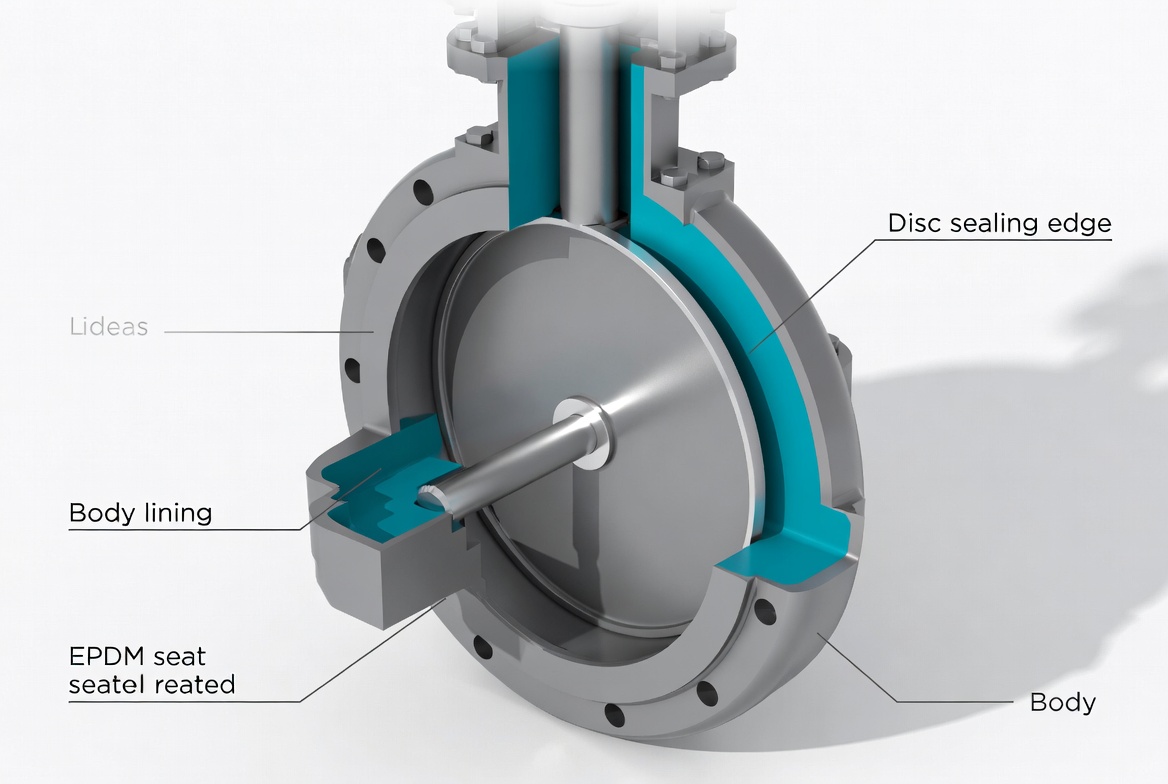
In most water and municipal pipeline applications, you will encounter three broad categories of butterfly valve seats. [raritanvalve]
Resilient seats (often elastomer-lined) are the standard choice in low- to medium-pressure water systems. [mfrsvalve]
- Seat materials: EPDM, NBR, sometimes silicone or other elastomers. [unionvalve]
- Applications: Potable water, wastewater, HVAC, general-purpose pipelines. [wtstwtvalve]
- Advantages: Excellent sealing, low torque, cost-effective, easy replacement. [kefa-valves]
This is the category where Tianjin Wode's resilient-seated butterfly valves are heavily deployed in municipal networks and water treatment plants. [wodevalve]
PTFE (polytetrafluoroethylene) and modified fluoropolymers are widely used in chemical and high-purity applications, and are increasingly adopted where safety and cleanability are critical. [fluorotec]
- Seat materials: PTFE, reinforced PTFE, modified PTFE grades. [fluorotec]
- Applications: Chemical dosing in water plants, food-grade utilities, high-purity lines. [fluorotec]
- Advantages: Excellent chemical resistance, wide temperature range, low friction. [kefa-valves]
Industry data suggests that the use of PTFE valve seats has grown significantly in recent years, driven by stricter safety and hygiene requirements. [kefa-valves]
Metal-seated butterfly valves are used when abrasion, high temperature, or severe service conditions exceed the limits of soft-seated valves. [mfrsvalve]
- Seat materials: Stainless steel or hard-faced alloys. [mfrsvalve]
- Applications: High-temperature steam, abrasive slurries, critical isolation in industrial plants. [raritanvalve]
- Advantages: High durability, resistance to wear and deformation, stable performance in harsh conditions. [raritanvalve]
Although metal seats are less common in municipal water networks, they can be justified at strategic locations—such as raw water intakes with heavy sand loads. [wtstwtvalve]
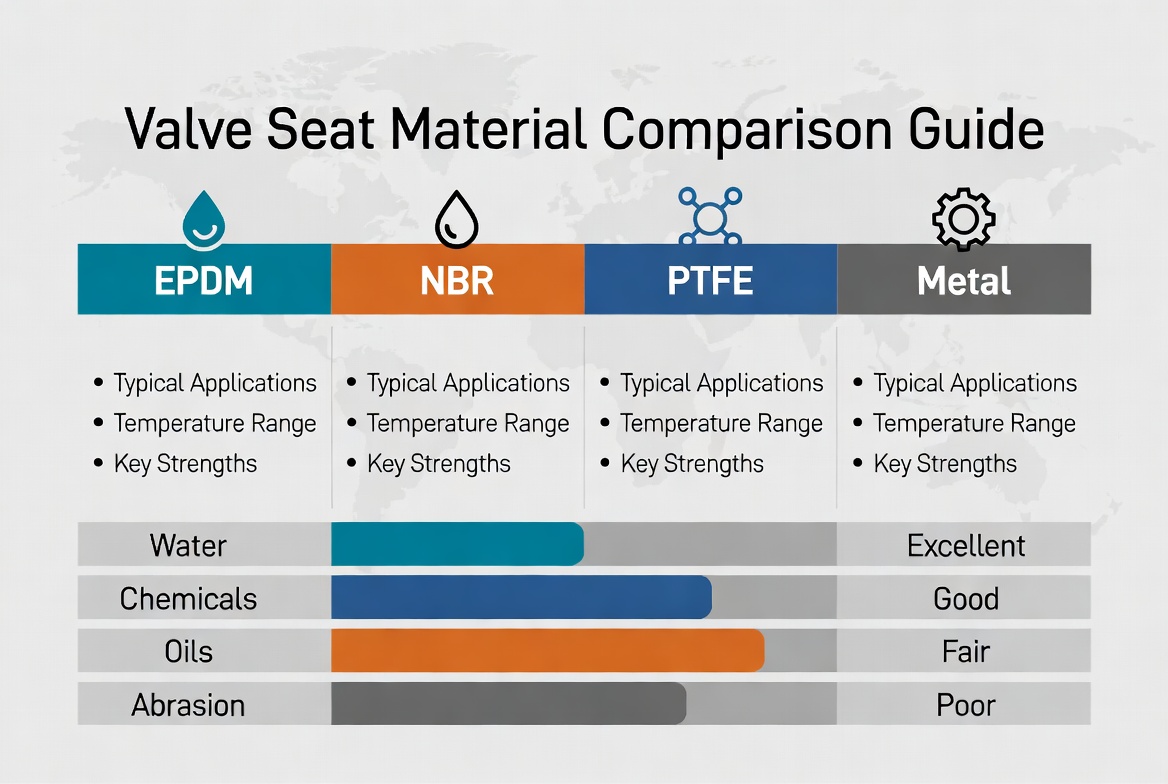
The table below summarizes typical butterfly valve seat materials, their core strengths, and usage ranges based on industry sources. [unionvalve]
| Seat Material | Typical Applications | Key Strengths | Approx. Temperature Range | Typical Pressure Range |
|---|---|---|---|---|
| EPDM | Potable water, wastewater treatment, HVAC water lines (unionvalve) | Excellent water and steam resistance, good aging and ozone resistance (unionvalve) | About -40°C to 120°C (kefa-valves) | Up to around 150 PSI in many designs (kefa-valves) |
| NBR (Nitrile) | Oil-contaminated water, industrial utilities with hydrocarbons (unionvalve) | Excellent resistance to oils and fuels, good sealing performance (unionvalve) | Roughly -20°C to 100°C (kefa-valves) | Typically up to 150 PSI (kefa-valves) |
| PTFE | Chemical dosing, food and beverage utilities, aggressive media (kefa-valves) | Broad chemical resistance, wide temperature window, low friction (kefa-valves) | About -50°C to 260°C (kefa-valves) | Often around 150 PSI depending on design (kefa-valves) |
| Silicone | Pharmaceutical and biotech utilities (kefa-valves) | High temperature resilience, flexibility at low temperatures (kefa-valves) | Approximately -60°C to 200°C (kefa-valves) | Often around 120 PSI (kefa-valves) |
| Metal Seat | High-temperature steam, highly abrasive slurries, severe service (raritanvalve) | Extreme wear and temperature resistance, longer life in harsh service (mfrsvalve) | Application dependent, often high-temperature (mfrsvalve) | Used in high-pressure service (mfrsvalve) |
For many water treatment and municipal pipeline projects, EPDM remains the default elastomer thanks to its balance of cost, performance, and compliance with drinking water regulations. [unionvalve]
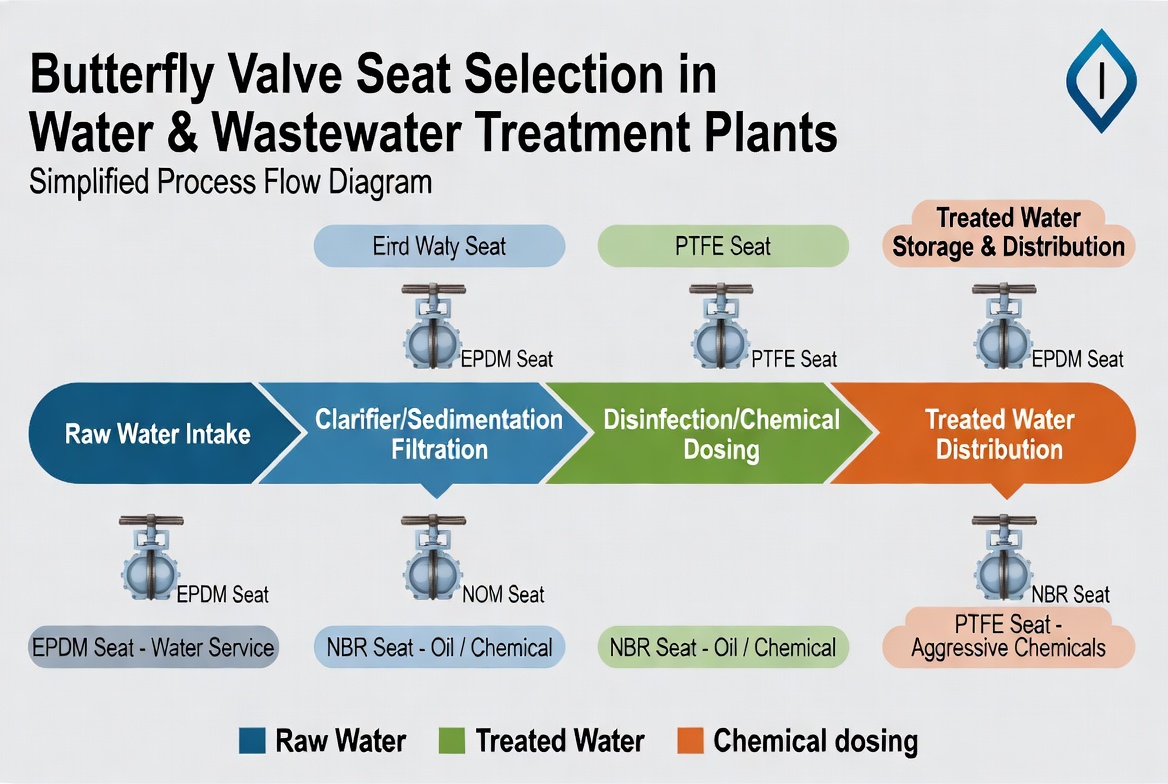
Although both environments rely heavily on butterfly valves, seat selection priorities differ between water treatment plants and distribution pipelines. [wtstwtvalve]
Inside a treatment plant, butterfly valves may see:
- Frequent cycling on filters, clarifiers, and chemical dosing lines. [wtstwtvalve]
- Exposure to disinfectants, coagulants, and pH-adjusting chemicals. [mfrsvalve]
- Occasional solids and sludge in settling or sludge-handling systems. [wtstwtvalve]
In these cases, we often recommend:
- EPDM seats for main water lines, clarifiers, and filter outlets. [unionvalve]
- NBR or PTFE seats where oils, hydrocarbons, or aggressive additives are present. [kefa-valves]
- Enhanced wear-resistant elastomers or metal seats in sludge or high-solids lines. [mfrsvalve]
Municipal networks typically prioritize:
- Long-term reliability in buried or difficult-to-access locations. [wtstwtvalve]
- Compatibility with treated water, including disinfectants and residual chemicals. [wtstwtvalve]
- Low operating torque for manual and automated operation in large diameters. [mfrsvalve]
Here, EPDM-lined resilient-seated butterfly valves are widely adopted due to their proven track record and cost-effectiveness. Special attention is given to certification for potable water where required by local codes. [unionvalve]
Drawing from both industry guidance and our own project experience, the following step-by-step checklist can help you systematically select butterfly valve seats for your application. [assuredautomation]
1. Define the Medium
- Is it potable water, wastewater, seawater, chemical-laden water, or oil-contaminated media? [unionvalve]
- Identify disinfectants, additives, or contaminants that may affect elastomers. [kefa-valves]
2. Determine Temperature and Pressure Range
- Record minimum and maximum operating temperatures. [kefa-valves]
- Confirm continuous and peak pressures, including transient surges. [assuredautomation]
3. Assess Solids and Abrasion
- Note the presence of sand, silt, or other abrasive particles. [unionvalve]
- For highly abrasive conditions, consider wear-resistant seats or metal options. [mfrsvalve]
4. Clarify Operating Pattern
- Is the valve used for isolation only, or also for throttling? [valuebutterflyvalves]
- Estimate open/close frequency and expected valve lifetime. [raritanvalve]
5. Check Compliance and Certifications
- For potable water, verify compliance with relevant drinking water standards where applicable. [mfrsvalve]
- For industrial or export projects, align with project specifications and client standards. [mfrsvalve]
6. Consult Pressure/Temperature and Corrosion Charts
- Always cross-check with manufacturer P–T charts and chemical compatibility data. [assuredautomation]
- When in doubt, consult the manufacturer's engineering team for a recommendation. [assuredautomation]
7. Evaluate Total Cost of Ownership
- Compare initial valve cost against expected maintenance and downtime. [raritanvalve]
- Consider spare part availability and ease of seat replacement. [raritanvalve]
Following these steps not only reduces selection errors but also creates a clear engineering record for audits and future expansions. [assuredautomation]
In our work with global distributors and EPC contractors, we have seen recurring patterns that highlight the importance of proper butterfly valve seat selection in water and municipal infrastructure. [tjwdvalve]
On a raw water intake line carrying river water with significant sand content, standard EPDM seats began to show premature wear around the sealing edge. Upgrading to a more abrasion-resistant seat formulation and adjusting operating patterns reduced seat wear and extended maintenance intervals. [wtstwtvalve]
Lesson: When raw water contains sand or abrasive particles, EPDM is still a strong base choice, but consider reinforced or upgraded seat materials and avoid unnecessary throttling at high velocities. [unionvalve]
In another project, valves installed on a line exposed to oil-contaminated wastewater experienced swelling and softening of standard water-service elastomers. Switching to NBR seats, designed for oil-based media, solved the issue and restored reliable shutoff. [kefa-valves]
Lesson: Even small amounts of oil or hydrocarbons in the medium can justify a shift from EPDM to NBR to avoid long-term seat degradation. [kefa-valves]
Recent industry developments are reshaping how engineers think about butterfly valve seat selection. [fluorotec]
Market research indicates a steady increase in the adoption of PTFE and advanced fluoropolymers for butterfly valve seats due to their broad chemical resistance and safety profile. At the same time, specialized modified PTFE grades have been developed that offer improved mechanical strength and regulatory approvals. [fluorotec]
In one documented case, a bespoke modified PTFE seat material replaced an entire butterfly valve seat inventory, becoming the standard across a wide valve range after passing demanding performance tests. [fluorotec]
Operators are paying closer attention to lifecycle cost, leakage reduction, and sustainability in water and municipal systems. This is driving: [wtstwtvalve]
- More accurate matching of seat material to medium to minimize early failures. [unionvalve]
- Greater use of high-performance seats in critical nodes where failure costs are high. [raritanvalve]
- Interest in materials and coatings that reduce friction and energy consumption in automated valves. [fluorotec]
At Tianjin Wode Valve Co., Ltd., our engineering team supports distributors, EPCs, and OEM valve brands through the entire seat selection process for resilient-seated butterfly valves and related products. [wodevalve]
Our typical approach includes:
- Reviewing project media, temperature, and operating conditions for water and municipal pipelines. [wodevalve]
- Recommending seat materials and body combinations aligned with project standards. [wodevalve]
- Providing documentation, test data where available, and engineering drawings for approvals. [tjwdvalve]
- Advising on maintenance intervals and spares stocking based on realistic operating scenarios. [wodevalve]
For international brands and OEMs, we also support private-label valve solutions, allowing them to leverage our manufacturing expertise while maintaining their own branding and channel strategies. [tjwdvalve]
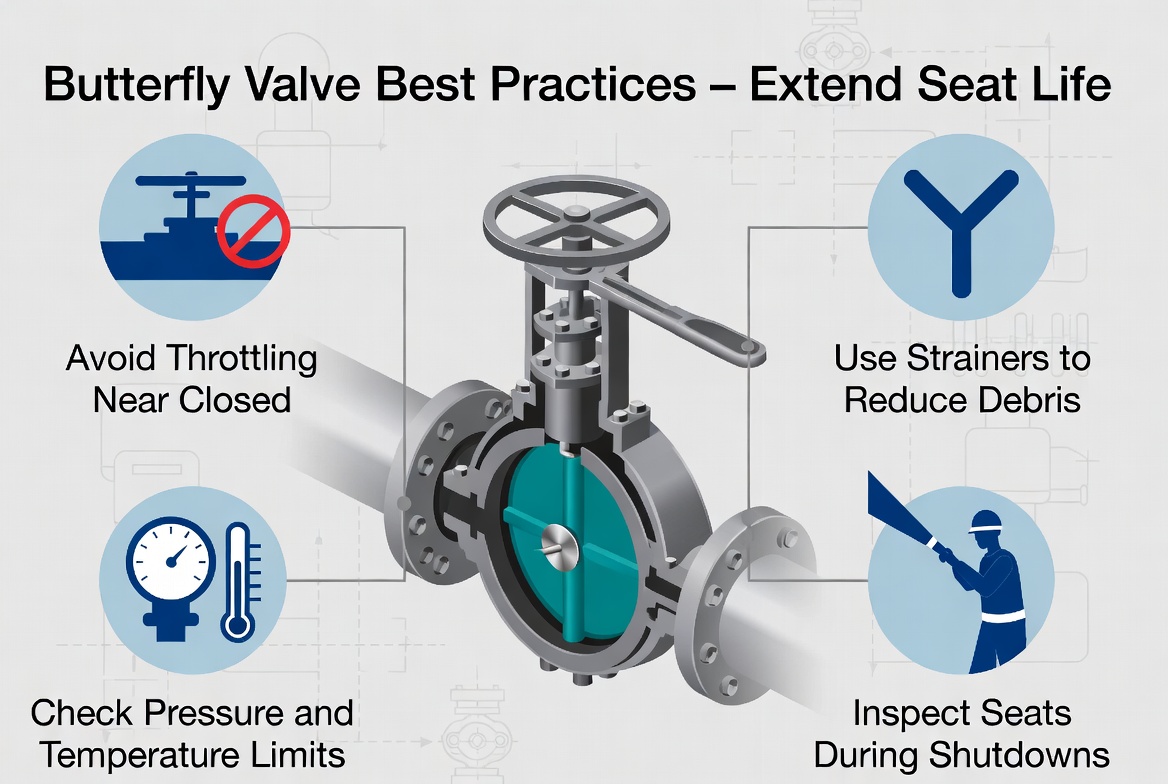
Once the correct seat material is selected, you can significantly extend valve life by following a few operational best practices. [wtstwtvalve]
- Avoid throttling near full closed: Prolonged throttling in a nearly closed position can cause localized wear and overheating at the seat. [raritanvalve]
- Control pipeline debris: Strainers or proper flushing procedures help reduce abrasive solids that damage the seat. [unionvalve]
- Respect pressure/temperature limits: Exceeding the seat's rated limits reduces elasticity and sealing performance. [assuredautomation]
- Use appropriate actuators: Oversized torque can compress or deform seats, while undersized torque can lead to incomplete closure. [raritanvalve]
- Inspect during planned shutdowns: Early signs of wear or chemical attack can be addressed before they lead to leaks. [wtstwtvalve]
If you are specifying valves for a water treatment plant, municipal distribution network, or industrial water system, the choice of butterfly valve seat can either protect your investment or become a hidden risk.
Our team at Tianjin Wode Valve Co., Ltd. offers free preliminary engineering reviews for distributors, EPC contractors, and international valve brands. Share your medium, pressure, temperature, and line size data, and we will recommend a seat material and valve configuration aligned with your project's goals. [tjwdvalve]
Contact us to discuss your next project and ensure your butterfly valve seat selection is as robust as the pipelines it protects. [tjwdvalve]
EPDM is widely used for potable water and general water distribution due to its strong resistance to hot water, steam, and disinfectants, along with good aging and ozone resistance. [kefa-valves]
NBR is preferred when the medium includes oils or hydrocarbons, such as oil-contaminated wastewater or industrial utilities, because it resists swelling and softening in the presence of oil-based media. [kefa-valves]
PTFE seats are more common in chemical and high-purity applications, but they can be used in municipal systems where aggressive chemicals or hygienic requirements justify their higher cost and broader chemical resistance. [fluorotec]
Most water and wastewater plants use resilient-seated valves, but metal seats may be justified in high-temperature, high-pressure, or highly abrasive lines—such as certain sludge or raw water intake applications. [raritanvalve]
Inspection frequency depends on cycling rate, medium, and operating conditions, but many operators include seat checks in their scheduled plant shutdowns and replace seats when signs of wear, swelling, or hardening appear. [mfrsvalve]
1. Assured Automation – *Butterfly Valve Seat Selection Guide*
https://assuredautomation.com/news-and-training/butterfly-valve-seat-selection-guide/ [assuredautomation]
2. Union Valve – *Butterfly Valve Seat Types, Materials, and Selection Guide*
https://unionvalve.com/blogs/valve-knowledge/butterfly-valve-seat-types-and-selection-in-practice [unionvalve]
3. KEFA Valves – *Best Butterfly Valve Seat Types for Optimal Performance and Longevity*
https://www.kefa-valves.com/blog/best-butterfly-valve-seat-types-for-performance-and-longevity/ [kefa-valves]
4. MFRS Valve – *A Complete Guide to Butterfly Valves: From Basics to High-Performance Solutions*
https://www.mfrsvalve.com/news/a-complete-guide-to-butterfly-valves-from-basics-to-high-performance-solutions.html [mfrsvalve]
5. BVC – *How to Choose the Right Butterfly Valve*
https://valuebutterflyvalves.com/how-to-choose-the-right-butterfly-valve/ [valuebutterflyvalves]
6. WTST WT Valve – *Types of Valves Used in Wastewater Treatment Plants*
https://www.wtstwtvalve.com/types-of-valves-used-in-wastewater-treatment-plants/ [wtstwtvalve]
7. Raritan Valve – *Choosing the Right Butterfly Valve: Selection, Materials, Automation*
https://raritanvalve.com/blog/choosing-the-right-butterfly-valve-selection-materials-automation/ [raritanvalve]
8. AFT Fluorotec – *Valve Seat Case Study*
https://www.fluorotec.com/news/case-studies/valve-seat-case-study/ [fluorotec]
9. Tianjin Wode Valve Co., Ltd. – Official Website
https://www.wodevalve.com [wodevalve]
10. Tianjin Wode Valve Co., Ltd. – Product Overview
https://tjwdvalve.com [tjwdvalve]


