

Views: 222 Author: Wode Valve Publish Time: 2026-05-08 Origin: Site


Automated ball valves are becoming a critical backbone of modern renewable energy and water infrastructure, and the same engineering principles apply directly to water treatment and municipal pipeline projects worldwide. Drawing on my experience working with EPC teams and global distributors, this article explains how to design, select, and deploy automated ball valves that actually perform in the field—while showing where Tianjin Wode Valve can support your projects as an OEM and technical partner. [assuredautomation]
Automated ball valves combine a quarter-turn ball valve with an electric, pneumatic, or hydraulic actuator to provide remote, precise flow control without constant manual intervention. In renewable energy, they regulate heat transfer fluids, gases, and process media under variable loads and harsh conditions. In water and municipal networks, they enable reliable zoning, isolation, and pressure management across large, distributed systems. [wodevalve]
For project owners and operators, the value is straightforward: fewer site visits, faster emergency shutoff, better energy efficiency, and more predictable OPEX. Instead of sending technicians to remote solar fields, biogas plants, or buried municipal lines, operators can monitor and actuate valves from control rooms or over SCADA systems. [engineerlive]
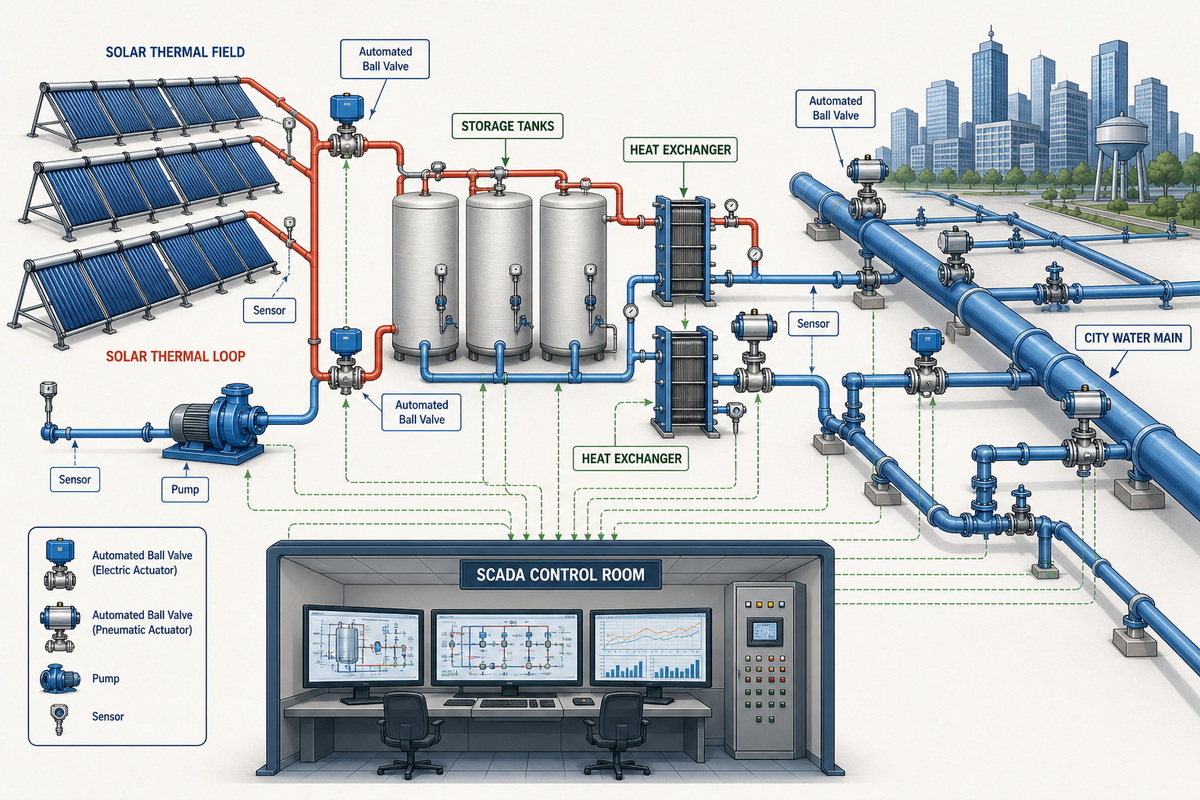
Automated ball valves provide tight shutoff and low pressure drop, which is essential when energy efficiency and water loss reduction are key performance indicators. [assuredautomation]
Key benefits for operators include:
- Consistent flow rates despite fluctuating loads or pressures in solar thermal loops, hydrogen lines, or distribution mains. [assuredautomation]
- Reduced pump and blower energy consumption thanks to optimized valve positioning.
- Lower non-revenue water (NRW) in municipal systems through accurate control and leak‑isolating operation. [wodevalve]
In practice, utilities often see measurable reductions in energy use per cubic meter pumped after upgrading manual valves to properly sized automated ball valves with tuned actuation cycles. [engineerlive]
In both renewable plants and city networks, fast and reliable isolation is non‑negotiable. Automated ball valves support: [assuredautomation]
- Emergency shutoff during pressure spikes, pump trips, or pipeline bursts.
- Automated interlocks with sensors and PLCs to prevent equipment damage.
- Safer operation in confined spaces or hazardous areas by minimizing manual intervention. [engineerlive]
For example, at hydroelectric and geothermal facilities in North America, electric valve actuators are used to safely control water or steam flow to turbines, delivering reliable automation for critical duties. [engineerlive]
Modern energy and water projects are increasingly distributed: remote solar fields, long transmission pipelines, or decentralized wastewater plants. Automated valves with appropriate actuators and position feedback allow teams to:
- Operate valves from centralized or cloud-based control systems.
- Reduce travel time and risk for technicians in remote or high‑risk environments.
- Log valve events (open/close cycles, alarms) for predictive maintenance. [assuredautomation]
This shift from manual to automated operation is particularly important for global distributors and EPC contractors who must deliver projects that can be run by lean local teams with limited on‑site staff. [wodevalve]
While every project is unique, several common applications have emerged where actuated ball valves are now considered standard design practice. [engineerlive]
In solar thermal plants and molten salt storage systems, automated ball valves:
- Switch and balance heat transfer fluid loops.
- Isolate storage tanks and heat exchangers for maintenance.
- Protect equipment by closing rapidly on over‑temperature or over‑pressure events. [assuredautomation]
In thermal storage, they help coordinate charging and discharging cycles, ensuring the right flow at the right time to meet demand curves and grid requirements. [assuredautomation]
Green hydrogen projects expose valves to high-pressure gas, frequent cycling, and strict leakage requirements. Actuated ball valves are used to:
- Control hydrogen feed to electrolyzers and downstream processes.
- Isolate storage cylinders and distribution manifolds.
- Integrate with safety systems that monitor leaks and pressure deviations. [assuredautomation]
Here, material selection and seat design are crucial: stainless steels, carefully specified sealing materials, and precision‑machined balls and seats are needed to minimize fugitive emissions and ensure tight shutoff. [wodevalves]
In biofuel plants and biogas projects, media can be corrosive, dirty, and variable. Automated ball valves help:
- Control feedstock and product flows through reactors and separators.
- Isolate digesters and gas lines for safe maintenance.
- Handle slurries and contaminated media with minimal sticking when the right internal coatings and seat materials are chosen. [assuredautomation]
For Tianjin Wode Valve, the core application is water treatment and municipal distribution, where the same automation principles used in renewable plants deliver reliability and lifecycle value. [wodevalve]
- Water treatment plants: Inlet and outlet isolation for filters, backwash lines, chemical dosing systems, and high‑lift pump stations.
- Municipal distribution networks: Zoning, district metered areas (DMAs), and remote isolation of trunk lines and branches.
- Wastewater and stormwater: Automated isolation and diversion to prevent flooding, overflows, and cross‑contamination. [wodevalve]
Compared with manual valves, actuated ball valves can be cycled more frequently as part of proactive leak detection and pressure management strategies, without relying on field crews for every operation. [wodevalve]
For many water and municipal duties, ball valves provide:
- Full bore flow with minimal pressure drop.
- Reliable bidirectional sealing.
- Fast quarter-turn operation suitable for automation.
- Compact face‑to‑face dimensions for tight installations. [wodevalve]
Combined with resilient seats and corrosion‑resistant materials, they are particularly suitable for treated water, clean process water, and many municipal service lines.
From an EPC or system integrator's perspective, selecting the right valve‑actuator package can make the difference between a stable, low‑maintenance system and a chronic bottleneck.
Use the following step‑by‑step checklist during design and procurement:
1. Define the medium and conditions
- Fluid type (potable water, treated effluent, hydrogen, thermal oil, brine, biogas).
- Temperature and pressure ranges, expected cycling frequency.
2. Specify valve performance requirements
- Required shutoff class and leakage rate.
- Allowable pressure drop and flow coefficient.
- End connections (flanged, threaded, welded, grooved).
3. Choose valve body and ball materials
- Carbon steel or stainless steel grades such as A105, 304, 316, 304L, 316L depending on corrosion risk and project specifications. [wodevalves]
- Consider internal coatings for aggressive media.
4. Select seats and seals
- Material compatibility with chemicals and temperature.
- Fire‑safe or low‑emission requirements if applicable.
5. Match actuator type and power source
- Electric actuators for precise positioning and easier integration into digital control systems. [engineerlive]
- Pneumatic actuators where plant air is available and fast response is needed.
- Verify torque margins with safety factors for worst‑case conditions.
6. Plan feedback and control strategy
- Position feedback (open/close or analog) for SCADA integration.
- Local controls for commissioning and manual override.
7. Confirm standards, testing, and documentation
- Compliance with relevant water, energy, and pressure equipment standards.
- Factory testing, inspection reports, and traceability documentation tailored to global distributors and project owners. [wodevalve]
As global distributors and EPC contractors scale projects across regions, the choice of valve OEM becomes a long‑term strategic decision. Based on common requirements from international buyers, a reliable partner should provide:
- Integrated manufacturing capability: From design, casting, and machining to assembly and inspection, to ensure consistent quality and traceability. [wodevalves]
- Modern CNC and ball processing equipment, plus dedicated assembly lines for ball valves.
- Flexible OEM and ODM options to support different brands, labeling, and documentation packages. [wodevalve]
- Stable lead times and capacity for large batch orders to support framework agreements.
For example, a manufacturer with more than 100 sets of processing machines, multiple automatic ball valve assembly lines, and an annual output in the millions of valve units can better absorb project peaks and urgent orders without sacrificing quality. [wodevalves]
One gap in many traditional articles on automated valves is the role of data and digital integration. Modern projects no longer treat valves as isolated mechanical components; they are data points in a connected system.
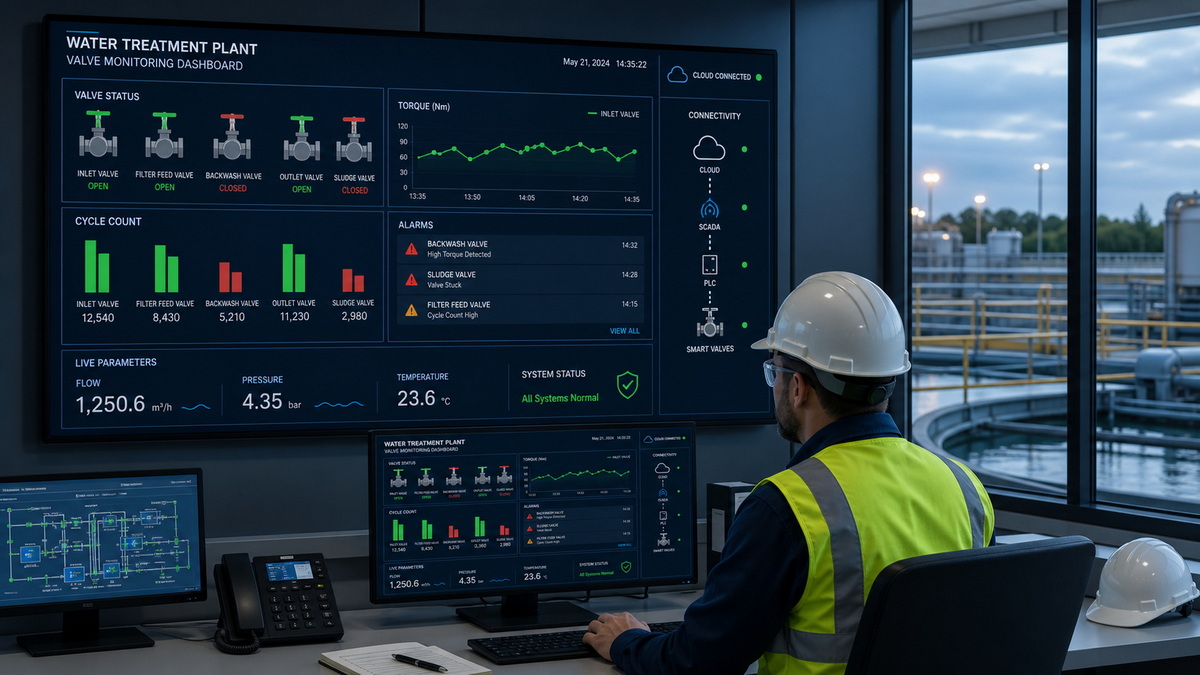
By adding position feedback, torque monitoring, and cycle count tracking, operators can:
- Identify sticky or partially blocked valves before they fail.
- Optimize maintenance schedules based on real usage, not fixed intervals.
- Reduce unplanned downtime and emergency call‑outs. [engineerlive]
In water utilities pursuing digital transformation, combining smart automated ball valves with flow and pressure sensors allows teams to detect anomalies—such as leaks or unauthorized consumption—in near real time.
From working with distributors and EPC contractors, several recurring lessons stand out when deploying automated ball valves in renewable and municipal projects:
- Involve valve engineers early: Late changes to pipe routing or actuation type often lead to compromises in accessibility and maintenance. Bring valve specialists into the 3D layout and HAZOP stages.
- Standardize where possible: Using a consistent range of ball valve sizes, materials, and actuator types across multiple projects reduces spare part complexity and training effort.
- Design for maintenance: Ensure clearances for actuator removal, visible position indicators, and safe isolation points. A technically correct but inaccessible valve will still generate complaints from operations teams.
These simple practices can significantly improve lifecycle performance and user satisfaction—especially for global distributors who must support multiple sites and operators with different skill levels.
Tianjin Wode Valve focuses on ball valves for water treatment and municipal pipelines, positioning itself as a long‑term manufacturing and engineering partner rather than a simple component supplier. [wodevalve]
Key strengths for international buyers include:
- Application focus: Product development centered on the pressure classes, coating systems, and sealing solutions commonly used in water and municipal infrastructure, ensuring compatibility with project standards.
- OEM cooperation for global valve brands that require private labeling, customized documentation, or specific testing procedures.
- Technical support for valve selection and specification review, helping distributors and EPC teams reduce design risk and RFQ complexity. [wodevalve]
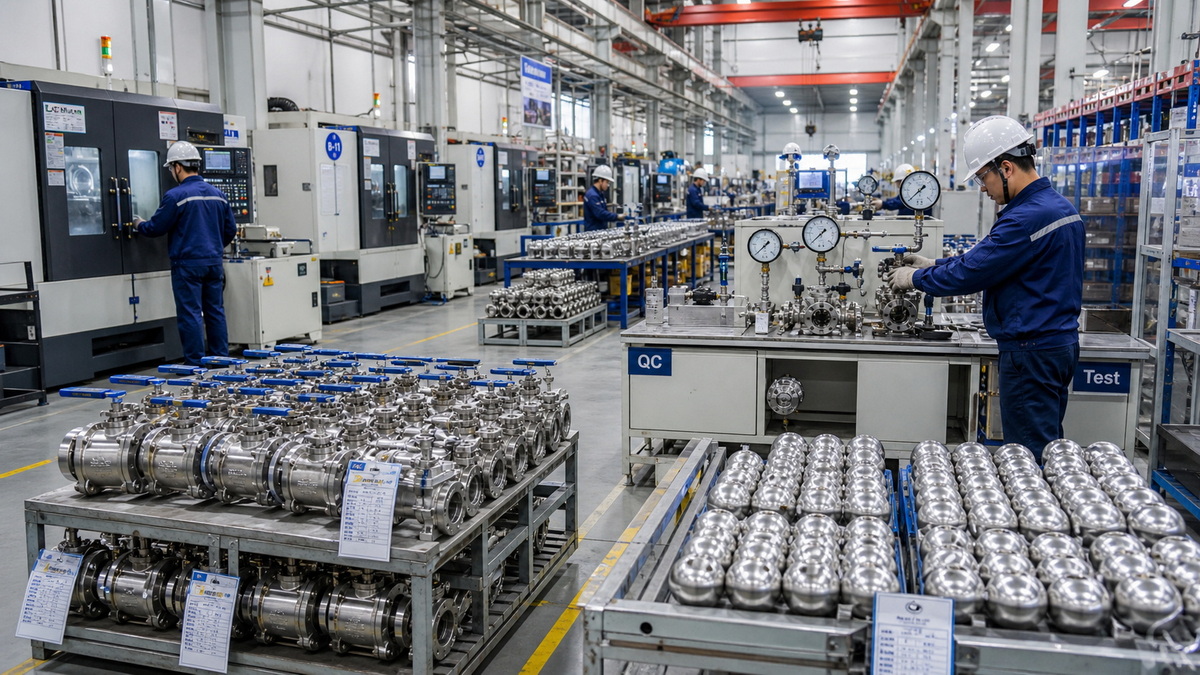
For ball valve components specifically, the group's extended capabilities in precision‑machined stainless steel balls (DN8–DN300, multiple materials including A105, 304, 316, 304L, 316L) support tight shutoff, low operating torque, and consistent quality across product lines. [wodevalves]
If you are a global distributor, EPC contractor, or international valve brand working on water treatment or municipal pipeline projects, the right automated ball valve strategy can directly improve your project performance, OPEX, and customer satisfaction.
Tianjin Wode Valve can support you with: application‑specific ball valves, OEM and branding options, and engineering input during design and RFQ stages. To discuss your upcoming projects or request technical datasheets, you can contact the Wode team via their official website's inquiry channels. [wodevalve]
Automated ball valves provide tight shutoff, low pressure drop, and fast actuation, which together improve energy efficiency, process stability, and safety in solar, hydrogen, and biofuel applications. [assuredautomation]
Ball valves are ideal for many clean water, chemical dosing, and isolation duties, but other valve types (such as butterfly or gate valves) may be more appropriate for very large diameters or throttling‑heavy duties. [assuredautomation]
Electric actuators are preferred when precise control, simple wiring, and digital integration are priorities, while pneumatic actuators are often chosen where plant air is available and very fast response or fail‑safe spring return is required. [engineerlive]
Depending on the region and application, you may need compliance with water quality standards, pressure equipment directives, and utility or energy‑sector specifications; your valve OEM should provide test reports and documentation aligned with the project's RFQ. [wodevalve]
OEM partnerships allow distributors and brands to offer application‑specific valves under their own label while relying on the manufacturer's engineering, production capacity, and testing capabilities, improving time to market and project consistency. [wodevalves]
1. Assured Automation – "Automated Valves for Renewable Energy Applications." [assuredautomation]
2. Assured Automation – "Custom Actuated Ball Valves" (News & Training Archive). [assuredautomation]
3. WODE Valve – Official Website And Product/Application Information. [wodevalve]
4. Hebei Wode Valve Industry Co., Ltd. – Company And Stainless Steel Ball Capabilities. [wodevalves]
5. Engineer Live – "Electric Actuators Deliver Reliable Automation At Renewable Energy Power Plants." [engineerlive]
6. Industrial SEO Best Practices For Manufacturers And Industrial Companies. [blog.saleslayer]


