

Views: 277 Author: Wode Valve Publish Time: 2026-06-30 Origin: Site


Coaxial valves vs ball valves is a practical comparison for engineers who need fast, reliable on/off control in water treatment, municipal pipelines, and industrial systems. In most general-duty applications, ball valves remain the familiar choice, but coaxial valves can outperform them when space, cycle speed, air consumption, and maintenance matter most. [assuredautomation]
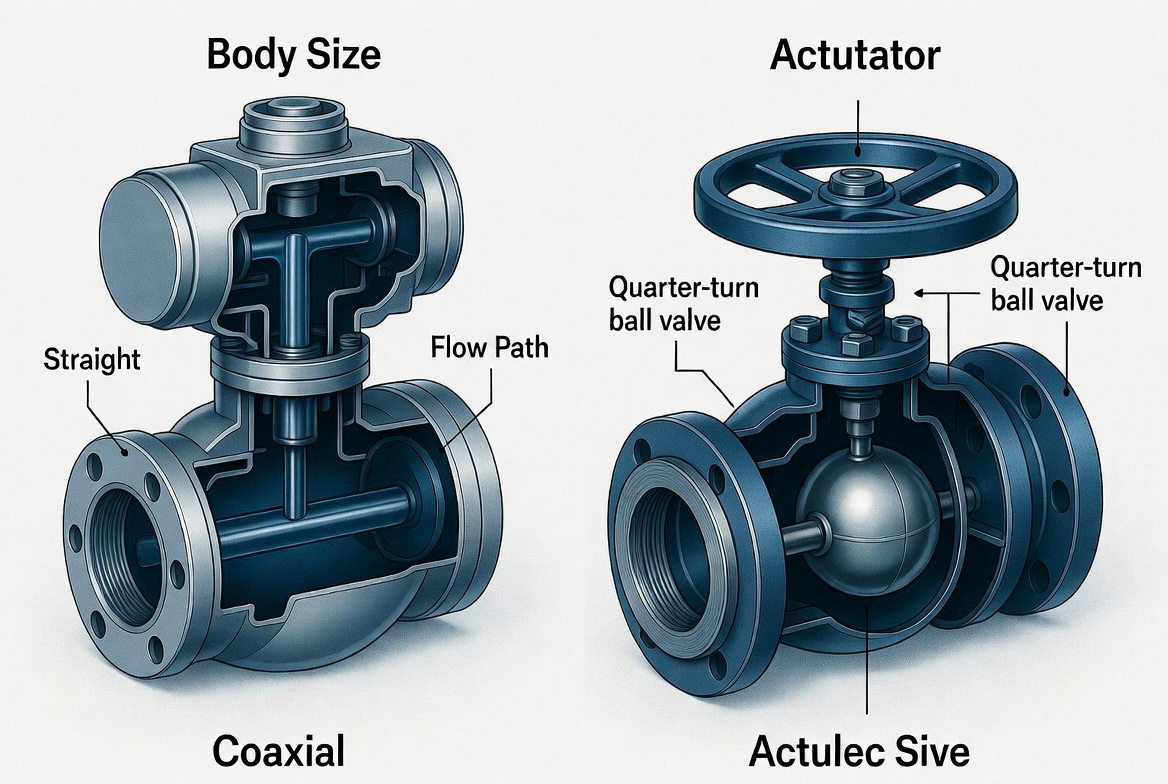
Choosing between a coaxial valve and a ball valve is not just a product decision. It affects footprint, operating cost, system uptime, and how easily a project can be maintained over time. For distributors, EPC contractors, and valve brands, the right choice can also influence total installed value and long-term customer satisfaction. [wodevalve]
Ball valves are widely used because they provide dependable quarter-turn shutoff and, in full-port designs, low pressure loss and high flow capacity. Coaxial valves, by contrast, are built around a compact pressure-balanced design that can deliver very fast switching, high cycle life, and a smaller overall package. [kinkoflow]
A coaxial valve is a valve in which the inlet and outlet are arranged on the same axis, creating a very compact flow path. That design helps the valve switch quickly, stay relatively pressure-balanced, and maintain reliable shutoff even in demanding conditions. [co-ax]
Compared with conventional valve designs, coaxial valves are often described as compact, fast, back-pressure-tight, and resistant to wear, especially where repeated cycling is required. They are also attractive when the system must be kept simple and efficient. [co-ax]
A ball valve uses a rotating ball with a bore through the center to open or close flow. Because the motion is quarter-turn, ball valves are easy to operate, widely available, and well understood across water, municipal, and industrial markets. [j-valves]
For water treatment projects, ball valves are often preferred because they provide reliable shutoff and can be selected in many body materials, including ductile iron and thermoplastics for corrosive service. In larger municipal pipelines, ball valves can also be engineered for high-pressure applications and long service life. [kinkoflow]
The main differences become clear when you compare performance, size, operating cost, and maintenance. The table below summarizes the practical tradeoffs for on/off applications. [assuredautomation]
| Factor | Coaxial Valve | Ball Valve |
|---|---|---|
| Footprint | Very compact | Larger, especially with actuator |
| Weight | Lighter system overall | Heavier once actuator is added |
| Switching speed | Extremely fast | Fast, but generally slower than coaxial designs |
| Air consumption | Lower | Higher, especially in actuated systems |
| Cycle life | Very high in repeated-duty service | Good, but depends on design and duty cycle |
| Flow capacity | Lower Cv in some models | Often higher Cv, especially full-port |
| Maintenance | Fewer external moving parts | More components in actuated assemblies |
| Best fit | Compact, high-cycle on/off duty | General shutoff and high-flow service |
The original comparison from Assured Automation notes that coaxial valves can be smaller, lighter, faster, less expensive in actuated form, and safer because they have no external moving parts. It also notes a key limitation: lower Cv, which makes ball valves better when high flow or minimal pressure drop is critical. [assuredautomation]
Coaxial valves are strongest in systems that demand speed, repeatability, and compactness. Their pressure-balanced construction can make them reliable across changing pressure conditions, and their short switching distance supports rapid operation. [co-ax]
They are especially useful when:
- Space is limited in a skid or manifold.
- The valve must cycle frequently.
- Lower air consumption matters.
- Maintenance access is difficult.
- The process benefits from very fast shutoff. [assuredautomation]
In one comparison cited by Assured Automation, an actuated coaxial valve assembly was significantly smaller and lighter than a comparable actuated ball valve assembly, with markedly lower air demand and lower cost in certain configurations. [assuredautomation]
Ball valves usually win when the priority is flow capacity. Full-port ball valves are better suited to applications where pressure drop must be minimized or where the process requires a high Cv. [kinkoflow]
They are also a safer default choice for many buyers because they are broadly standardized, familiar to maintenance teams, and available in a wide range of sizes and materials. In water treatment and municipal service, that versatility matters because projects often need predictable sourcing and long-term parts compatibility. [j-valves]
For water treatment and municipal pipeline projects, ball valves remain one of the most practical shutoff solutions. They are commonly selected for chemical dosing, corrosive lines, and high-pressure mains because material selection can be matched to the media and service conditions. [j-valves]
At WODE Valve, this market fit is especially relevant because the company positions itself as a valve manufacturer focused on water treatment and municipal pipeline applications, with OEM supply capabilities for global distributors and EPC partners. That makes ball valves a strong fit for projects that need reliable shutoff, stable quality, and customization. [wodevalve]
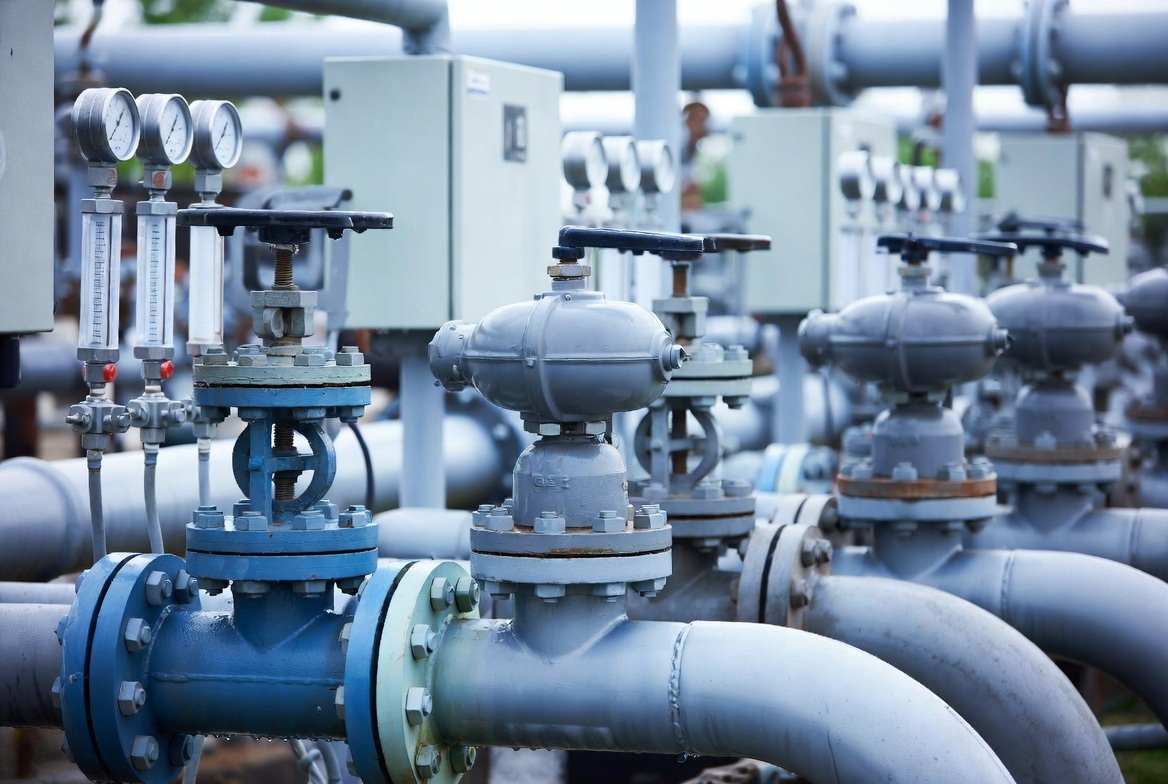
The most common mistake is treating this as a "which valve is better" question. The better question is: which valve is better for this duty cycle, flow requirement, and installation envelope? [co-ax]
Use this decision rule:
1. Choose a coaxial valve when the system is compact, the valve cycles often, and speed matters.
2. Choose a ball valve when flow capacity, low pressure drop, and broad application flexibility matter more.
3. For actuated systems, compare not only valve price but also actuator cost, air consumption, installation time, and maintenance access. [kinkoflow]
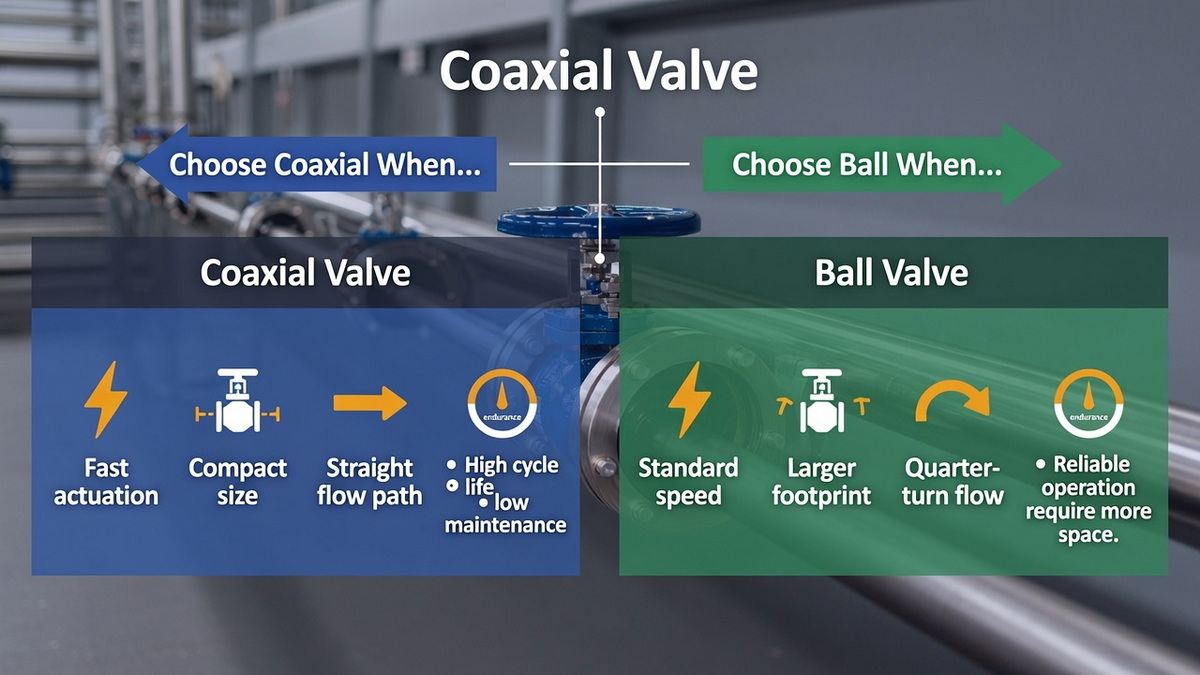
From a project and sourcing perspective, the right valve is the one that lowers total cost of ownership, not just purchase price. Coaxial valves may reduce actuator burden and air use, while ball valves often reduce application risk in high-flow or standard shutoff service. [kinkoflow]
For EPC contractors, this means the specification should include:
- Required Cv or allowable pressure drop.
- Maximum cycle frequency.
- Available installation space.
- Media compatibility.
- Actuation type and utility consumption.
- Maintenance expectations over the project life. [co-ax]
For distributors and private-label brands, a ball valve portfolio is usually the most scalable base offering for water and municipal projects, while coaxial valves can serve as a premium niche solution in compact or high-cycle applications. [wodevalve]
For coaxial valves vs ball valves for on/off applications, the best choice depends on the operating priority. Coaxial valves are the smarter option for compact, high-cycle, fast-switching systems, while ball valves remain the better all-around answer for high-flow shutoff, broad material selection, and municipal water service. [j-valves]
For water treatment and municipal pipeline buyers, the most effective sourcing strategy is to match the valve design to the real duty conditions, not just the catalog description. That approach reduces risk, improves uptime, and creates a better long-term result for end users. [wodevalve]
If you are specifying valves for water treatment, municipal pipelines, or OEM distribution, request a project-matched ball valve solution with the required pressure rating, material selection, and sealing design. WODE Valve can position the valve around your application instead of forcing the application around the valve. [wodevalve]
Not always. Coaxial valves are better for compact, fast, high-cycle on/off duty, while ball valves are better when high flow and low pressure drop matter more. [assuredautomation]
They are common because they provide reliable shutoff, can be built in many materials, and work well in both corrosive and municipal service conditions. [j-valves]
Yes. In actuated systems, coaxial valves typically use less air because the internal travel distance is shorter and the valve package is more compact. [co-ax]
Coaxial valves can offer very high cycle life in repeated-duty applications, and the source comparison cites examples reaching millions of cycles. Ball valves can also last well, but duty cycle and service conditions matter. [assuredautomation]
For most municipal pipeline shutoff duties, ball valves are usually the safer and more flexible choice because they are widely accepted, offer broad sizing options, and can deliver high flow capacity. [kinkoflow]
1. Assured Automation. "Coaxial Valves vs. Ball Valves for On/Off Applications." [https://assuredautomation.com/news-and-training/coaxial-valves-vs-ball-valves-for-on-off/]
2. Kinko Flow. "Best Ball Valves for Water Treatment Projects." [https://www.kinkoflow.com/industry-news/best-ball-valves-for-water-treatment-projects]
3. Müller co-ax gmbh. "Advantages of coaxial valves." [https://co-ax.com/en/coaxial-valves/advantages-coaxial-valves.php]
4. WODE Valve. "About Us." [https://www.wodevalve.com/aboutus.html]
5. J-Valves. "Valve Selection for Water Treatment Systems." [https://www.j-valves.com/trunnion-ball-valves-awwa-c509-and-gate-valves-c515.html]
6. WODE Valve. "Home / Company Overview." [https://www.wodevalve.com]
7. Assured Automation. "VIP-EVO High-Pressure Coaxial Valves – System Performance." [https://assuredautomation.com/news-and-training/how-vip-evo-high-pressure-coaxial-valves-optimize-system-performance/]


