

Views: 290 Author: Wode Valve Publish Time: 2026-07-09 Origin: Site


Content Menu
● Introduction: Why Emergency Shutdown Isolation Valves Matter
● What Is an Emergency Shutdown Isolation Valve?
● How the Valve Works in an Emergency
● Valve Types Commonly Used for Shutdown Isolation
● Design Features That Improve Reliability
>> 4. Low Maintenance Requirements
>> 5. Testing and Verification
● Industry Trend: Safety, Automation, and Smarter Monitoring
● Why This Matters in Water and Municipal Projects
● How to Specify the Right Valve
● Why Work With a Specialized Manufacturer
● Conclusion: Choosing the Right Shutdown Valve
● FAQ
>> 1. What is an emergency shutdown isolation valve?
>> 2. Which valve type is best for emergency isolation?
>> 3. What is fail-safe operation?
>> 4. Why are actuators important?
>> 5. How do I choose the right valve for my project?
Emergency shutdown isolation valves are one of the most important safeguards in modern industrial systems. In water treatment, municipal infrastructure, oil and gas, chemical processing, and power applications, these valves help isolate a pipeline or process line quickly when abnormal conditions occur, reducing risk to people, equipment, and the environment.
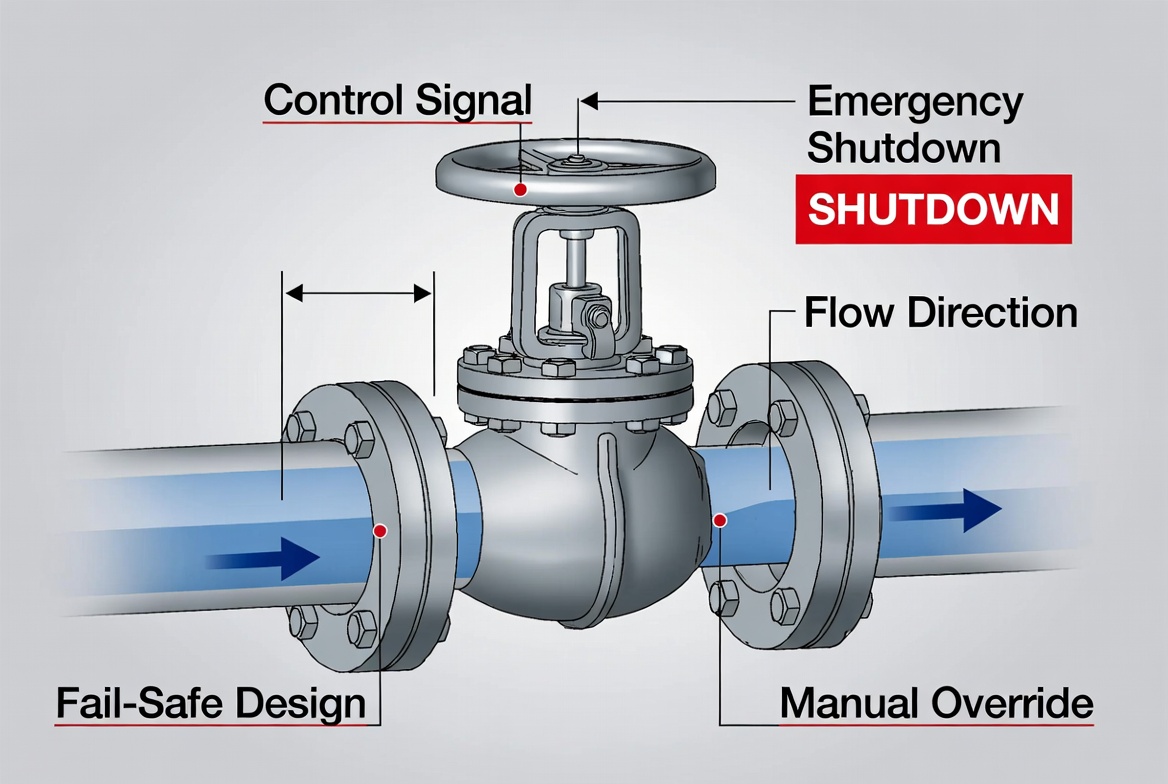
An emergency shutdown isolation valve is designed to stop flow fast and reliably when a system detects a dangerous condition. In practice, that may mean protecting a pumping station, preventing backflow, isolating a damaged line, or limiting the spread of a leak.
For engineers, distributors, EPC contractors, and plant owners, the real value of this valve is not just shutdown speed. It is system confidence: the ability to shut down a section safely, predictably, and with minimal operational disruption.
At WODE Valve, we understand this from a manufacturer's point of view. In real projects, valve performance is not defined only by pressure rating or size. It is defined by sealing stability, corrosion resistance, actuator compatibility, maintainability, and long-term field reliability.
An emergency shutdown isolation valve is a valve used to isolate a pipeline or process segment during an emergency, fault, or unsafe operating condition. It is commonly integrated into an emergency shutdown system or safety instrumented function.
Depending on the application, the valve may be a:
- Butterfly valve.
- Gate valve.
- Ball valve.
- Check valve in a protective function.
- Actuated isolation valve with fail-safe behavior.
The key difference between a standard isolation valve and an emergency shutdown valve is response intent. Standard valves are used for routine operation, while emergency shutdown valves are selected and configured to perform under abnormal conditions, often with automation, fast actuation, and fail-safe design.
Emergency shutdown isolation valves are used wherever rapid isolation can reduce danger or loss. Typical applications include:
- Water treatment plants.
- Municipal water supply and transmission pipelines.
- Wastewater treatment systems.
- Pumping stations.
- Fire protection and utility networks.
- Chemical process lines.
- Petrochemical facilities.
- Industrial utility systems.
In water and municipal projects, the objective is often to isolate a failed zone quickly while keeping the rest of the network running. In process industries, the emphasis is usually on preventing escalation, protecting critical equipment, and maintaining compliance with safety requirements.
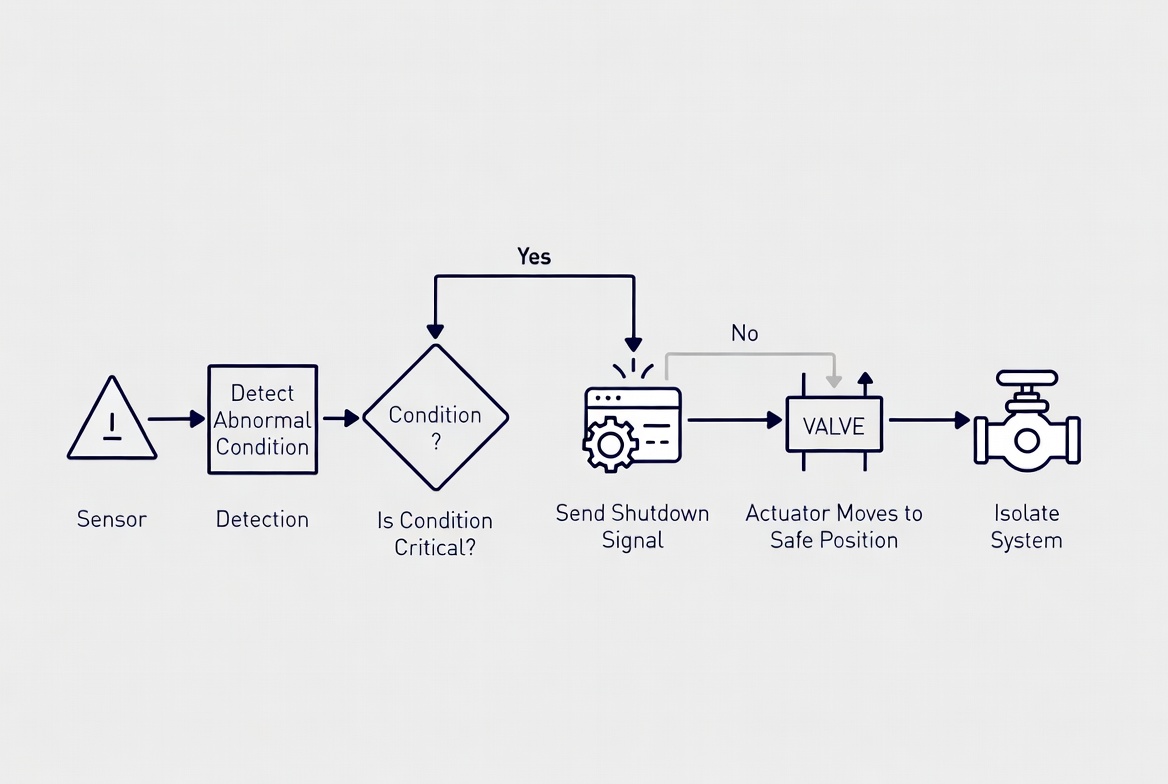
In a shutdown scenario, the control system detects a trigger such as abnormal pressure, loss of power, leak detection, fire, overtemperature, or unsafe process deviation. The shutdown sequence then commands the valve to move to its safe position.
A typical emergency isolation sequence includes:
1. Sensor or logic solver detects an unsafe condition.
2. The shutdown signal is sent to the actuator or control system.
3. The valve closes or opens to the pre-defined safe state.
4. The isolated segment is removed from service.
5. Operators verify system status and investigate the cause.
The most important design principle here is fail-safe behavior. In many applications, this means the valve should move to a predetermined safe position even if power, air supply, or control communication is lost.
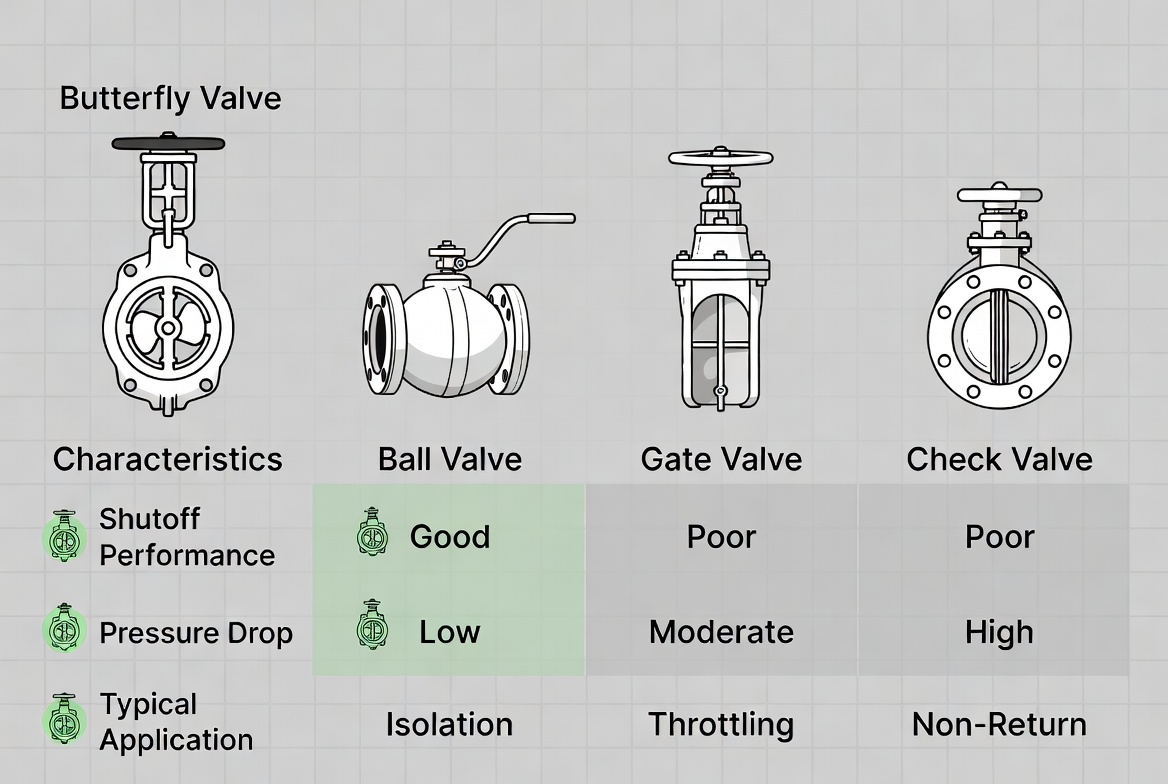
Different valve types are chosen based on pressure, flow characteristics, fluid type, operating frequency, and cost target.
| Valve Type | Strengths | Typical Use |
|---|---|---|
| Butterfly Valve | Compact, cost-effective, suitable for large diameters | Water treatment, municipal pipelines, utilities |
| Ball Valve | Tight sealing, fast quarter-turn action | Process isolation, smaller to medium sizes |
| Gate Valve | Good shutoff in certain services, low pressure drop when open | Utility isolation, line blocking |
| Check Valve | Prevents reverse flow, protects equipment | Pump discharge, backflow prevention |
| Actuated Isolation Valve | Fast, automated, can be fail-safe | Safety systems, critical shutdown lines |
For large-diameter water and municipal systems, butterfly valves are often preferred because they are efficient, compact, and economical. In systems where reverse flow protection matters, check valves play an important supporting role. For applications needing very tight isolation or frequent operation, ball valves are often evaluated.
A shutdown valve should never be selected on price alone. The most important design features are those that improve consistency under stress.
A valve used for emergency isolation must maintain reliable shutoff over time. Seat design, disc geometry, machining accuracy, and elastomer selection all affect leakage performance.
Water treatment and municipal systems often expose valves to treated water, chlorides, sludge, or varying water chemistry. Material selection matters, especially for body, disc, stem, seat, and fasteners.
The valve must work seamlessly with electric, pneumatic, or hydraulic actuators, depending on the system architecture. A good shutdown design includes proper torque calculation, response time verification, and end-position feedback.
Operators need valves that remain dependable with minimal intervention. This is especially important in remote networks, buried lines, and plants with limited maintenance windows.
Factory testing, seat leakage checks, pressure testing, and actuator functional testing all help reduce field risk. For safety-critical projects, documentation is not optional — it is part of the product value.
Many buyers focus only on size, pressure, and price. In emergency shutdown applications, that is not enough.
Common mistakes include:
- Selecting a valve without confirming fail-safe behavior.
- Ignoring actuator sizing and response time.
- Overlooking fluid characteristics such as solids, corrosion, or scaling.
- Choosing the wrong seat material.
- Using a general-purpose valve for a safety-critical application.
- Failing to define inspection and testing requirements early.
A better approach is to treat the valve as part of a complete safety function, not a standalone hardware item.
The global emergency shutdown valve market continues to attract attention because industries are prioritizing safety, uptime, and compliance. Recent market reports show continued growth in emergency shutdown-related valves, driven by industrial safety requirements, infrastructure expansion, and automation adoption. [strategicmarketresearch]
One important trend is the move toward better monitoring. More operators want valves that can provide position feedback, diagnostics, and maintenance insights rather than simply opening and closing on command. This aligns with the broader shift toward predictive maintenance and smarter plant operations. [metastatinsight]
For manufacturers, this means product design must go beyond mechanical performance. It now includes integration, traceability, documentation, and serviceability.
In water treatment and municipal pipeline systems, shutdown isolation valves help protect service continuity and reduce damage during emergencies. That is especially valuable in large networks where one failed segment can affect downstream supply or critical treatment processes.
For these projects, the buyer usually wants:
- Stable sealing performance.
- Long service life.
- Corrosion-resistant construction.
- Large-size manufacturing capability.
- Reliable OEM support.
- Compliance with project specifications.
WODE Valve's core manufacturing focus on butterfly valves, check valves, gate valves, ball valves, strainers, and expansion joints makes it well positioned for these systems, especially where large-diameter and customized solutions are needed. [wodevalve]
If you are an EPC contractor, distributor, or plant engineer, use this checklist when specifying an emergency shutdown isolation valve.
1. Define the service medium.
2. Confirm line size and pressure class.
3. Identify the safe failure position.
4. Determine the required closure speed.
5. Choose the actuator type.
6. Select seat and body materials.
7. Confirm leakage class or shutoff requirement.
8. Specify testing and inspection documents.
9. Verify installation orientation and space constraints.
10. Align the valve with the control philosophy of the plant.
This checklist reduces downstream changes and helps avoid costly redesigns after procurement.
A specialized valve manufacturer can make a significant difference in project success. The benefit is not only product supply, but also application support, material selection guidance, and OEM customization.
For international distributors and EPC buyers, this matters because you need more than a catalog item. You need a partner who can support:
- Custom sizes.
- OEM/private label supply.
- Project documentation.
- Stable quality control.
- Delivery coordination.
- Application-specific recommendations.
That is especially relevant for water treatment and municipal infrastructure projects, where the cost of failure is not just repair expense but service disruption and reputational damage.
Emergency shutdown isolation valves are a critical part of any safe and resilient fluid control system. The best choice depends on the application, but the principle is always the same: the valve must perform when the system is under stress.
For water treatment and municipal projects, butterfly valves, check valves, gate valves, and ball valves each have a role to play. The right solution depends on service conditions, shutoff requirements, actuator strategy, and long-term maintenance goals.
For distributors, EPC firms, and international valve brands, partnering with a manufacturer that understands both product design and project execution can make the difference between a standard supply and a dependable system solution.
CTA: If your project needs custom emergency isolation or shutoff valve solutions for water treatment or municipal pipelines, contact WODE Valve for OEM support, technical selection guidance, and project-specific manufacturing options.
It is a valve designed to isolate a pipeline or process line quickly during an emergency, helping reduce risk and prevent damage.
There is no single best type. Butterfly valves are common in water and municipal systems, while ball and gate valves are often used depending on pressure, shutoff needs, and service conditions.
Fail-safe operation means the valve moves to a predetermined safe position when power, air, or control signals are lost.
Actuators determine how quickly and reliably the valve can move during a shutdown event, which is critical in safety applications.
You should consider fluid type, pressure, size, closure speed, actuator type, materials, leakage requirements, and maintenance expectations.
1. Assured Automation, "Emergency Shutdown Isolation Valves."
[https://assuredautomation.com/news-and-training/emergency-shutdown-isolation-valves/]
2. Strategic Market Research, "Emergency Shutdown Valves Market Size ($2.71 Billion) - 2030."
[https://www.strategicmarketresearch.com/market-report/emergency-shutdown-valves-market]
3. Research and Markets, "Emergency Shutdown Valve Market Size & Forecast to 2032."
[https://www.researchandmarkets.com/report/emergency-shutdown-valve]
4. Metastat Insight, "Emergency Shutoff Valves Market To Reach CAGR of 6.3% by 2031."
[https://www.metastatinsight.com/press-releases/emergency-shutoff-valves-market]
5. WODE Valve, "About Us."
[https://www.wodevalve.com/aboutus.html]
6. WODE Valve, homepage and product positioning content.


