

Views: 222 Author: Rebecca Publish Time: 2026-02-11 Origin: Site


Content Menu
● Valve Materials Explained – Cast Iron, Ductile Iron, Bronze and Stainless Steel
● Core Factors in Valve Material Selection
● Cast Iron Valves – Strength and Cost Efficiency
>> Material Characteristics and Performance
>> Limitations and Typical Applications
● Ductile Iron Valves – Modern Standard for Waterworks
>> Mechanical Strength and Flexibility
>> Coatings, Standards and Certification
>> Ideal Use Cases for Ductile Iron
● Bronze Valves – Potable Water and Marine Strength
>> Properties and Corrosion Resistance
>> Lead-Free Requirements and Certifications
>> Where Bronze Valves Make Sense
● Stainless Steel Valves – High Corrosion Resistance and Durability
>> Corrosion Resistance and Longevity
>> Cost Considerations and Best-Fit Applications
● Side-by-Side Comparison of Valve Materials
● Practical Framework for Choosing the Right Valve Material
>> Step 1 – Define Your Operating Environment
>> Step 2 – Align Material to Risk and Budget
>> Step 3 – Check Standards and Compliance
● Expert Tips for Water and Municipal Projects
● Why Work With a Specialized Water and Municipal Valve Manufacturer
● Take the Next Step for Reliable Water and Municipal Valve Solutions
● Frequently Asked Questions (FAQ)
>> 1. Which valve material is best for buried municipal water mains?
>> 2. When should I choose stainless steel instead of ductile iron?
>> 3. Are bronze valves safe for drinking water?
>> 4. Why is cast iron still used if ductile iron is stronger?
>> 5. What certifications should I check before approving valves for a water project?
Selecting the right valve body material is critical to the safety, life cycle cost, and reliability of any water treatment plant or municipal pipeline project. This guide explains the differences between cast iron, ductile iron, bronze, and stainless steel valves, and shows how to choose the best material for real-world applications in waterworks and infrastructure projects.

Valve materials directly affect pressure rating, corrosion resistance, temperature limits, and total cost of ownership in water and wastewater systems. In water treatment plants, municipal pipelines and distribution networks, most valves are made from cast iron, ductile iron, bronze or stainless steel, each with specific advantages and trade-offs.
Engineers, EPC contractors, and distributors should align valve material selection with fluid type, pressure, temperature, soil and atmospheric conditions, as well as regulatory requirements such as NSF/ANSI 61 and NSF/ANSI 372 for potable water.
Before comparing metals, it is important to clarify the operating conditions of the pipeline or plant.
Key selection factors include:
- Medium: Potable water, raw water, wastewater, seawater, chemical-laden water.
- Pressure and mechanical loads: Nominal pressure, water hammer risk, external loads from soil or traffic.
- Temperature range: Normal operating and maximum transient temperatures.
- Corrosion environment: Soil corrosivity, chlorides, disinfectants, coastal or marine conditions.
- Regulatory compliance: NSF/ANSI 61 and 372 for drinking water, local water authority specifications, AWWA standards.
- Budget and lifecycle cost: Initial price, expected lifespan, maintenance, and replacement intervals.
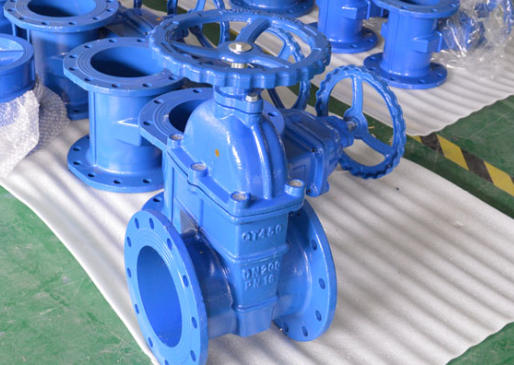
A simple example: for buried potable water transmission mains at moderate pressure, ductile iron gate valves with epoxy coating are often preferred because they combine high strength, good ductility and reasonable cost.
Cast iron has long been a standard material for water and wastewater valves thanks to its high compressive strength and affordability.
Cast iron is a metal mainly composed of iron with carbon and silicon, known for high temperature tolerance in appropriate designs. It is very strong in compression and can withstand severe vibration without deformation, but its rigidity and low bending resistance make it brittle under flexing or impact.
Advantages of cast iron valves include:
- High temperature tolerance for many industrial and thermal applications.
- Good dimensional stability and vibration resistance in stationary installations.
- Low material cost, making it an economical option for large-diameter valves and budget-constrained projects.
The main limitation of cast iron is its brittleness, as the metal tends to crack under bending, shock, or significant ground movement. For this reason, many modern waterworks specifications favor ductile iron for buried pipelines and dynamic conditions where flexing can occur.
Cast iron valves are still widely used in:
- Above-ground plant rooms with stable support conditions.
- Non-critical applications where impact loads are low and cost is the primary driver.
Ductile iron improves on traditional cast iron by adding nodular graphite to create a strong yet flexible structure. For water distribution and municipal pipelines, ductile iron has become a preferred standard in many specifications.
Ductile iron valves are made from an iron alloy in which graphite forms nodules, allowing the metal to bend slightly rather than fracture. This gives higher tensile strength and impact resistance compared with gray cast iron, as well as better performance under external loads such as traffic or soil movement.
Key performance benefits include:
- High strength-to-weight ratio with better toughness than cast iron.
- Improved flexibility, enabling pipelines and valves to tolerate minor ground settlement without cracking.
- Very good corrosion resistance when combined with modern epoxy coatings for water and wastewater service.
For buried water mains, ductile iron valves are commonly fusion-bonded epoxy coated both inside and outside to AWWA or equivalent standards to protect against long-term erosion and corrosion. Many water authorities specify ductile iron bodies conforming to ASTM A536 and relevant AWWA standards such as C509 and C515 for resilient seated gate valves.
These valves can be:
- Rated to relatively high working pressures depending on design and standard.
- Supplied with stainless steel stems and bolting for enhanced corrosion resistance in water service.
Ductile iron valves are a strong choice when:
- The pipeline is buried and subject to external loads or possible ground movement.
- The medium is potable water, raw water or treated wastewater with moderate corrosivity.
- The project requires high strength with reasonable cost, such as municipal transmission and distribution networks.
Bronze has been used in plumbing systems for centuries and remains a key material for many smaller-diameter valves, especially in potable water and marine environments.
Bronze is primarily an alloy of copper and tin, offering a combination of strength and high ductility. Unlike gray cast iron, bronze does not crack easily under bending, and it exhibits very good resistance to corrosion, even in fluids similar to seawater.
However, bronze can have a rough and porous surface, which may become susceptible to pitting and degradation over time if not maintained or if exposed to highly aggressive media.
Key advantages include:
- Strong and ductile behavior, allowing reliable sealing in compact valve designs.
- Excellent corrosion resistance in potable water and many marine environments.
- In some cases, beneficial antimicrobial properties in plumbing contexts.
For drinking water systems, it is critical to select low-lead or lead-free bronze valves that comply with current health regulations. Modern lead-free bronze valves are typically certified to NSF/ANSI 61 (health effects for drinking water components) and NSF/ANSI 372 (lead content limits).
These certifications confirm that:
- The valve meets maximum allowable lead content requirements for potable water components.
- The material and construction are suitable for long-term contact with drinking water.
Bronze valves are commonly used in:
- Small-diameter potable water lines, HVAC systems and building services.
- Marine and coastal applications where corrosion resistance is important.
- Control and isolation valves where reliability and compact size are priorities despite higher material cost.
Because bronze is more expensive than cast or ductile iron, it is less common in very large diameters or bulk municipal infrastructure, where cost scales quickly with size.
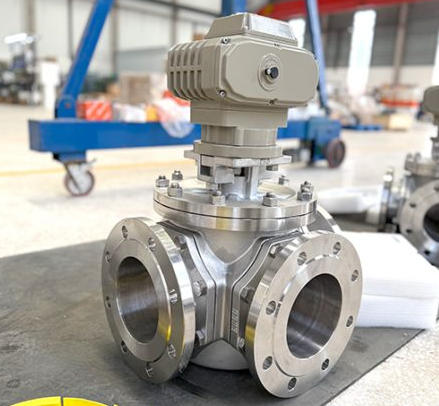
Stainless steel has become a highly popular valve material where corrosion resistance and hygiene are critical design drivers.
Valves manufactured from stainless steel provide exceptional resistance to oxidation and corrosion, even in high-moisture areas or when submerged in water. Unlike many ferrous materials, stainless steel does not rust in most potable or slightly saline environments, making it ideal for coastal regions and aggressive atmospheres.
Notable benefits include:
- Extreme durability, leading to long service life in demanding applications.
- Smooth, easily cleaned surfaces, supporting hygienic operation in food and beverage and pharmaceutical facilities.
- Effective performance at elevated temperatures, depending on the specific stainless steel grade.
The major trade-off for stainless steel valves is higher initial cost relative to cast or ductile iron. However, in environments where corrosion would rapidly damage other materials, stainless steel often delivers lower total lifecycle cost due to reduced maintenance and longer service intervals.
Stainless steel valves are widely used in:
- Desalination plants, coastal installations and chemical dosing lines with aggressive media.
- Food and beverage, pharmaceutical, and ultra-pure water systems requiring hygienic, easily cleaned surfaces.
- Special sections of water treatment plants where chlorides or disinfectants make corrosion resistance critical.
The table below summarizes key differences between cast iron, ductile iron, bronze and stainless steel for water and municipal applications.
| Material | Mechanical behavior | Corrosion resistance | Typical certifications / standards | Cost level | Typical water and municipal uses |
|---|---|---|---|---|---|
| Cast iron | High compressive strength, low ductility, brittle in bending. | Moderate, requires coatings and proper environment. | Often AWWA standards for certain gate/check valves, ASTM A126. | Low | Plant rooms, above-ground systems with low external loads and strong budget focus. |
| Ductile iron | High strength, good flexibility and impact resistance. | Very good when epoxy coated inside and out. | AWWA C509/C515, ASTM A536, epoxy standards such as AWWA C550. | Low–medium | Buried water mains, distribution networks, resilient seated gate and check valves. |
| Bronze | Strong and ductile, stable in small valve bodies. | High in potable and seawater-like fluids, but can pit over time. | NSF/ANSI 61 and 372 for potable water, lead-free bronze markings. | Medium–high | Small-diameter potable lines, building services, marine plumbing, HVAC. |
| Stainless steel | Strong and tough, maintains integrity under many loads. | Excellent in moisture, many chemicals and coastal conditions. | Various ASTM grades, used where NSF or hygienic requirements apply | High | Desalination, aggressive chemical zones, hygienic food and beverage and special plant sections. |
For engineers and buyers, a simple step-by-step framework can make material selection easier and more consistent across projects.
1. Identify the medium: potable water, wastewater, seawater, chemical solution.
2. Define pressure rating and surge risk: normal operating pressure, transient events, pump starts.
3. Record temperature range and whether thermal shocks are likely.
4. Assess the installation: buried or above ground, soil conditions, traffic and structural loads.
- If you need maximum strength with controlled cost for buried pipelines, choose ductile iron with high-quality epoxy coating.
- If the project is in a coastal or highly corrosive environment, consider stainless steel or high-grade bronze for small sizes.
- For small-diameter internal plumbing where hygiene and compact size matter, bronze lead-free valves are often preferred.
- Where loads are stable and cost pressure is high, cast iron may still be acceptable, especially in above-ground technical rooms.
Always verify that the chosen valve meets:
- Relevant AWWA or equivalent regional standards for the valve type.
- NSF/ANSI 61 and 372 or equivalent for potable water service where drinking water is involved.
- Any local water authority specifications regarding coating systems, pressure class, and material grade.
From an engineering and lifecycle perspective, a few practical best practices can significantly improve system reliability and reduce unplanned downtime.
- Always consider soil and groundwater corrosivity when choosing between unlined metal, coated metal and stainless steel.
- For buried valves, adopt fusion-bonded epoxy or equivalent coatings with proven performance and quality testing.
- Use stainless steel stems and fasteners even on ductile or cast iron bodies to reduce localized corrosion at critical sealing and bolting points.
- In potable water projects, insist on documented compliance and traceable certificates from the valve manufacturer.
Beyond choosing the right material, partnering with an experienced water and municipal pipeline valve manufacturer ensures that design, production and testing all match real project conditions.
A specialist manufacturer can provide:
- Application-specific guidance on material selection for surface water, wastewater, desalination and reclaimed water systems.
- Valves engineered and tested in line with international standards and local water authority requirements.
- Customized coatings, end connections and actuation options to fit existing networks and EPC project needs.
If your projects involve water treatment plants, municipal distribution networks or large infrastructure, working closely with a dedicated valve manufacturer helps minimize risk, avoid costly rework, and extend system life.
Choosing between cast iron, ductile iron, bronze and stainless steel valves is about matching performance, safety and lifetime cost to the exact needs of your pipeline or plant. If you are planning or upgrading a water treatment facility, municipal pipeline, or industrial water system, now is the right time to involve a professional valve manufacturer. Share your project conditions, medium, pressure class and specifications, and request a tailored valve material and product recommendation so that your next project benefits from safe, durable and cost-effective valve solutions from the very beginning.
Contact us to get more information!
For buried potable water mains, epoxy-coated ductile iron valves are generally preferred because they combine high strength, good ductility and proven performance with coatings designed for soil and water contact.
Choose stainless steel when the environment is highly corrosive, such as in coastal regions, desalination plants, chemical dosing lines, or where long-term corrosion resistance and hygienic surfaces are more critical than initial cost.
Yes, bronze valves are widely used for potable water, but you should select lead-free bronze valves certified to modern drinking water standards such as NSF/ANSI 61 and 372 to ensure they meet health-based limits and suitability for long-term contact with drinking water.
Cast iron remains in use because of its low cost and good performance in stable, above-ground installations where bending and impact loads are limited, while ductile iron is favored for buried and structurally demanding applications.
For water and municipal pipelines, verify that valves comply with relevant AWWA or equivalent standards for the valve type, and for potable water, ensure NSF/ANSI 61 and 372 certifications or regional equivalents, alongside documented coating and pressure ratings.
1. https://www.flomatic.com/news/cast-iron-ductile-iron-bronze-and-stainless-steel-valves-whats-the-difference/
2. https://www.ai-pro.in/industrial-valve-selection-simplified-criteria-to-follow/
3. https://www.juhanvalve.com/Knowledge/15.html
4. https://soval.com/material-type/cast-and-ductile-iron/gate-valves.html
5. https://mcwane.com/upl/downloads/catalog/products/cast-ductile-iron-valves-awwa-standards-for-water-sewage-fd0aea18.pdf
6. https://processautomation.imiplc.com/products/isolation-valves/lfb-series-lead-free-bronze-ball-valves
7. https://www.vytlcontrols.com/valves/ball-valves/pid9688/ns-series-ball-and-butterfly-valves-nsf-61-372-rated/
8. https://www.watts.com/dfsmedia/0533dbba17714b1ab581ab07a4cbb521/18099-source/638779935820000000/s-lfb6080-1g2-ss.pdf
9. https://www.millikenvalve.com/sites/millikenvalve.com/files/uploads/media/awwa_butterfly_valves-web.pdf
10. https://kitzvalvesdistributors.blogspot.com/2025/05/cast-iron-vs-other-valve-materials.html


